The Complications
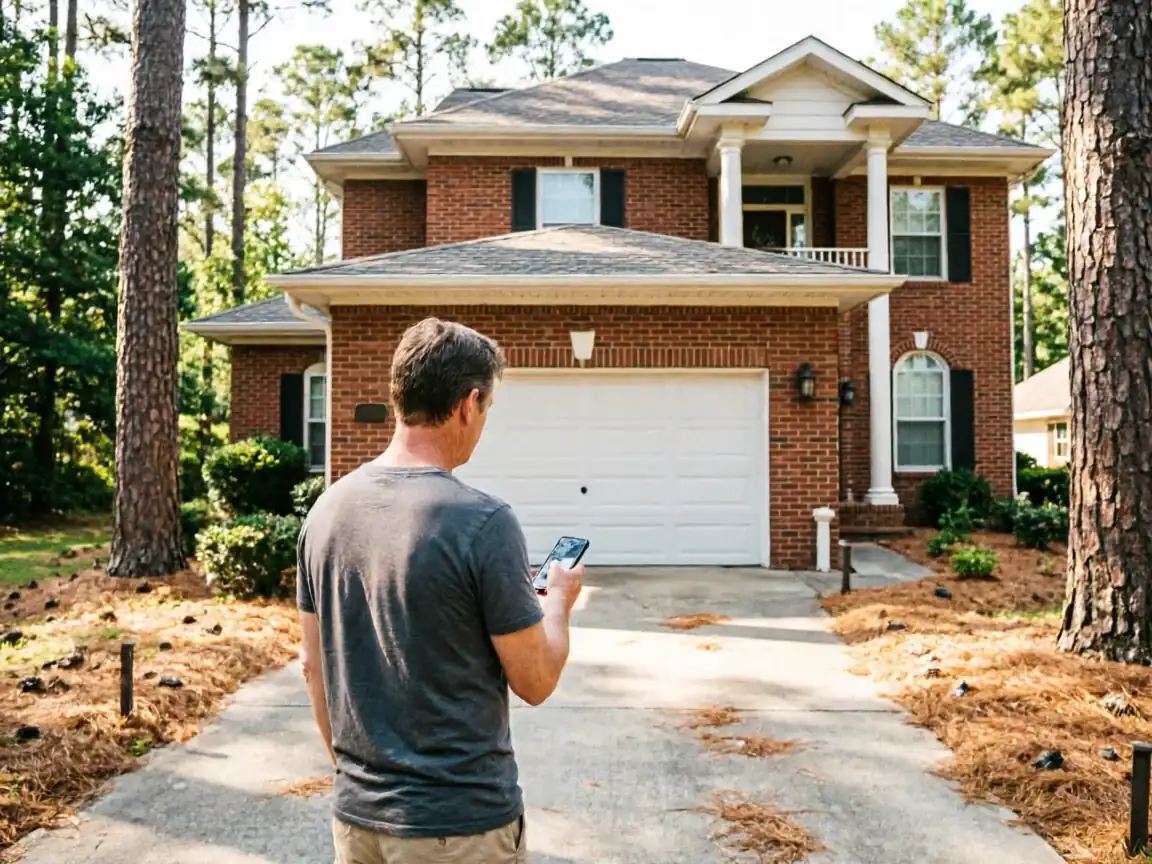
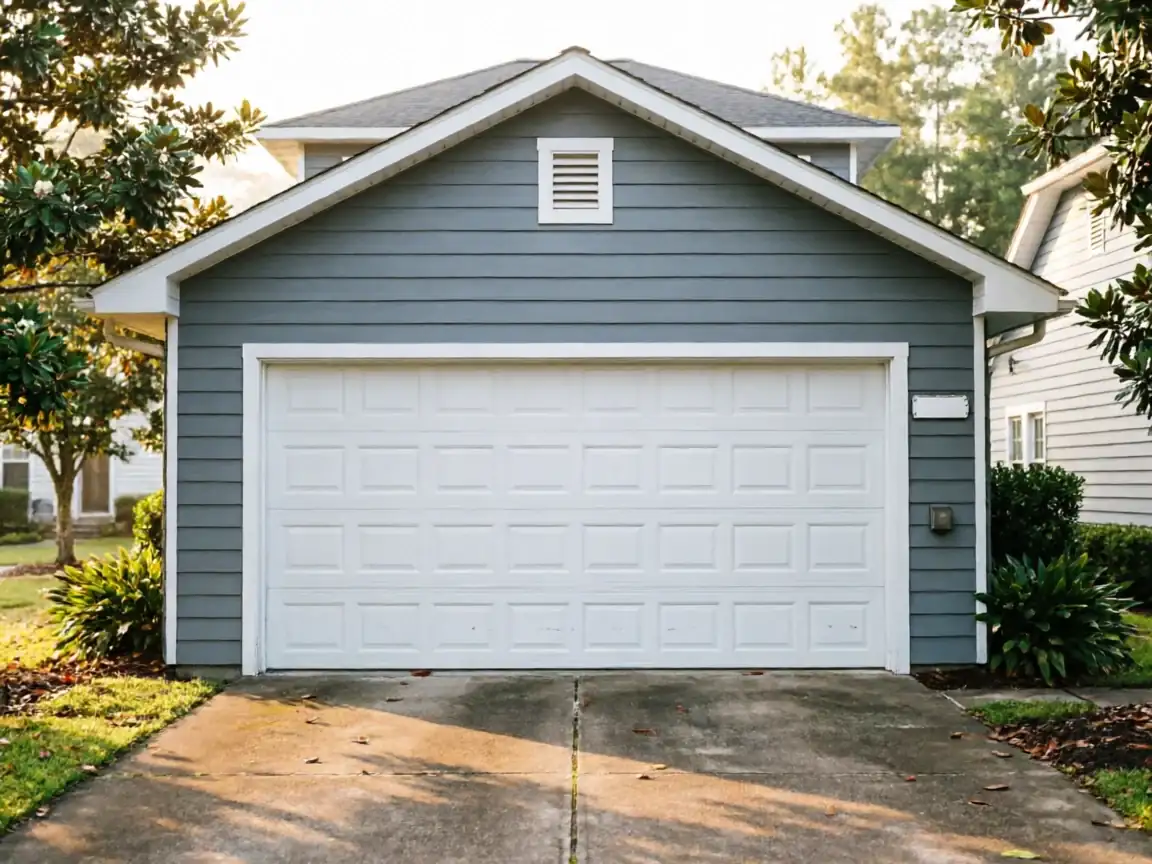
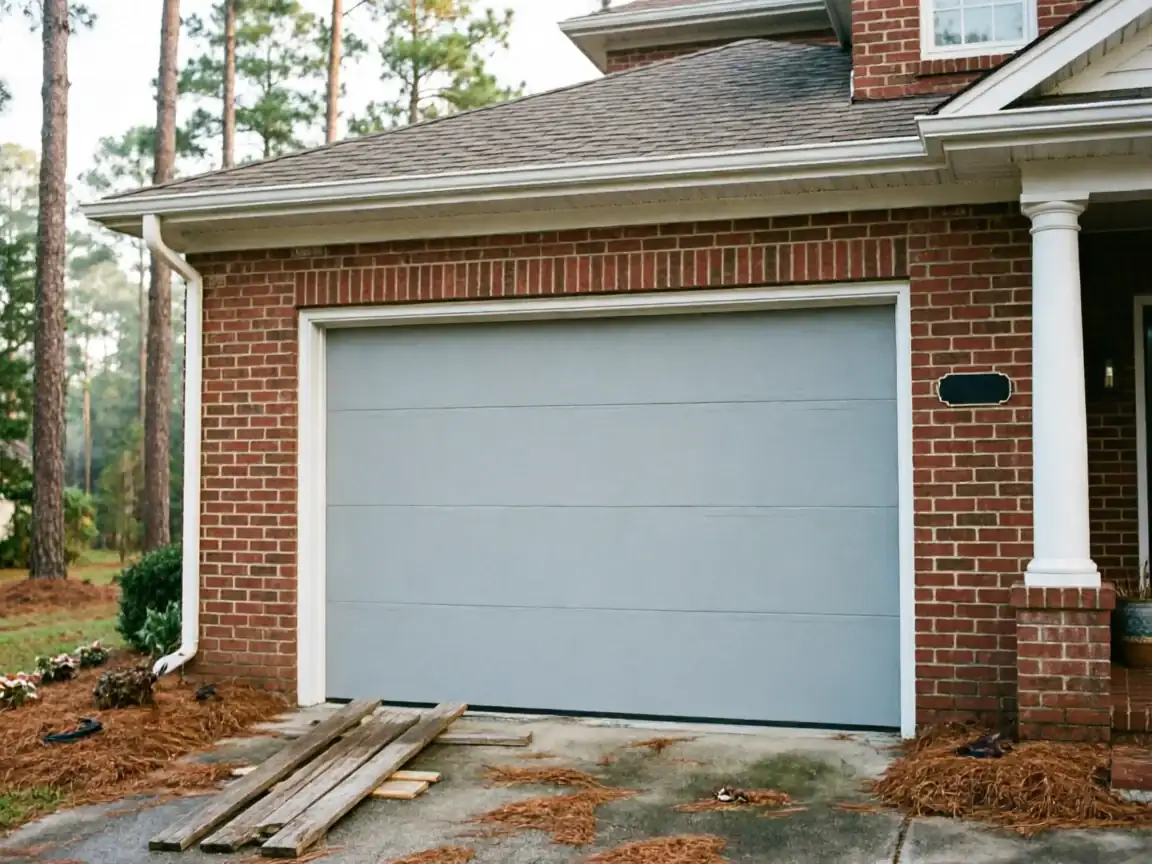
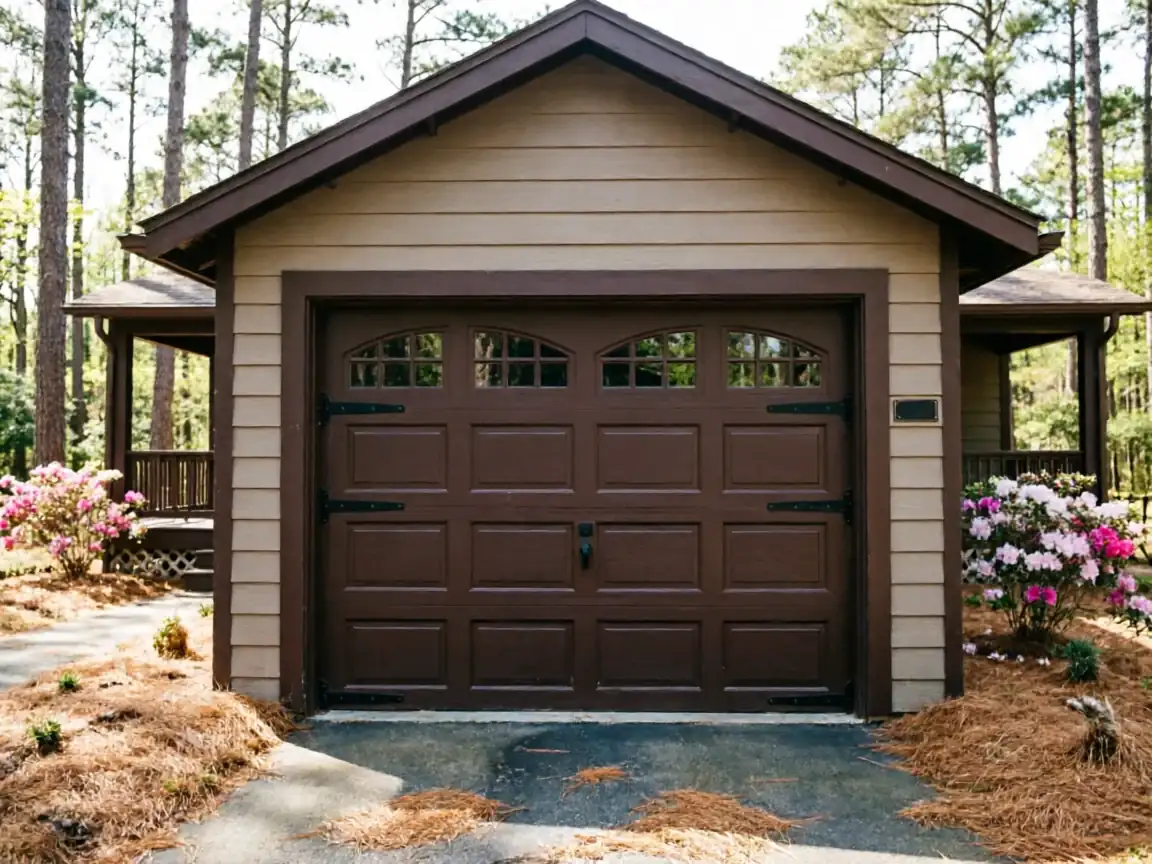
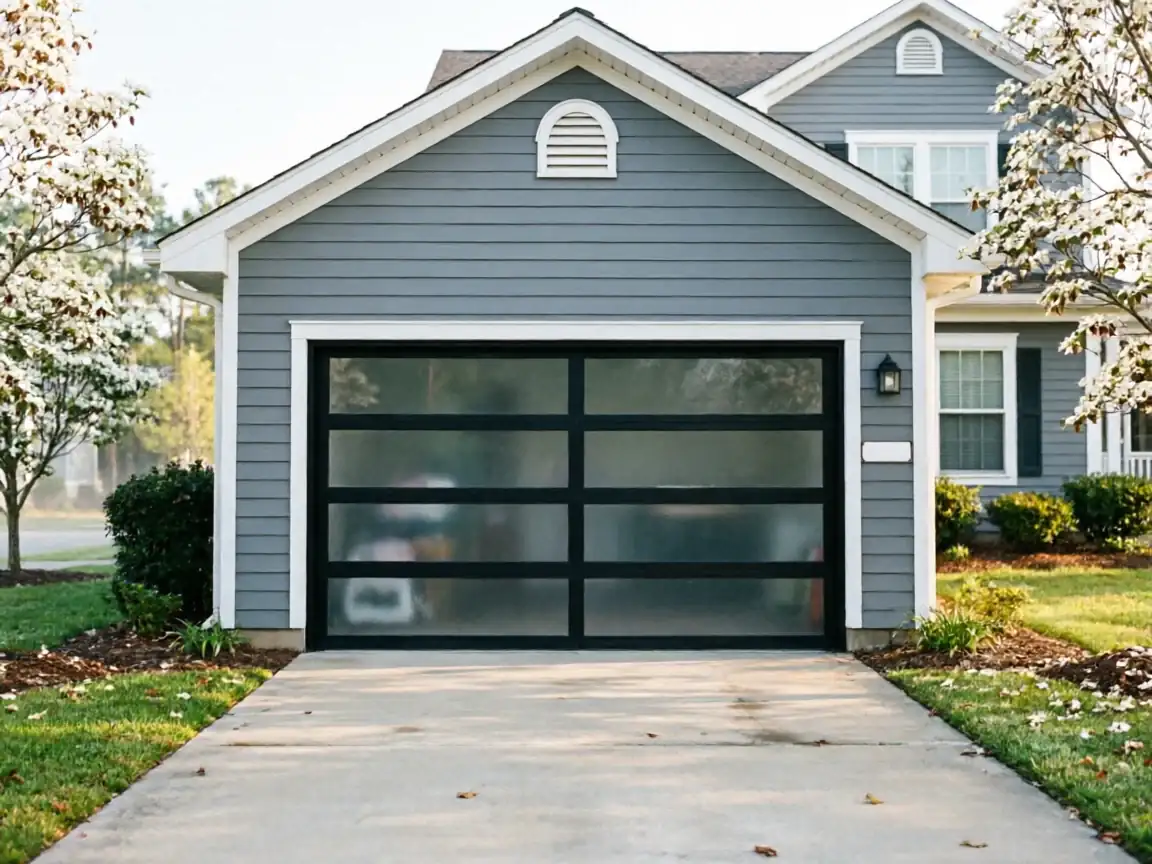
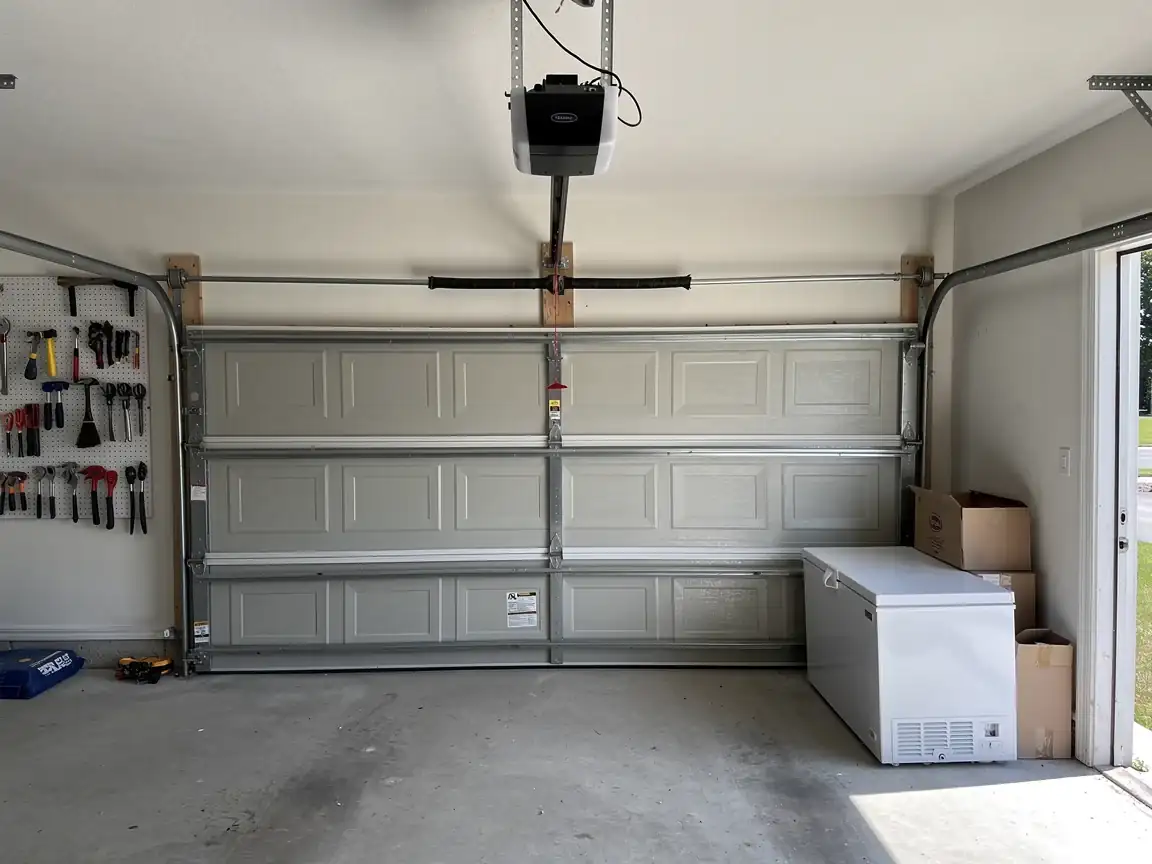
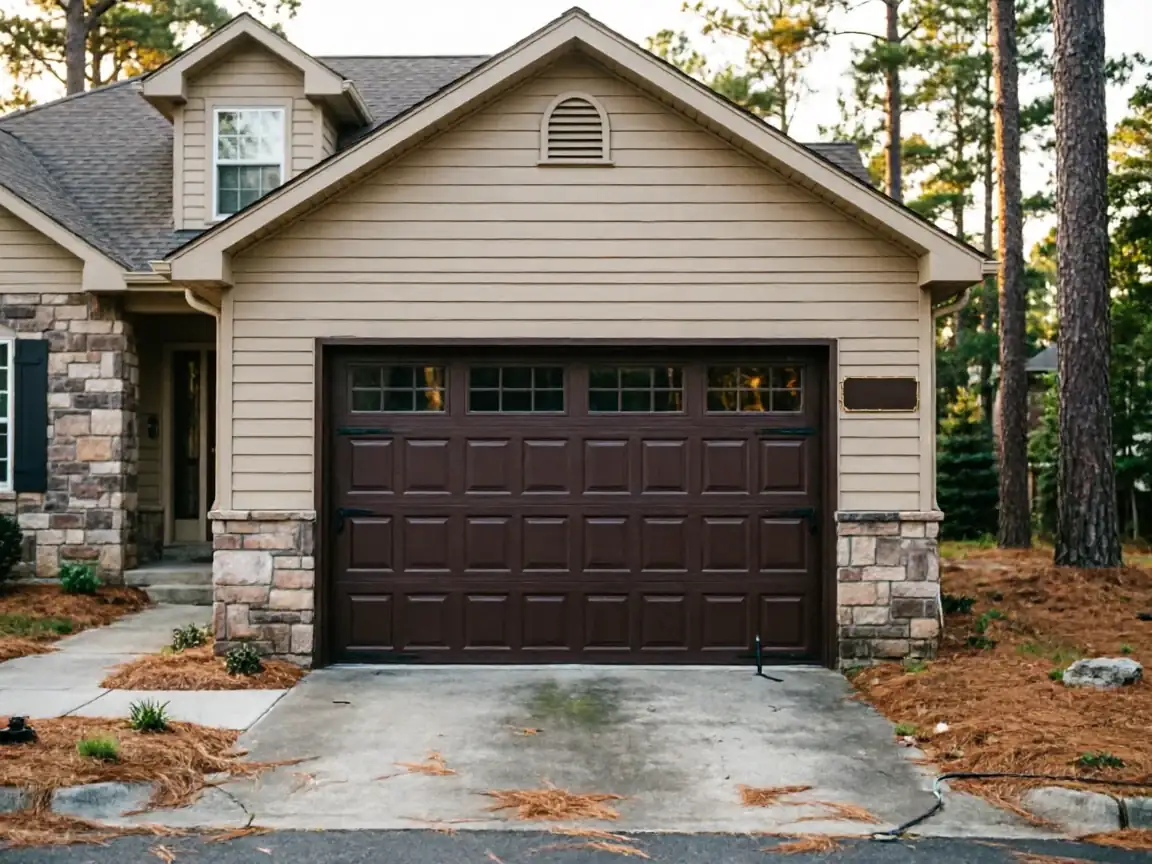
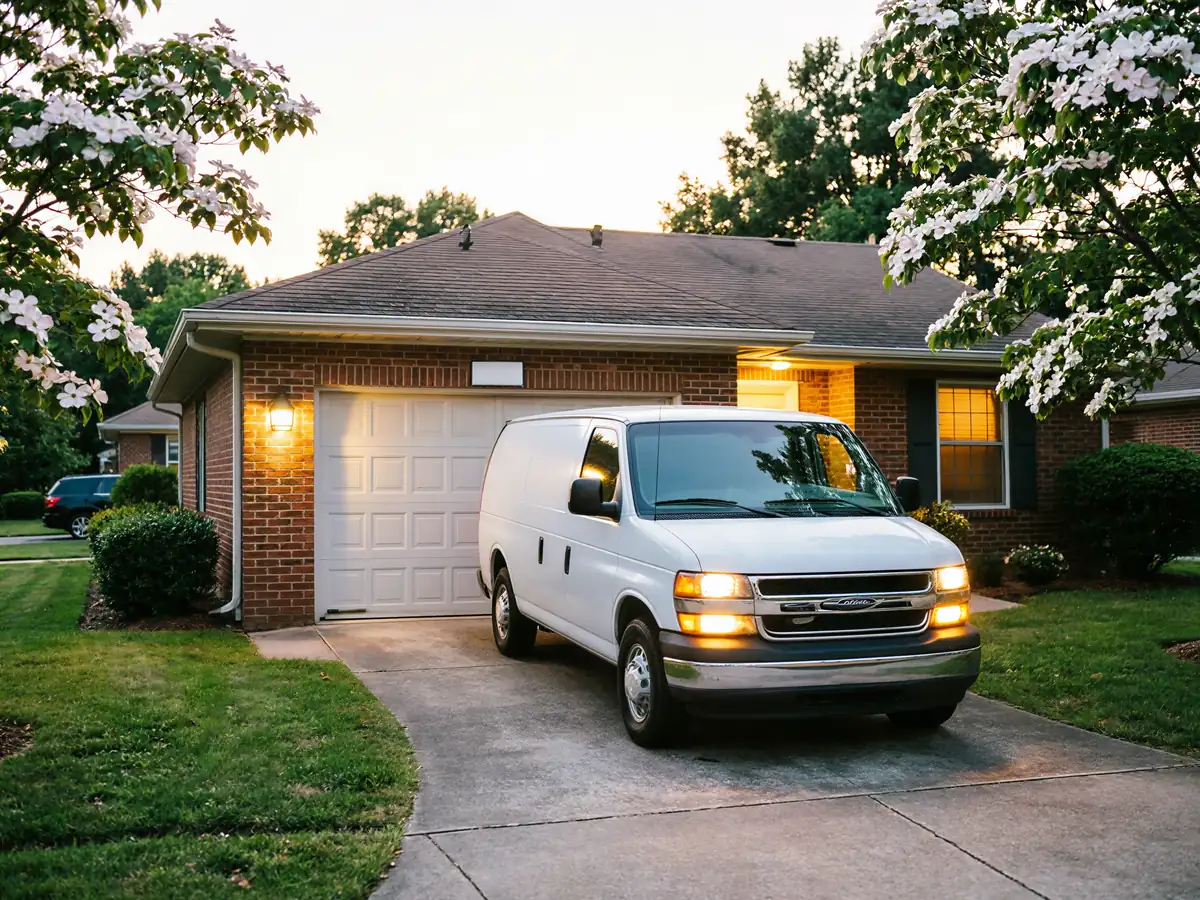
Most houses in Theodore went up around 1988, which puts the garage doors squarely in the steel-sectional era - not the old one-piece slab doors you still find on pre-1960s stock elsewhere in the Mobile area, and not the insulated composite doors going up today. A typical door from that build year is a 16-foot double or 9-foot single, two-inch steel panels, hung on a torsion spring mounted on a header bar above the opening rather than the older side-mounted extension springs. That's the standard setup for a house built in the mid-to-late '80s, and it's what we expect to find when we pull into a Theodore driveway.
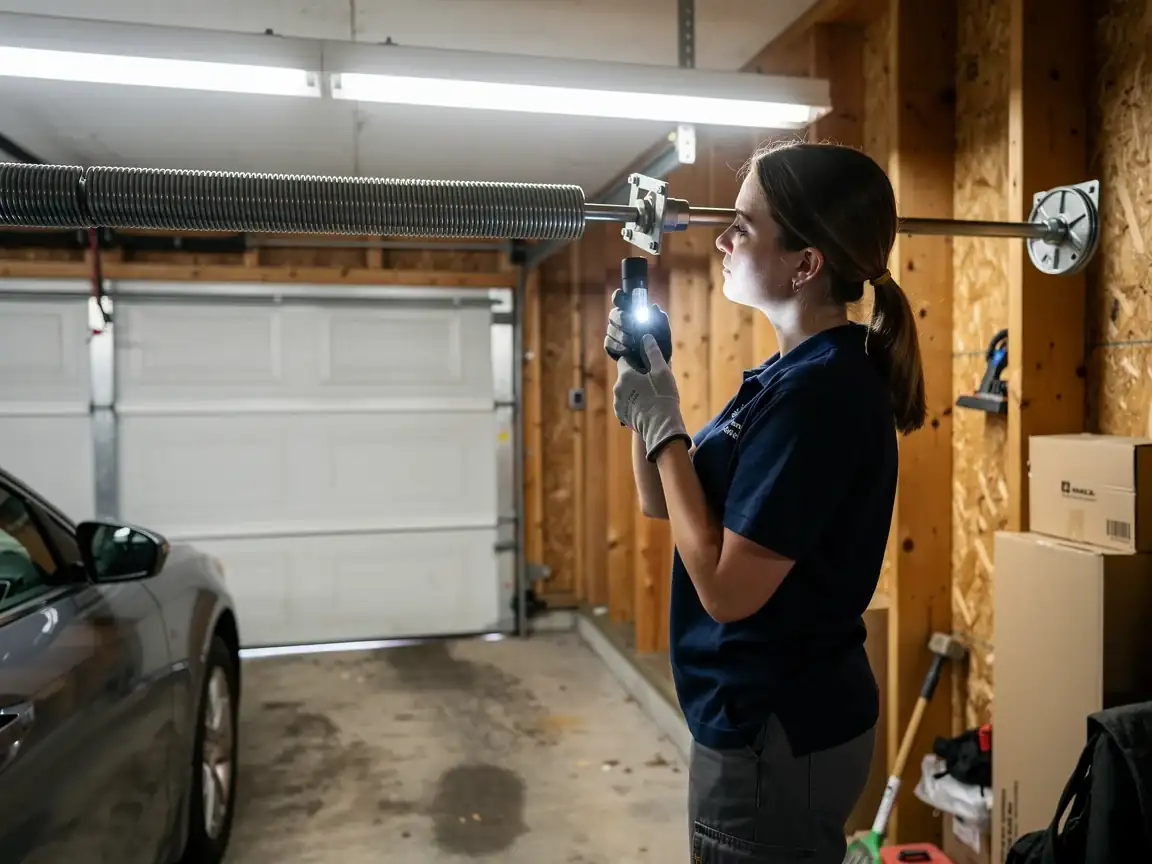
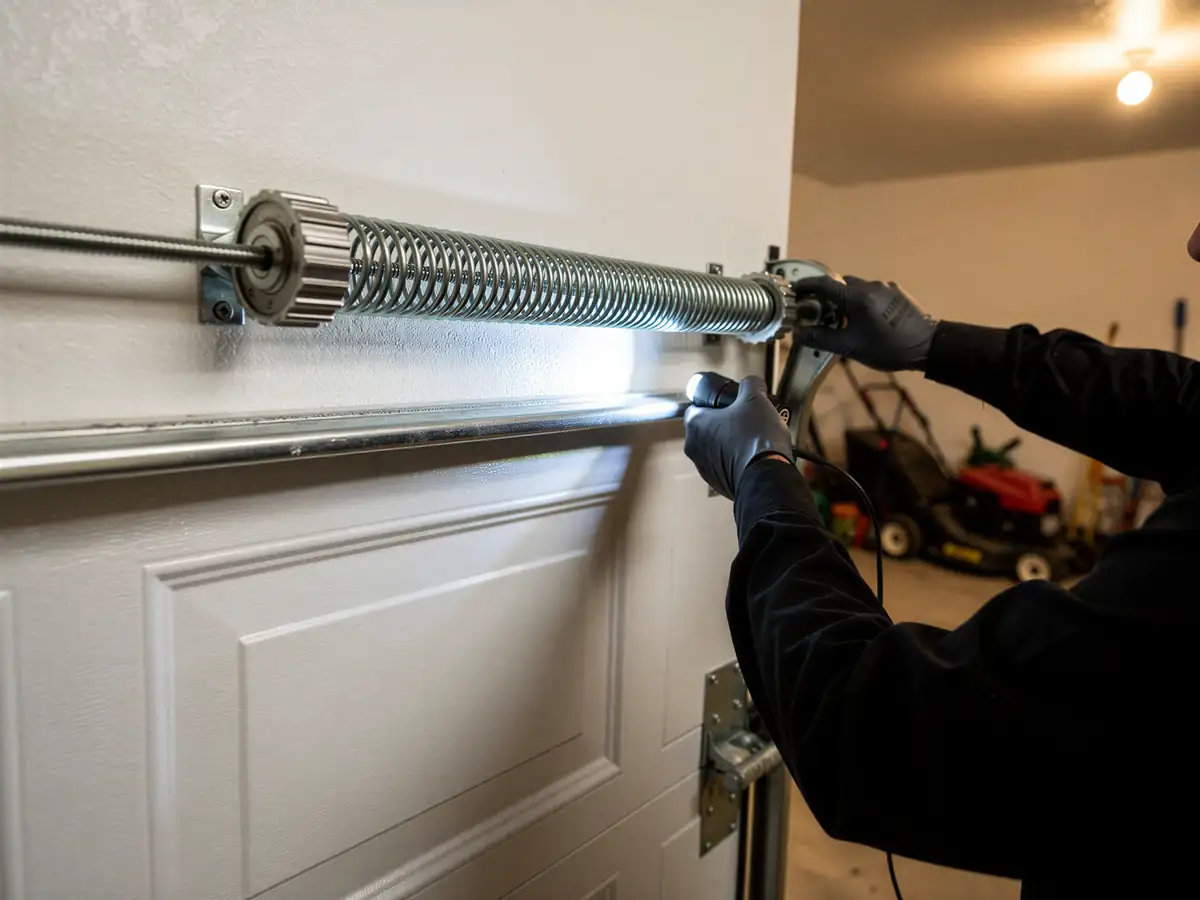
The complication isn't the door itself - it's the spring wire. A torsion spring from that generation was wound to lift a specific door weight, and thirty-plus years of cycling, combined with the mild coastal climate's occasional freeze snaps, leaves the wire fatigued even when it looks fine. We've seen springs that still hold tension but are one cold morning away from letting go.
The Symptom
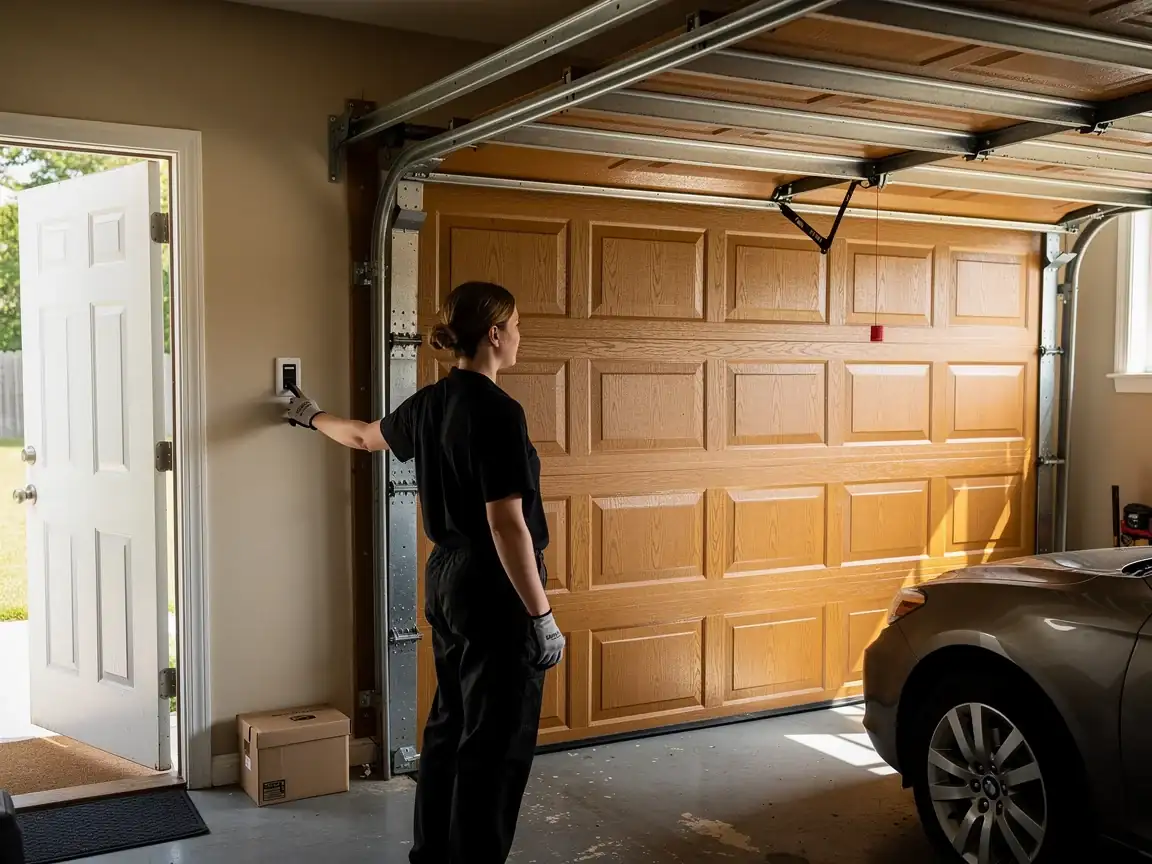
The door that used to glide now drops the last foot on its own, or it won't lift past knee height before the opener strains and reverses. Sometimes you hear the bang first - a torsion spring letting go sounds like a gunshot in a closed garage - and the door simply won't move afterward. On a double door from this era, a single broken spring often still lets the door limp up a few inches before the opener gives out, because these doors were built heavy enough that one spring alone can't carry the load.
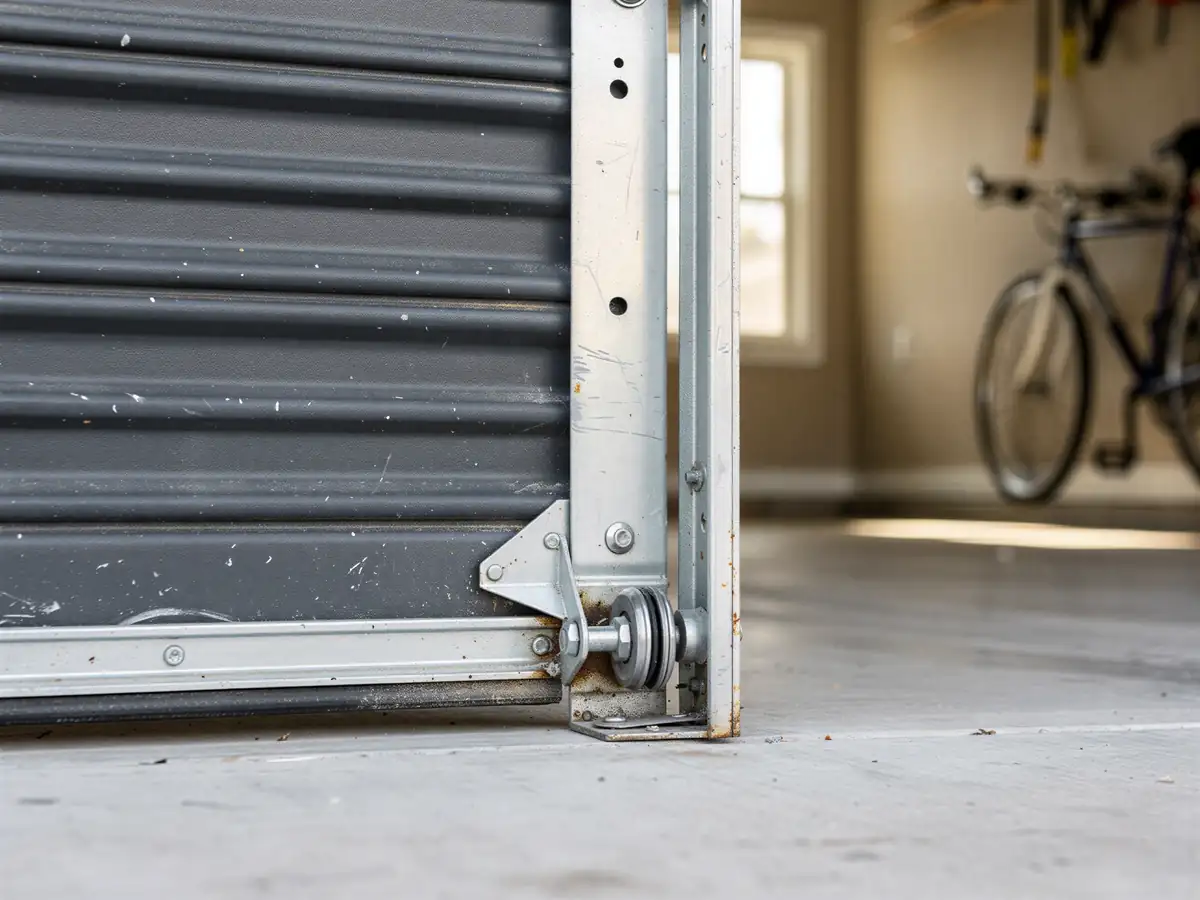
If you're hearing a grinding or popping noise instead of a clean break, that's usually the spring cone or the end bearing plate wearing out underneath the coil - common once a torsion spring from the late '80s has logged its working life, but not the same repair as a snapped spring.
How We Fix It
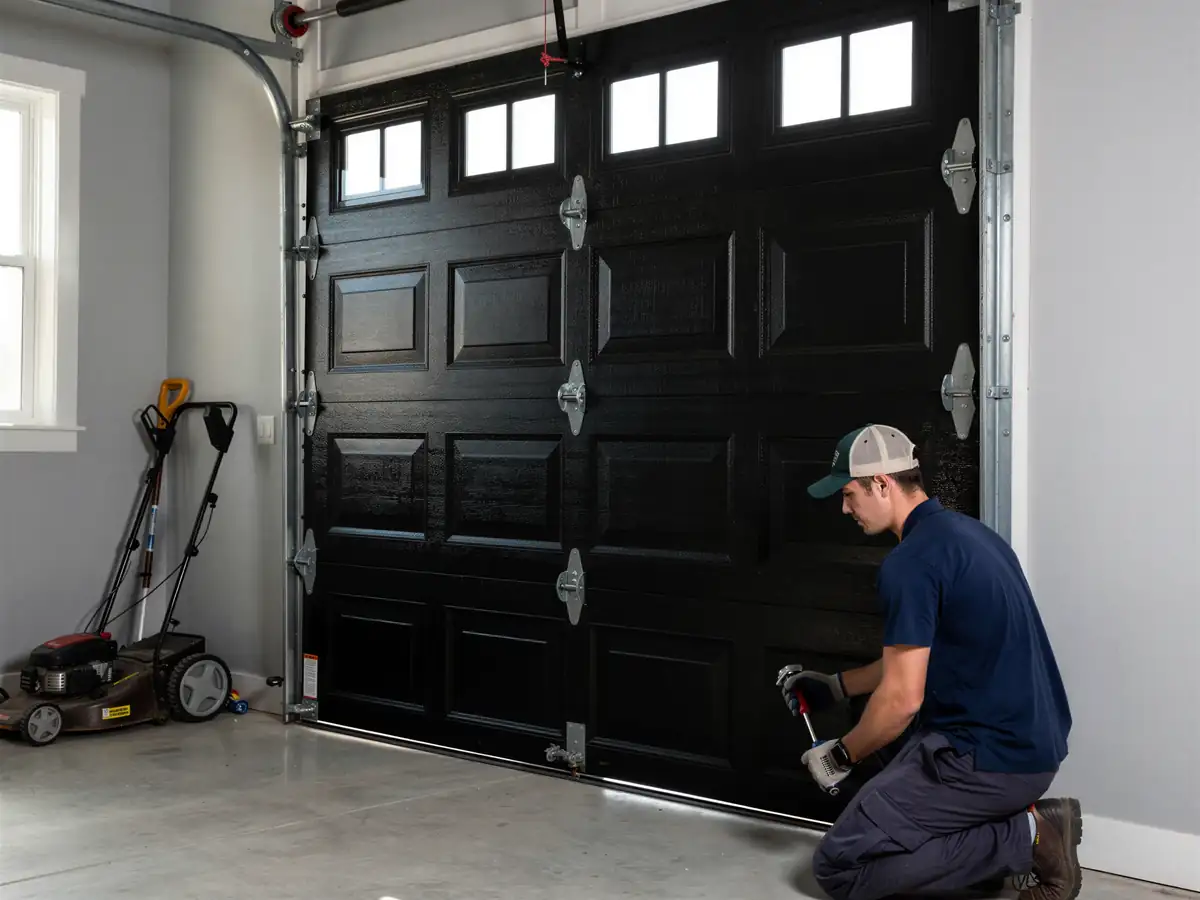
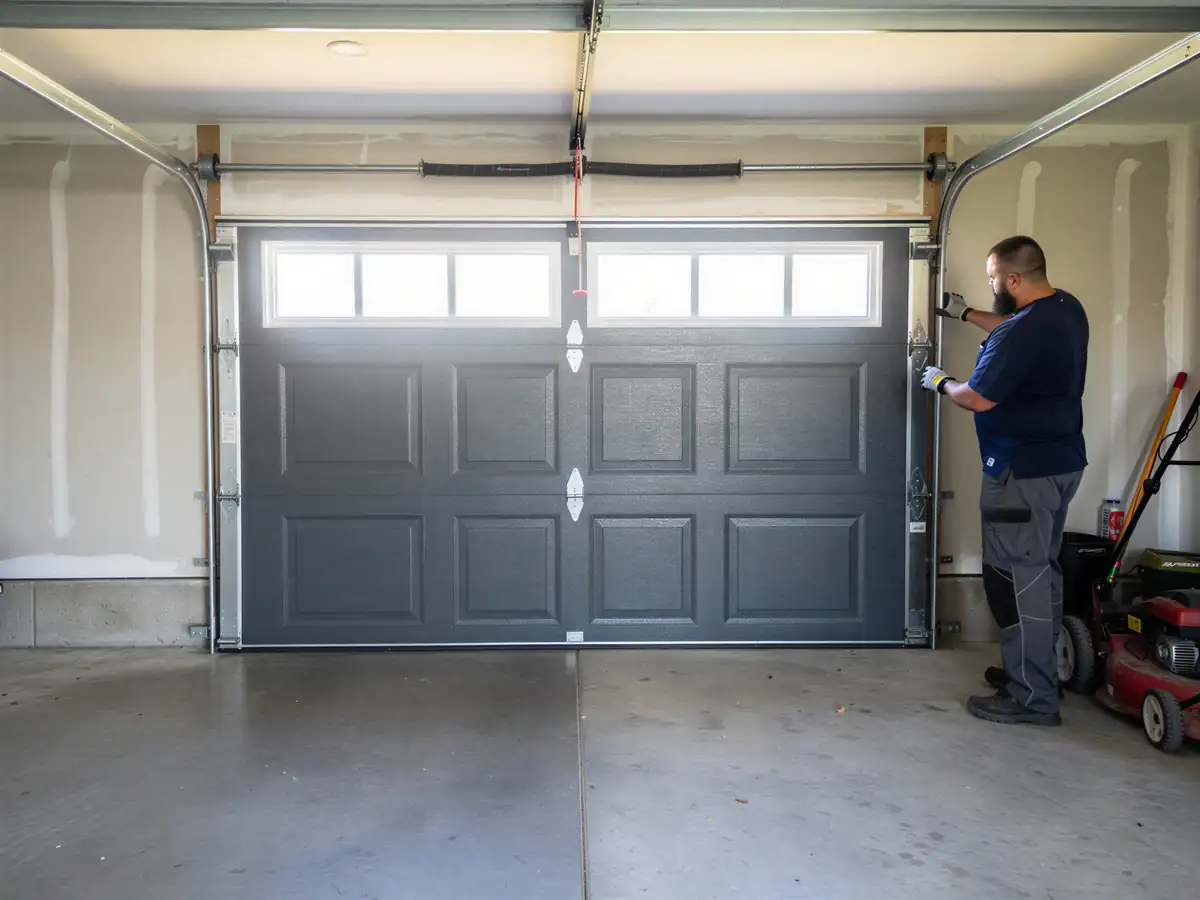
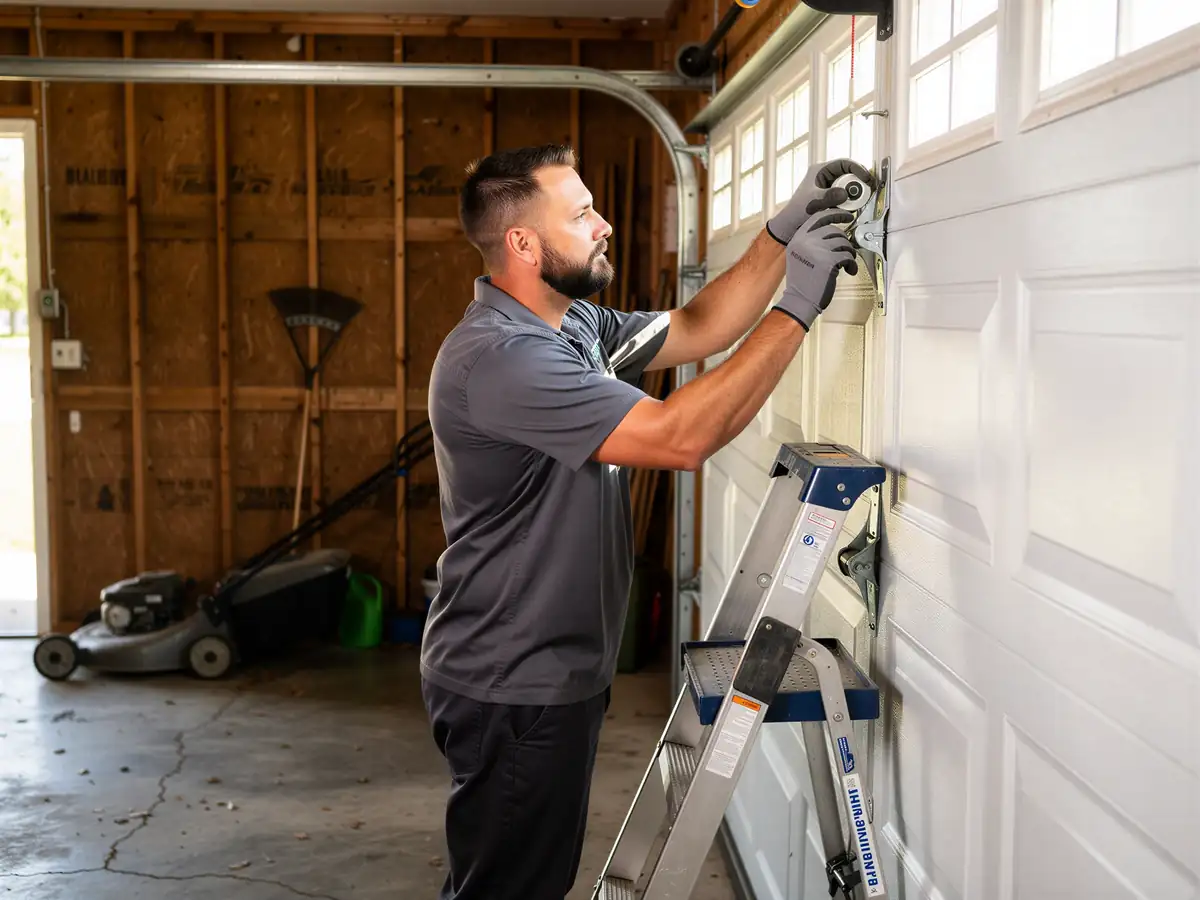
We replace the torsion spring with one matched to your door's actual weight and the drum size on your shaft
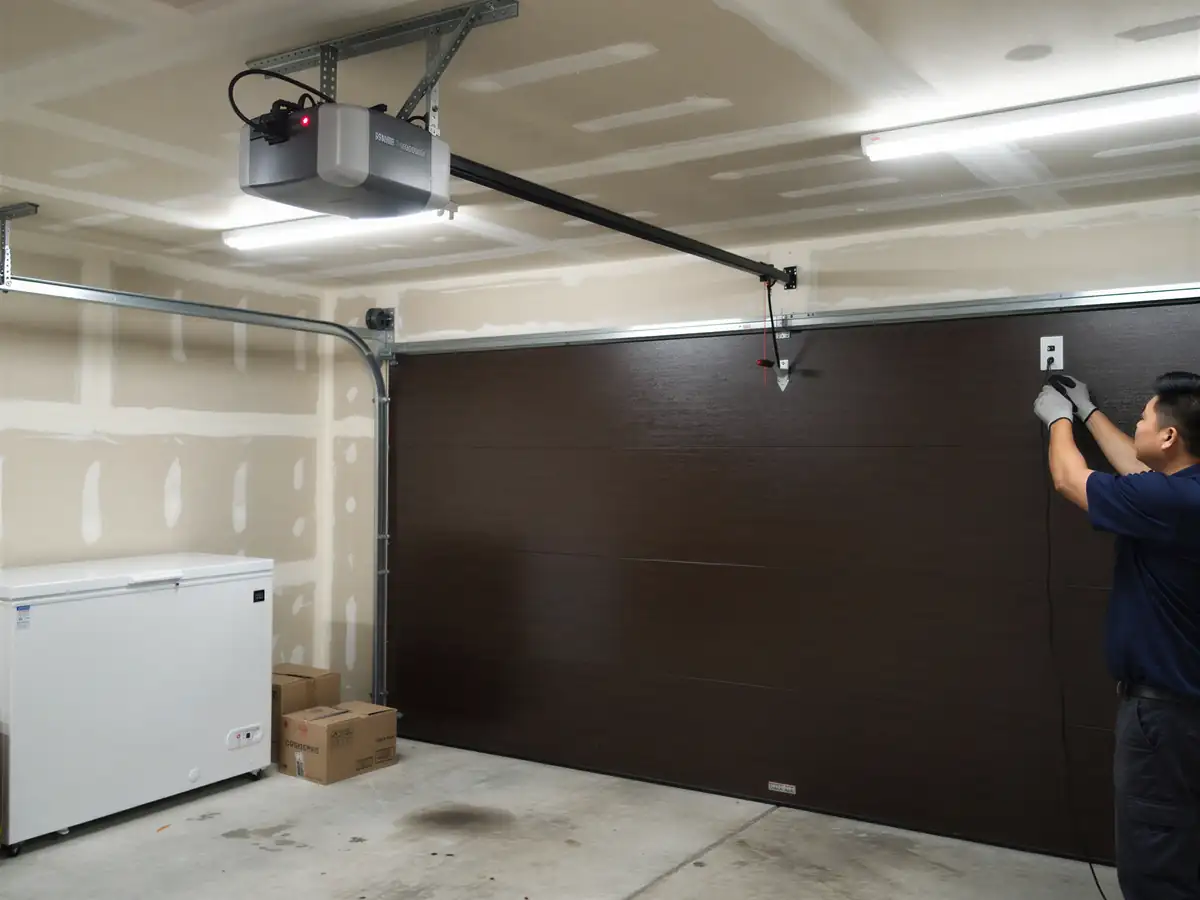
Not a generic swap, since a mismatched spring either won't lift the door fully or over-stresses the opener. For a 16-foot double door of the vintage common in Theodore, that usually means a heavier dual-spring setup; a single 9-foot door takes less wire. We check the cable condition, the center bearing, and the drums while the shaft is unloaded, since those parts wear on the same schedule as the spring and it costs far less to do them together than to call us back out in six months.
One limitation worth saying plainly
If the torsion shaft itself is bent, or the header above the door has sagged enough that the mounting bracket won't hold true, spring replacement alone won't fix the door - that's a structural repair, and we'll tell you before we quote the spring job, not after.
What You Pay
We don't have a published price list for Theodore-specific work, and we won't invent one here. What we can tell you is that Theodore sits about 10 miles from our Mobile base, and every job out this direction carries the drive into it. Theodore's roughly 2,169 households skew toward the same median income as much of the wider service area - around $60,764 locally versus $62,318 across the whole coverage zone - and spring jobs here run in line with what a late-1980s double-door setup needs: one or two torsion springs, bearings, and sometimes cable. Ask for the number on your specific door and we'll give you a real quote before any work starts.
Why This Fails Locally
A spring sized for a 2010s insulated door won't do the job on a 1988 steel slab door, and a shop that doesn't ask your home's build year is guessing. Theodore's housing stock sits inside the broader 1963-1999 range that covers most of the Mobile area, but the 1988 median here means heavier, uninsulated steel doors are far more common than the lighter doors going into newer construction closer to the coast. A universal spring kit bought online is wound for an average door weight, not your door weight - and on a double door that's heavy to begin with, an undersized spring just means the opener motor burns out trying to make up the difference. We size to the door in front of us, not to a catalog average.