The Symptom
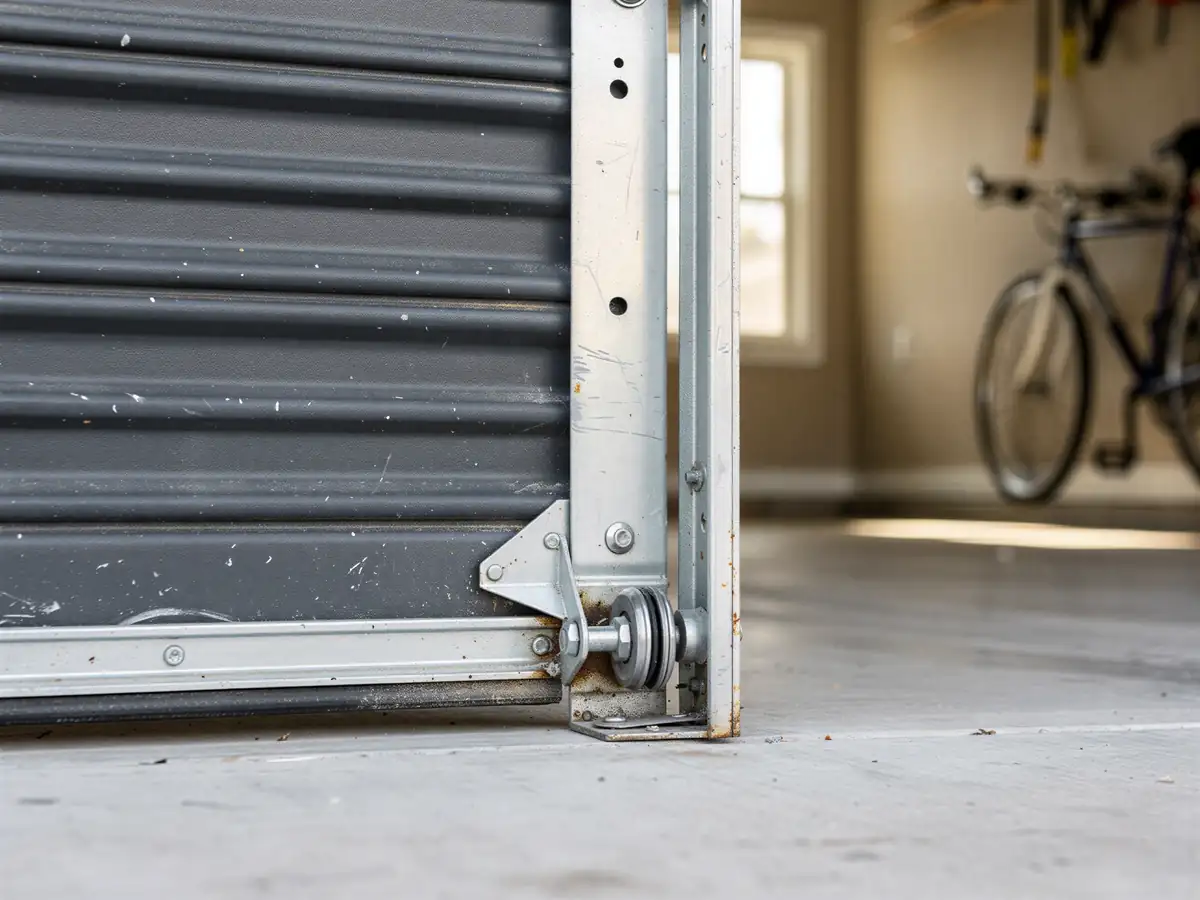
A door that grinds, hops, or catches partway up the track almost always comes down to the rollers. You'll hear it before you see it - a rhythmic clunk as each worn roller hits the same spot, or a scrape that gets louder in the first cold snap of the year. Sometimes a roller shears clean off its stem and the door jumps the track entirely, leaving a gap you can see daylight through.
Mobile's housing stock makes this a steady call for us. Most of the service area's houses went up between 1963 and 1999, with the typical build year landing around 1983. That means a lot of doors are still running original steel track and the stamped-steel or nylon rollers that came with it decades ago - hardware that was never meant to last this long. Nylon rollers dry out and crack; steel rollers lose their bearings and start riding on bare metal.
Humidity plays its part too. The region sits in a mild climate with occasional freeze, and that swing between damp, salt-heavy air and the odd cold morning corrodes roller stems and track bolts faster than you'd expect in a drier climate. You get surface rust in the track itself, which chews up a roller that's already past its working life.
The DIY Question
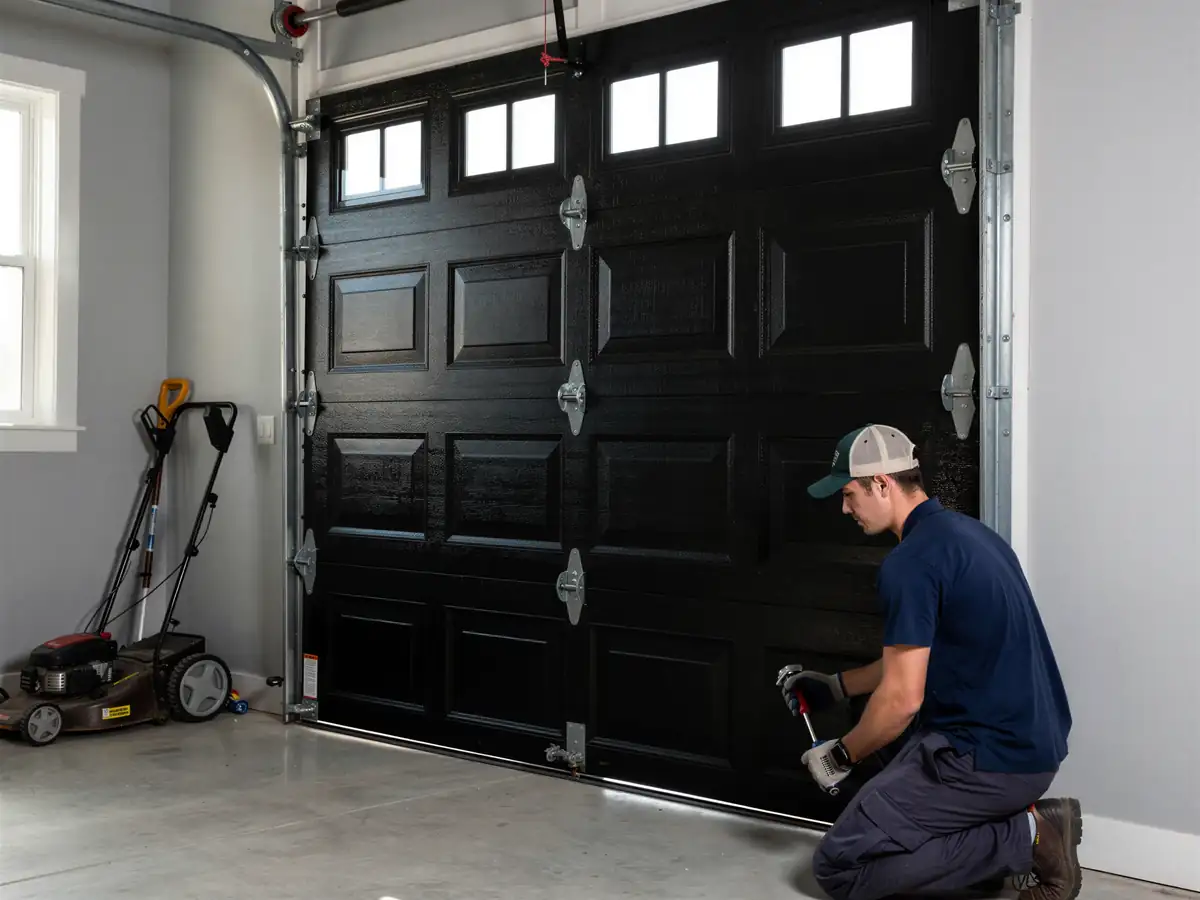
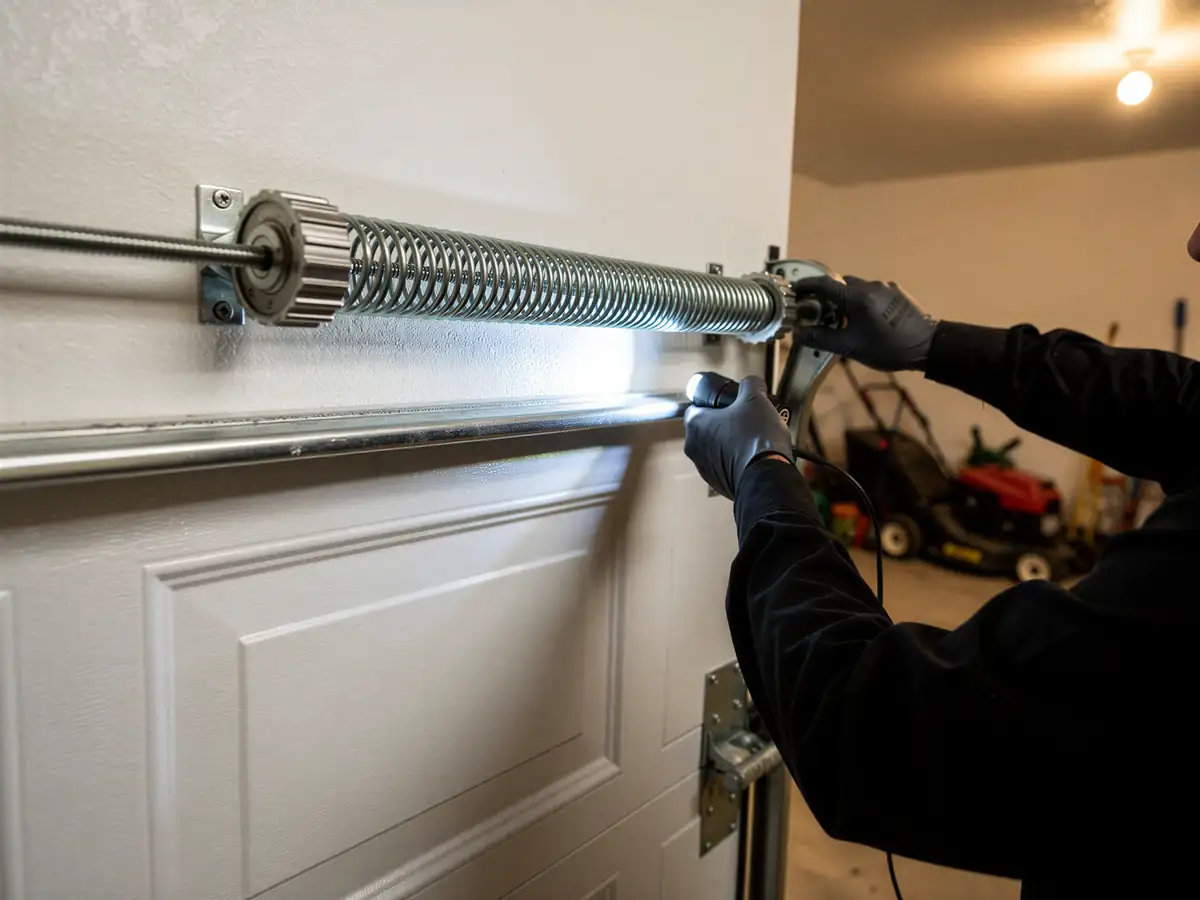
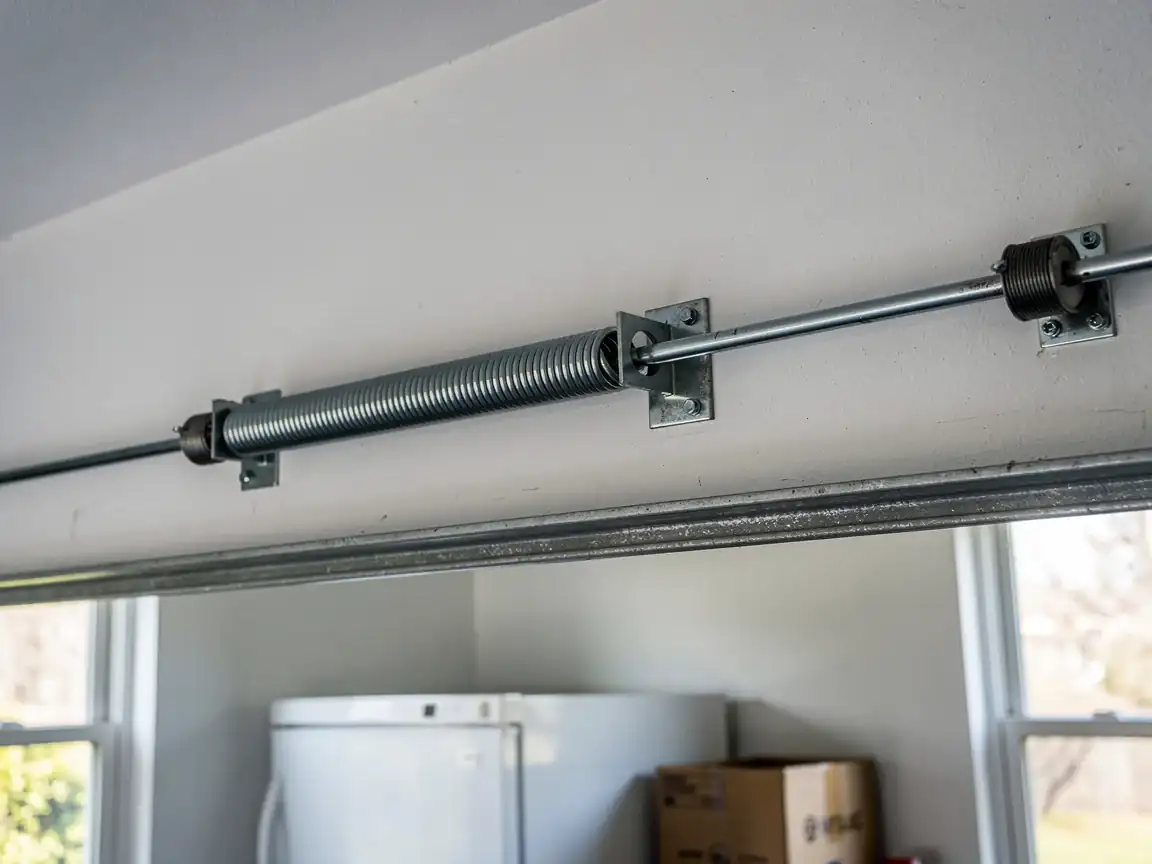
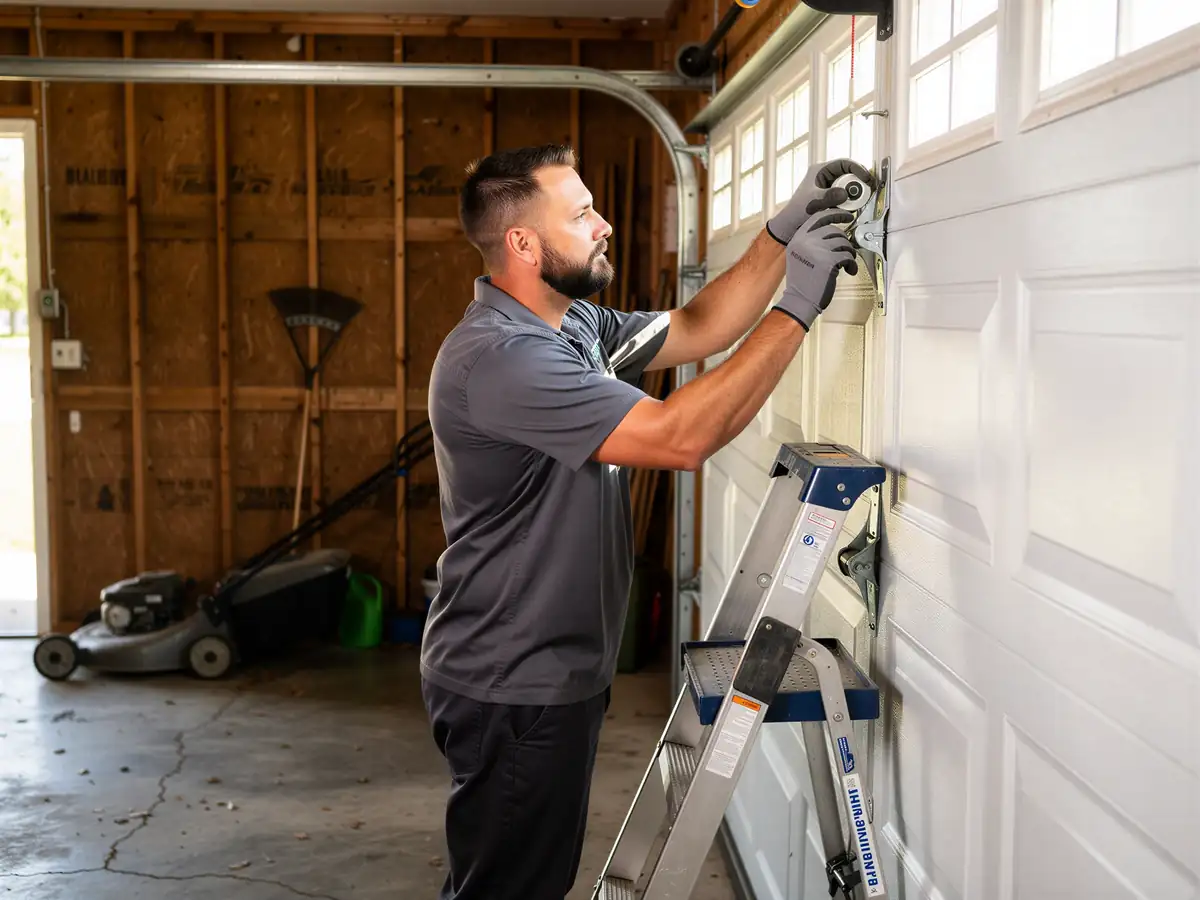
Swapping a single nylon roller on a door that's otherwise in good shape is within reach for a lot of homeowners - pull the retaining bracket, slide the old roller out, slide the new one in, done. Where it stops being a weekend job is anywhere near the bottom bracket on a torsion-spring door, because that bracket is under spring tension and a slip there can take a finger with it.
The harder problem is diagnosis, not installation. A roller that looks fine can still be the symptom of a bent track, a sagging panel, or a spring that's lost tension and is letting the door ride unevenly on its rollers - which chews through new rollers just as fast as old ones. If you replace rollers without checking why they wore unevenly in the first place, you're doing the job twice.
We'll be straight about the limitation here: we don't walk people through spring-side roller swaps over the phone, and we won't sell you a roller kit without seeing the track first. If the track itself is bent or pitted from rust, a new roller in an old track just wears out again in a season.
What You Pay
We don't post a flat number for roller replacement because the job isn't flat
A single roller swap on an accessible panel is a different job from replacing a full set of ten rollers on a door with a bent track or a misaligned bracket. What drives the bill is how many rollers need replacing, whether the track needs straightening or resetting at the same time, and whether the bottom bracket has to come off.
What we can tell you is what we look at before quoting
Roller material and condition, track condition over its full run, and whether the noise is coming from the rollers alone or from a spring that's making the door ride crooked. We quote the job after that look, not before.
Homeowners across the service area
With a median household income around $62,318 and roughly 29,831 owner-occupied houses - tend to ask the same question up front: is this a roller job or a bigger repair. That's a fair question, and it's one we answer on-site rather than guess at over the phone.
- $62,318 median household income
- 29,831 owner-occupied
Why This Fails Locally
Roller failure here isn't random wear - it's a pattern tied to what's actually on the houses. Across the 13 named areas in the service territory, most garage doors date to the same general build window, the 1980s and 90s, which means the same original track-and-roller setups are hitting the end of their service life around the same time. When one house on a street needs rollers, the one next to it usually isn't far behind.
The mild, sometimes-freezing climate adds a second layer. Rollers don't fail from cold the way they might up north - they fail from the cycle of humid air swelling nylon and corroding stems, then an occasional cold snap making brittle nylon crack outright. A roller that would last another two years in a dry climate gives out early here.
Put those two things together - original-era hardware plus a climate that's hard on nylon and steel both - and roller replacement becomes one of the most common calls we get, not an occasional one. It's also why we check the whole track assembly on every roller call: in houses this age, a worn roller rarely travels alone.