The Symptom
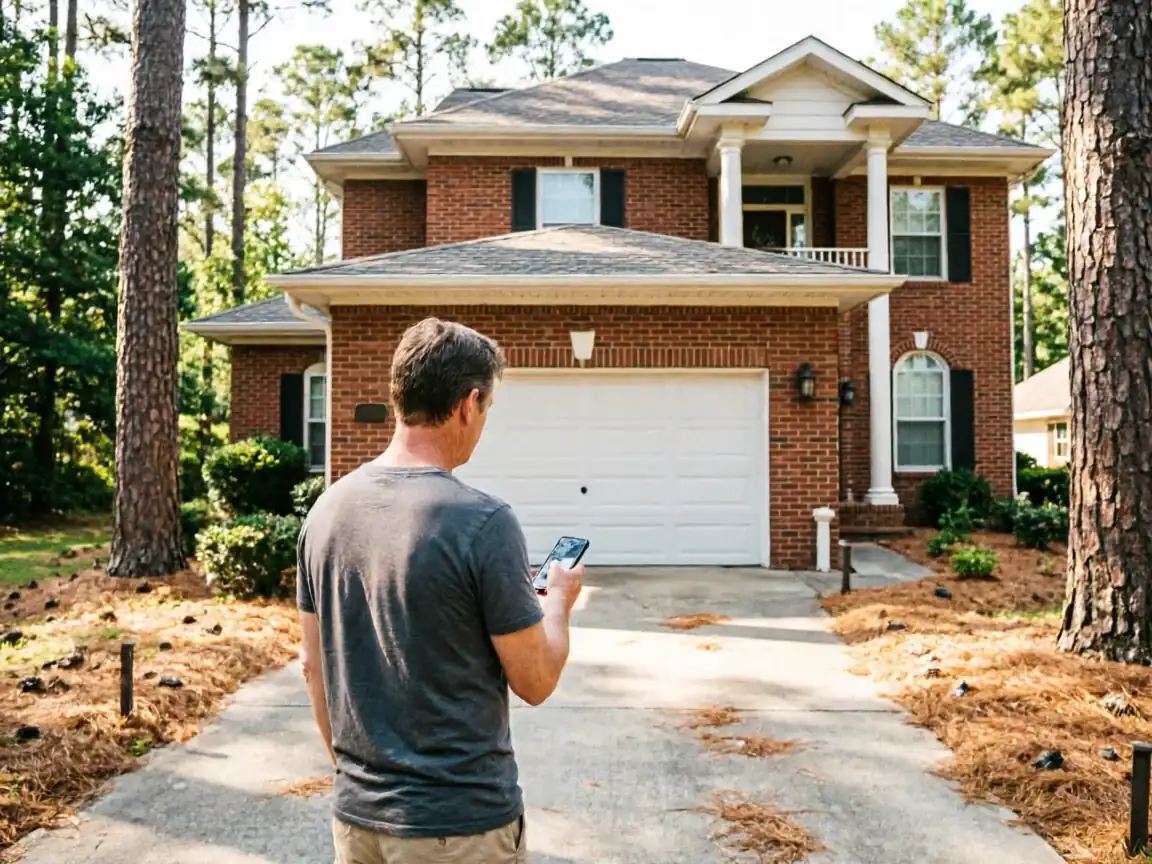
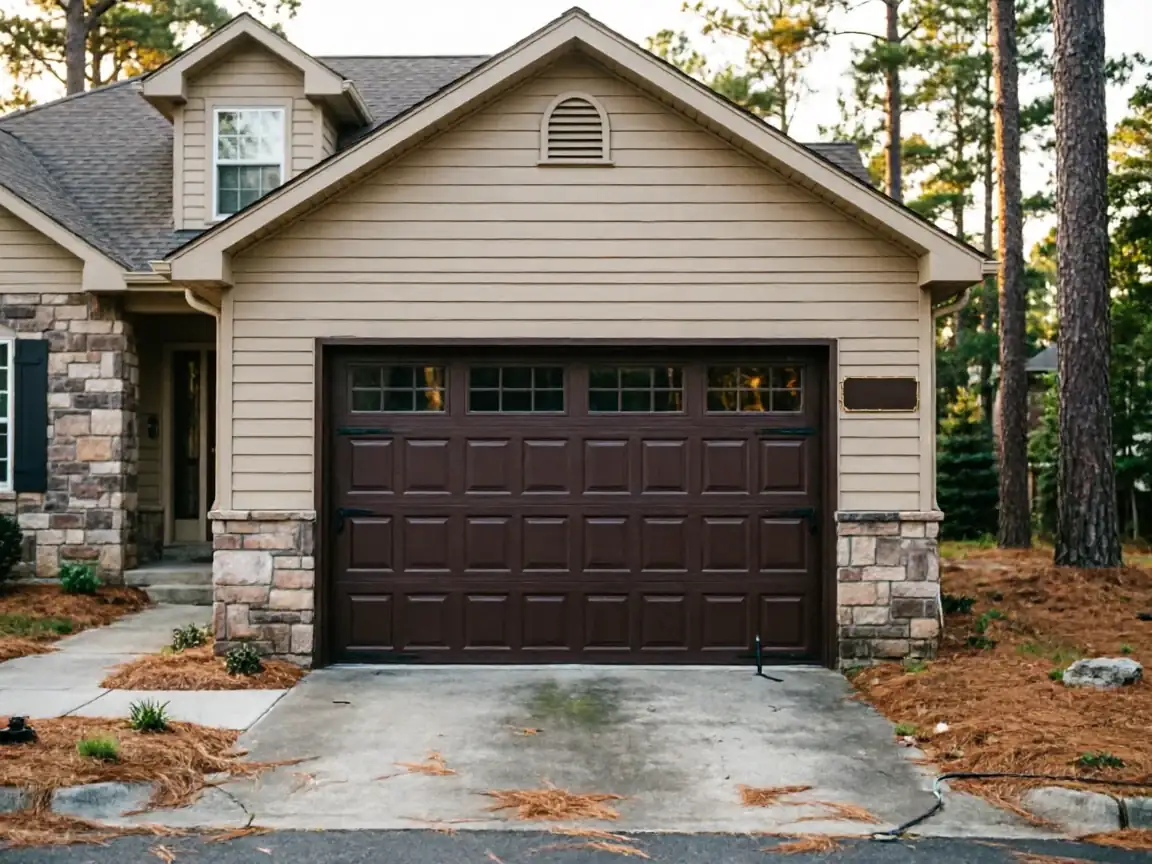
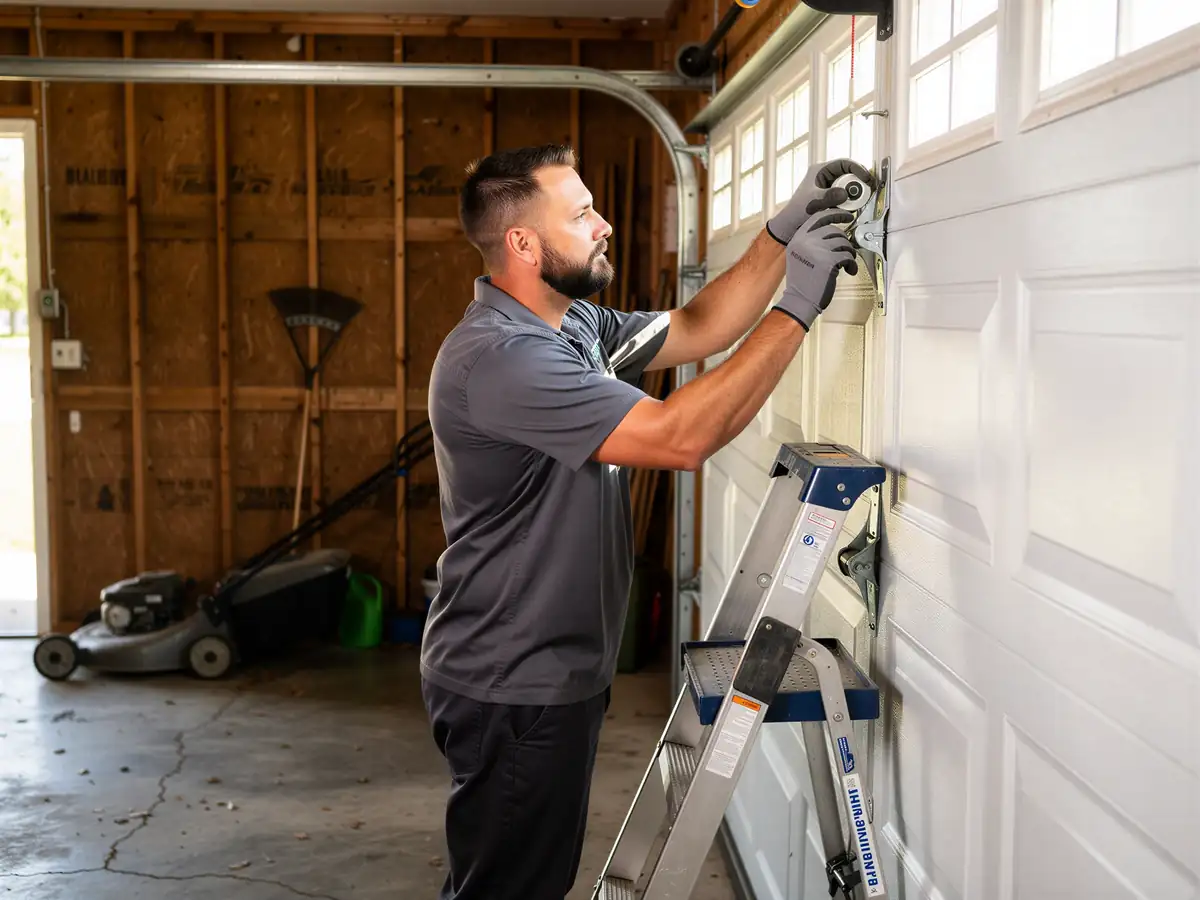
The call usually starts the same way: the door won't go up, or it goes up six inches and stops, or it slams down the last two feet instead of easing shut. Sometimes it's a loud bang from the garage followed by a door that won't budge at all - that's a torsion spring letting go. On a lot of the houses we get called to, built somewhere in that 1963 to 1999 run with a median around 1983, the spring and cable setup is original or close to it. Forty years of cycling in a mild climate that still dips below freezing a handful of times a winter does a number on steel. The metal doesn't crack from cold the way it might further north, but the swing between humid Gulf air and the occasional freeze snap is still a stress cycle, and it adds up. If your door is making noise it didn't used to make, that's the hardware telling you something before it fails outright.
Other symptoms we see a lot: a door that drifts down on its own, rollers that have worn their track grooves egg-shaped, or an opener that runs but the door doesn't move - usually a stripped gear or a cable off its drum. None of these fix themselves, and most get worse on the same week it's 95 degrees out and you need the garage open.
The DIY Question
Some of this is fair to tackle yourself. Tightening loose hinge bolts, lubricating rollers and hinges, clearing debris out of the track, replacing worn weatherstripping - all reasonable weekend jobs with a ladder and a socket set.
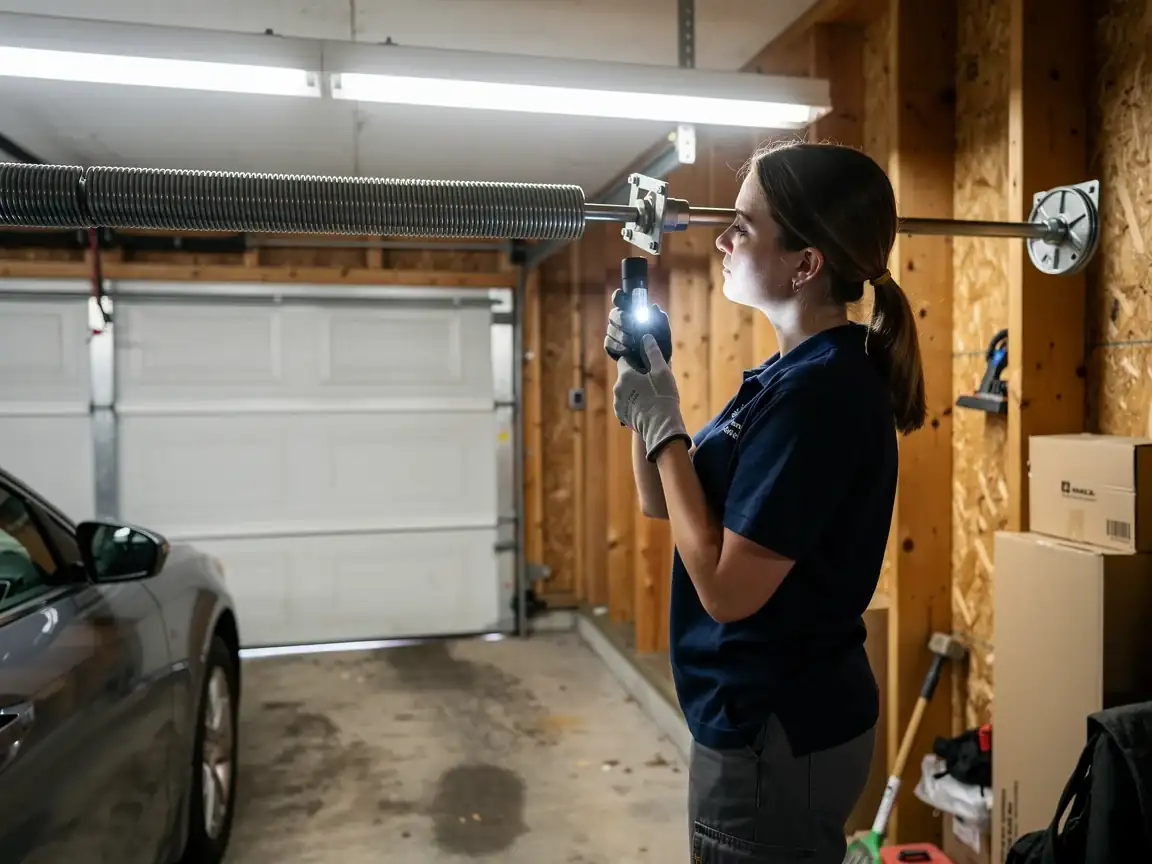
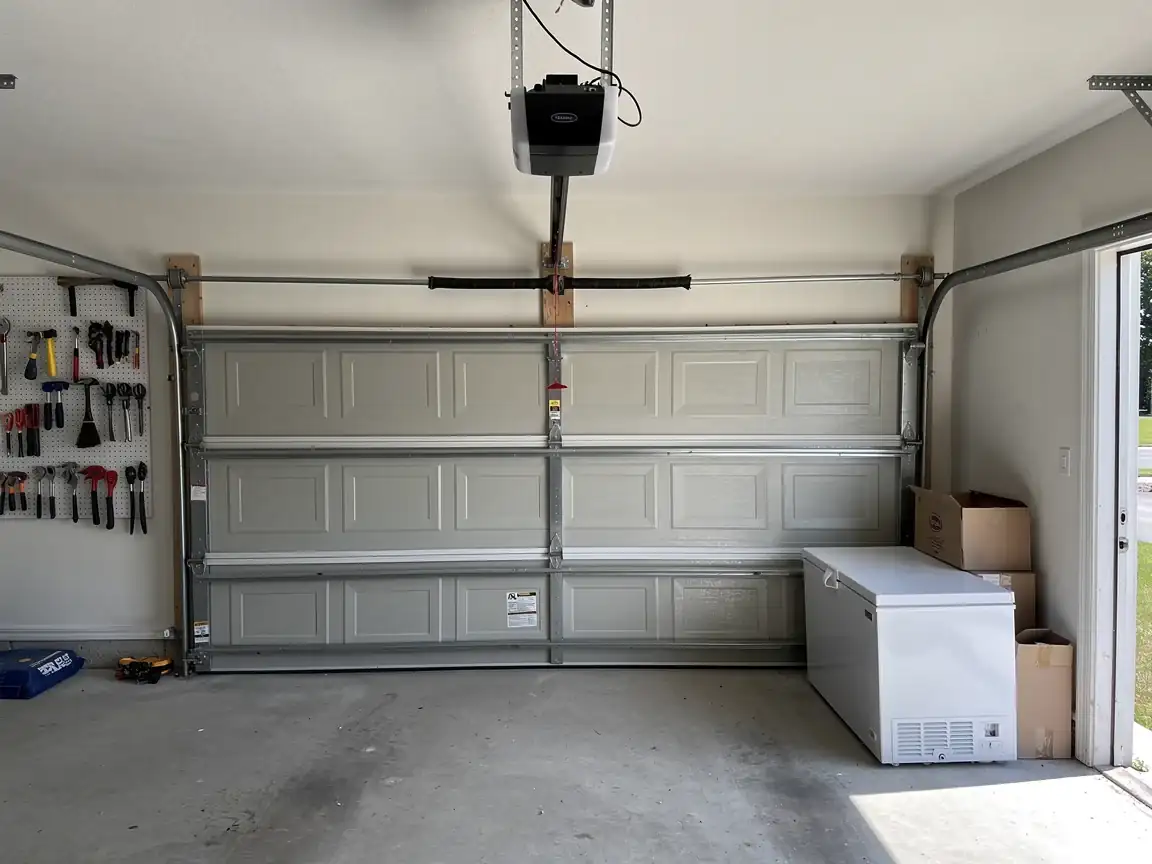
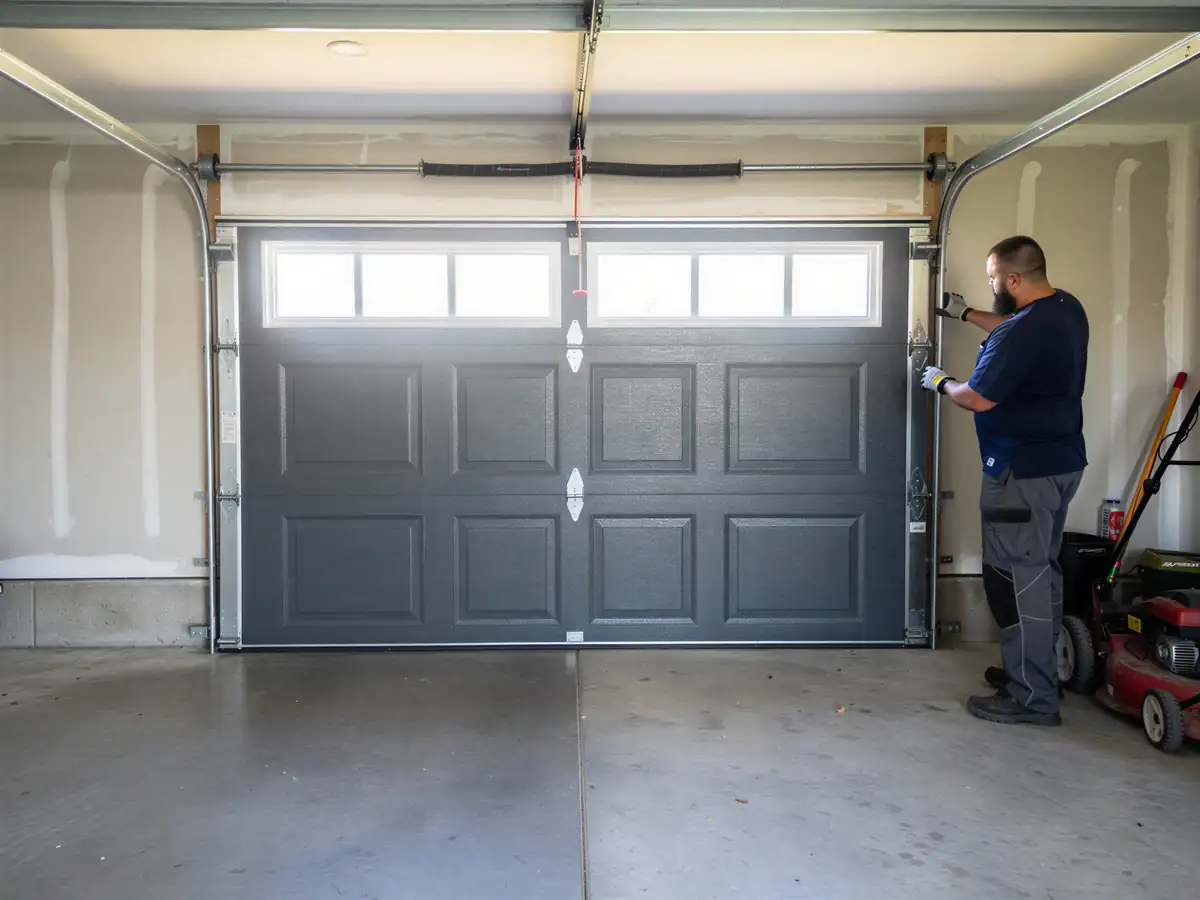
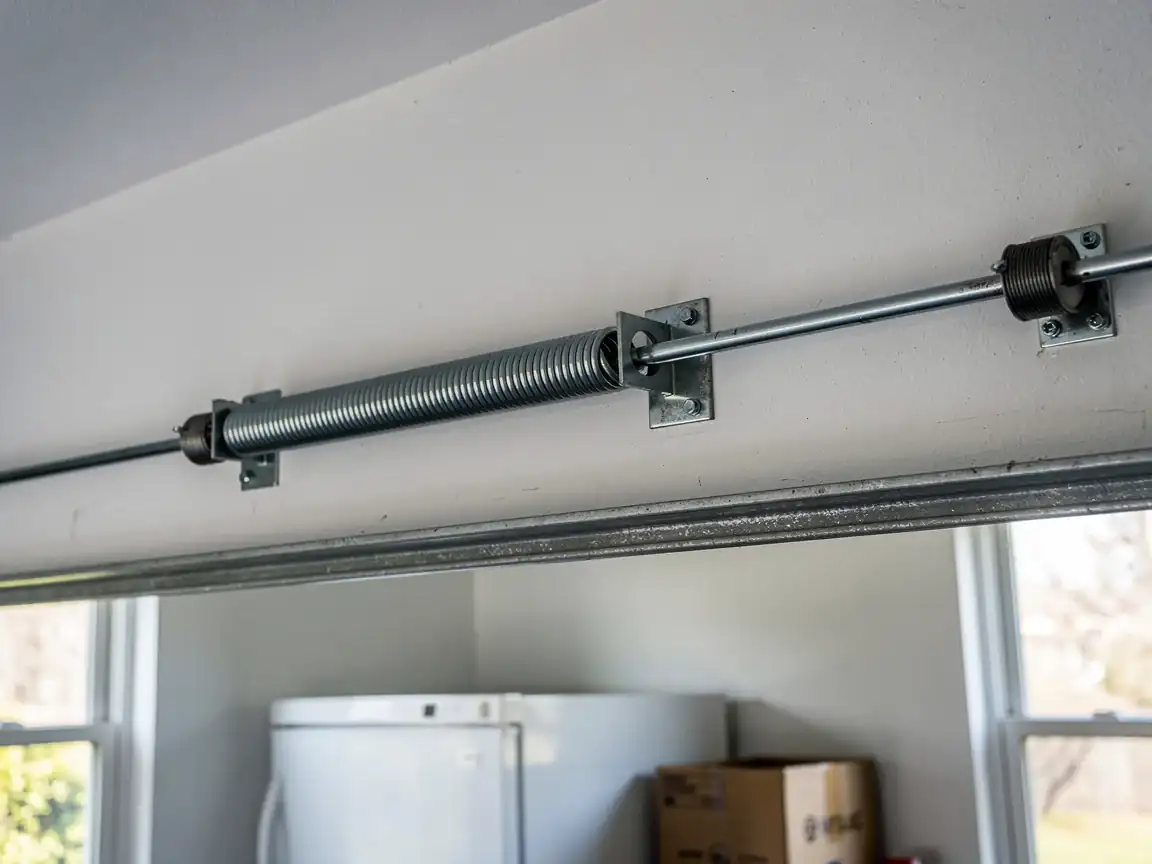
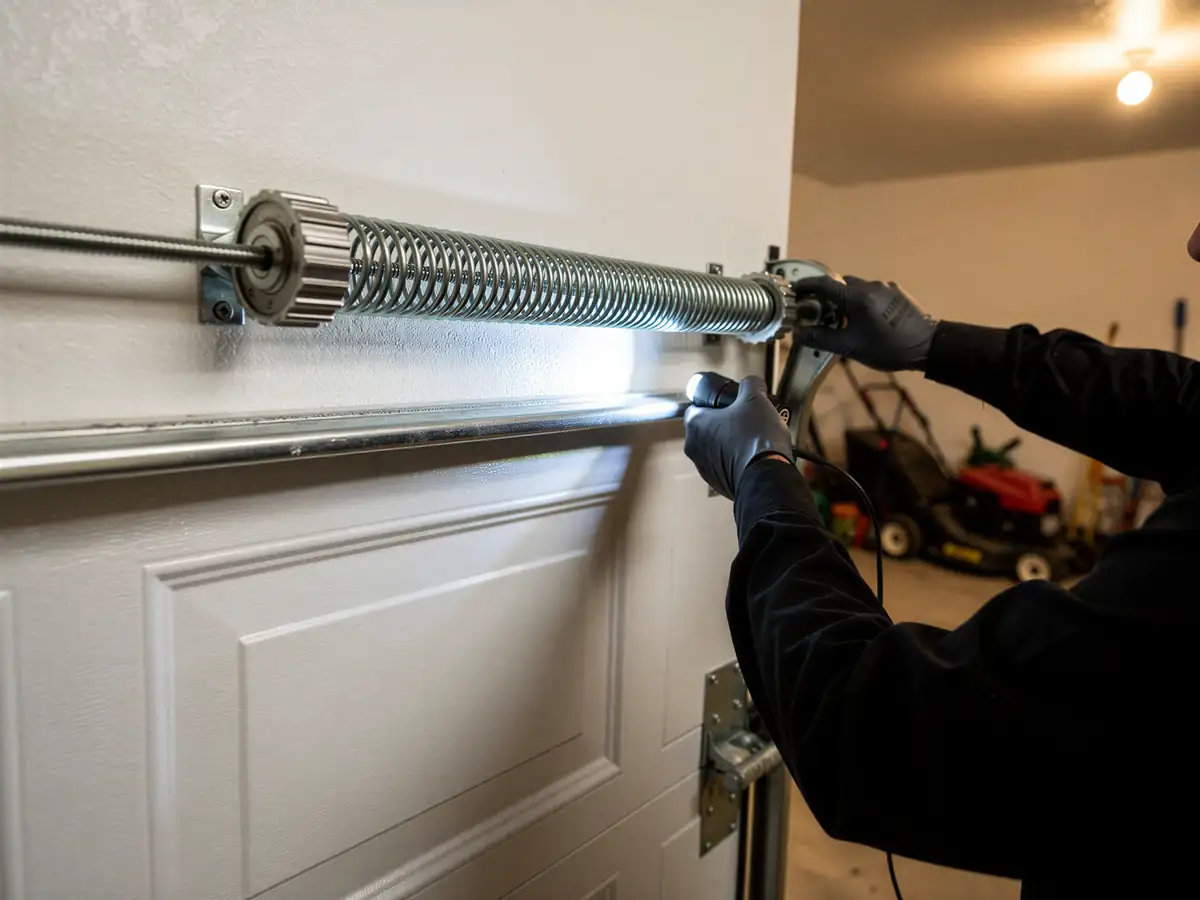
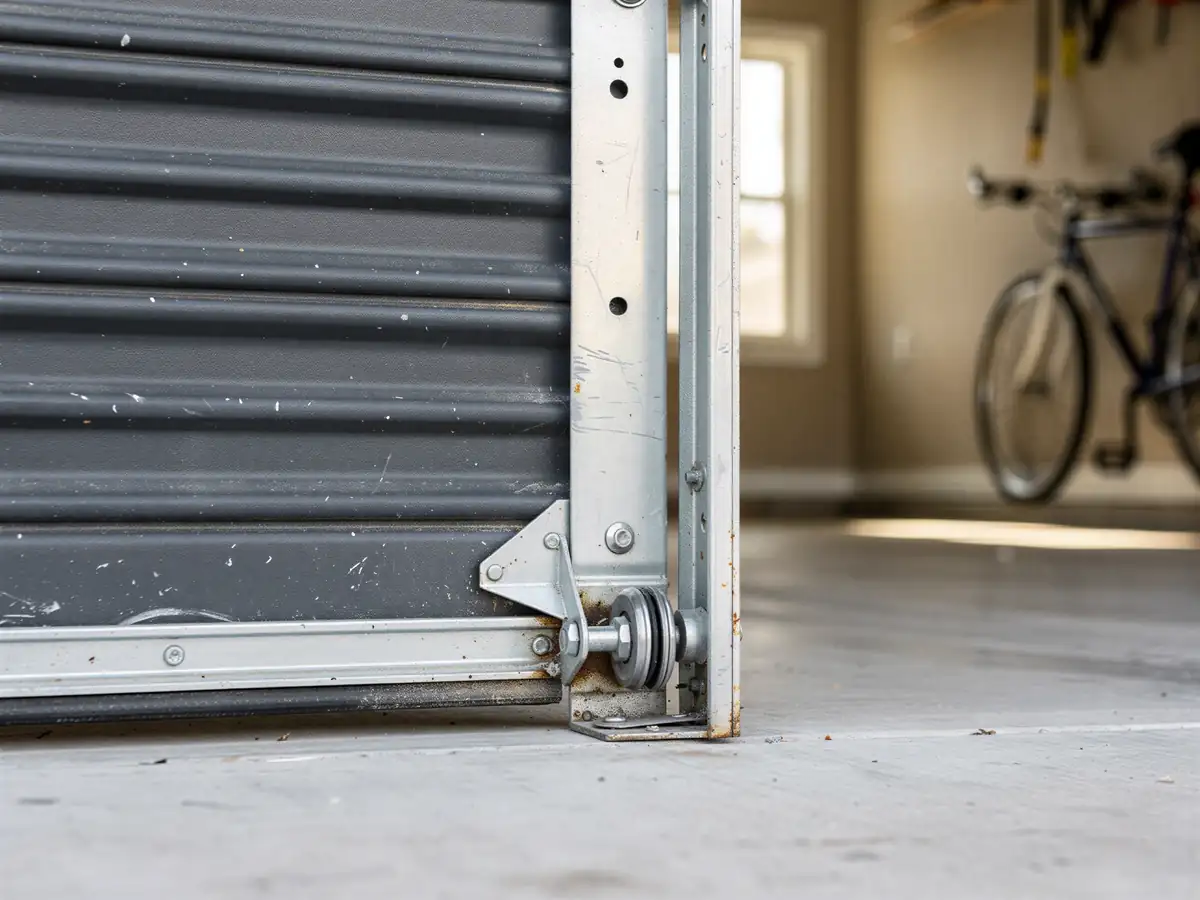
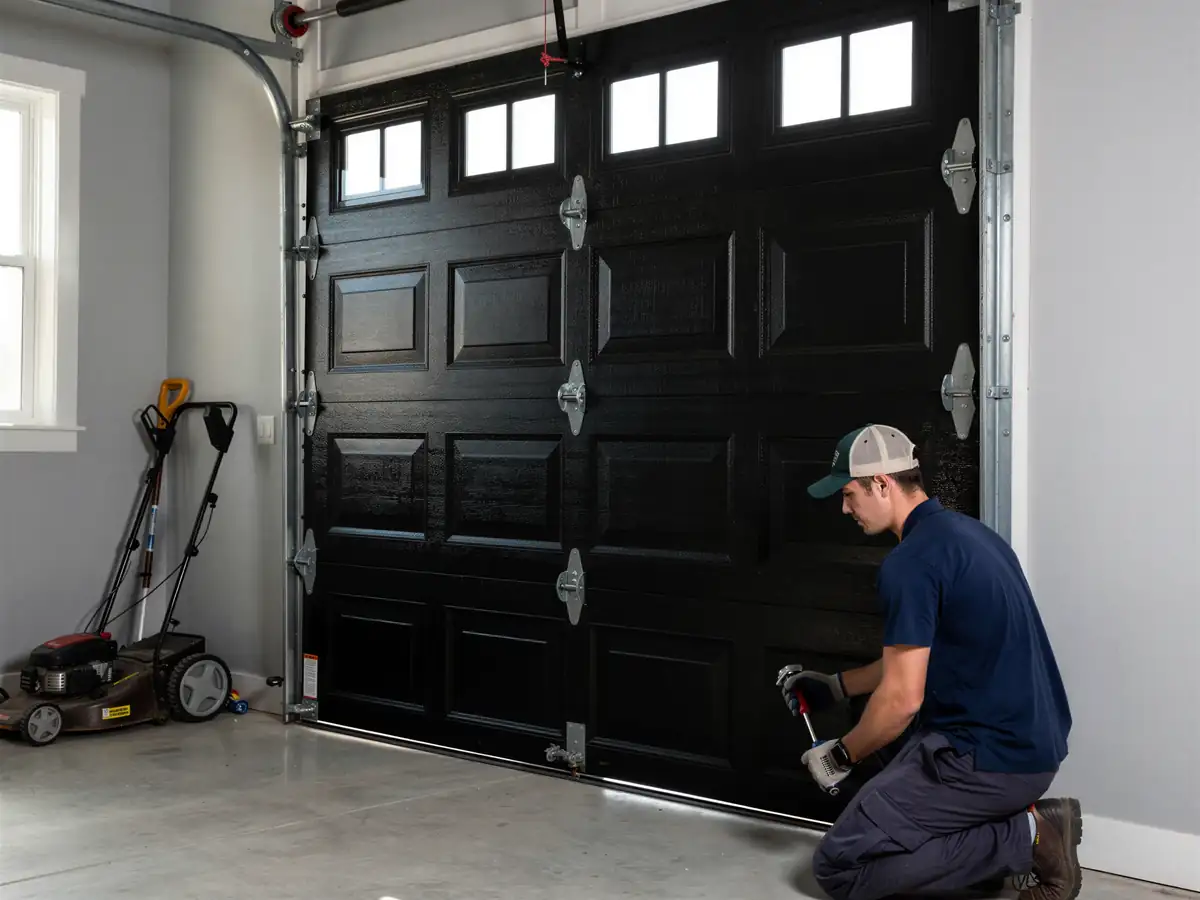
Torsion springs are not on that list. A torsion spring on a standard double door is wound under enough tension to break a wrist or worse if the winding bars slip, and on the 1980s and 90s builds that make up most of the stock in this area, a lot of those springs have never been replaced. If your door has one center spring running across the top - the classic torsion setup - and it's sagging, cracked, or gapped, that's a call, not a project. Same goes for anything involving the high-tension cables or the bottom brackets on an extension-spring system.
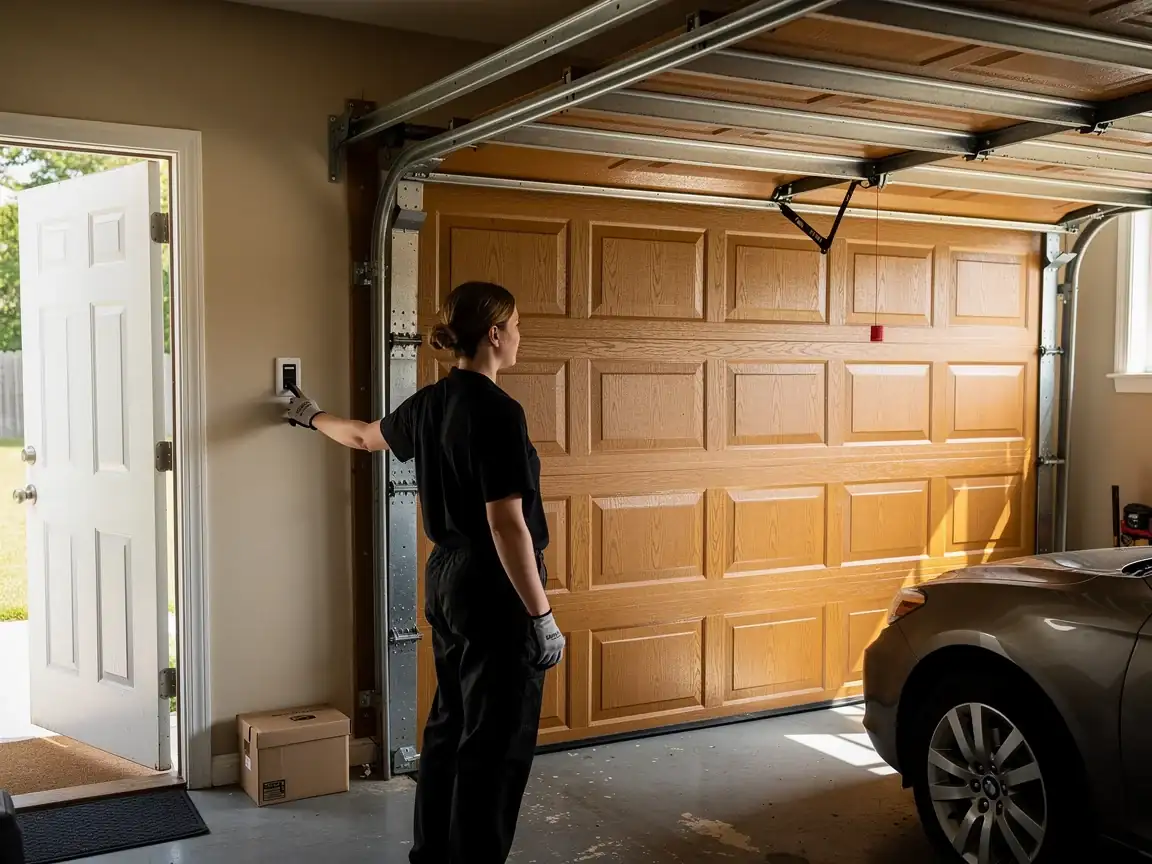
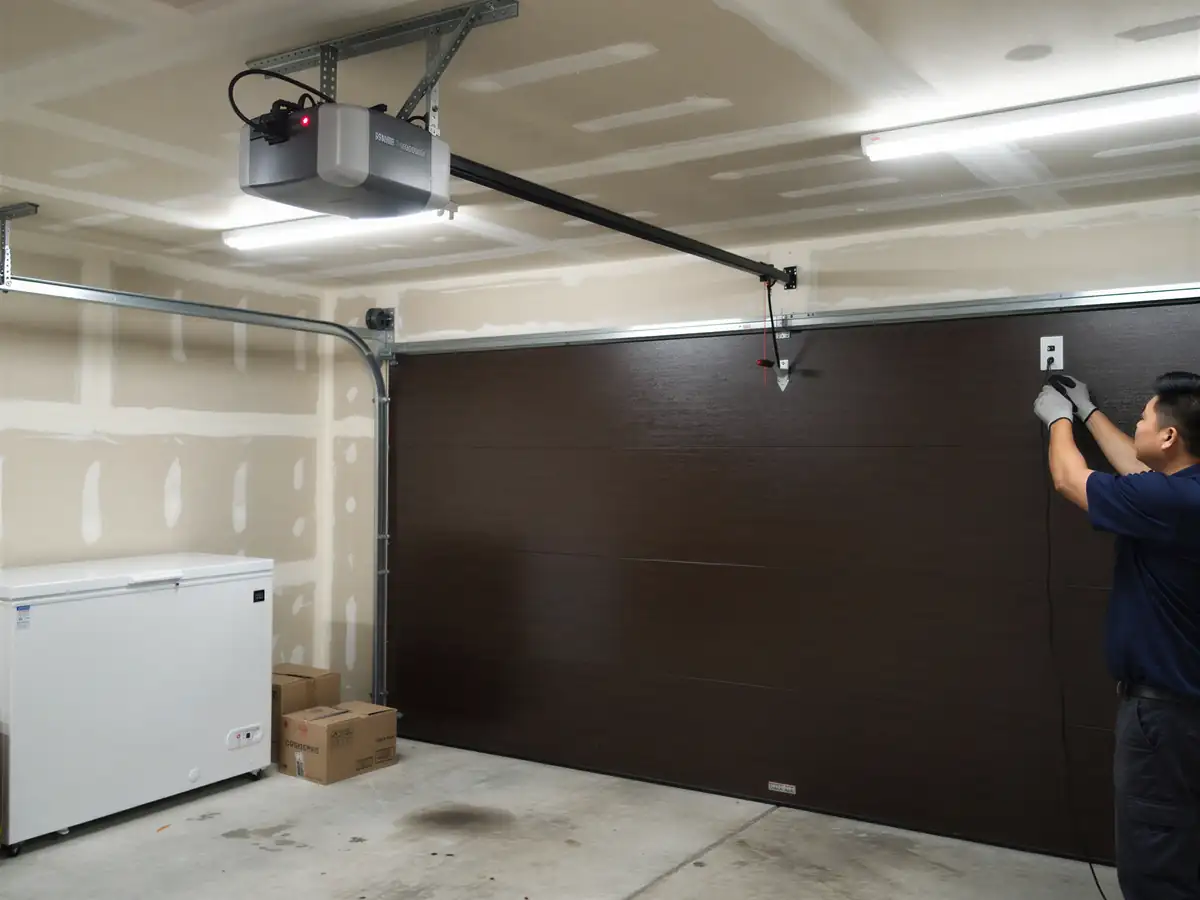
Opener issues sit in a gray zone. Reprogramming a remote or replacing a sensor is doable. Diagnosing why a 20-year-old opener trips the breaker or grinds through a cycle without lifting the door usually means pulling the cover and knowing what a stripped nylon gear looks like versus a bad capacitor. If you're not sure which one you're looking at, don't guess with the power on.
What You Pay
We don't post a flat number here because the job isn't flat
A broken extension spring on a single door and a seized torsion system on a double door aren't the same visit, and we're not going to quote one price and pad the invoice later. What we can tell you is how we price: we look at the door, tell you what's actually wrong, and quote that repair before any work starts. No charge to guess over the phone what we haven't seen in person.
One honest limitation
If your opener or spring system is old enough that replacement parts are backordered or discontinued - which happens on some of the original hardware still running on houses from the 1960s and 70s side of our service area - full replacement of the unit can end up being the more sensible call than chasing parts for a repair. We'll say so if that's the case instead of running up a bill trying to find a part that isn't coming.
Why This Fails Locally
This isn't a generic wear-and-tear story. Across the 13 named areas we cover - from Chickasaw and Prichard a few miles out to Tillmans Corner, Theodore, and Semmes further south and east - the housing stock clusters hard in that 1980s-to-90s window, with a median build year around 1983. That means a huge share of the doors we work on are original torsion or extension setups matched to openers from the same era, sized for lighter doors than a lot of the insulated steel or wood-composite replacements homeowners want now.
The climate here is mild with occasional freeze, which sounds easy on hardware compared to a true winter climate, but it's actually a worse cycle for metal fatigue than steady cold: springs and cables expand and contract through humidity and heat most of the year, then get hit with a hard contraction on the handful of freeze nights. That's a different stress pattern than a house up north deals with, and it's part of why springs on 30-to-40-year-old setups here tend to go without much warning rather than stretching out slowly.