The Complications
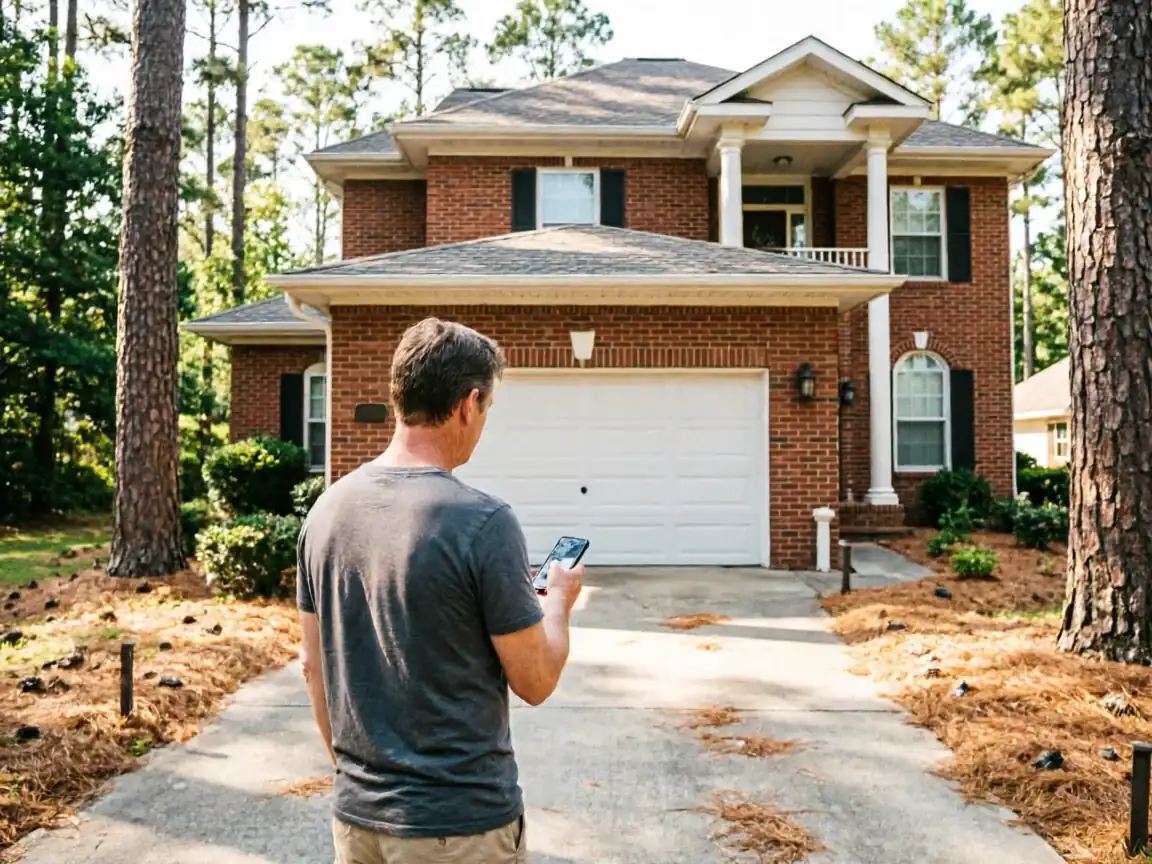
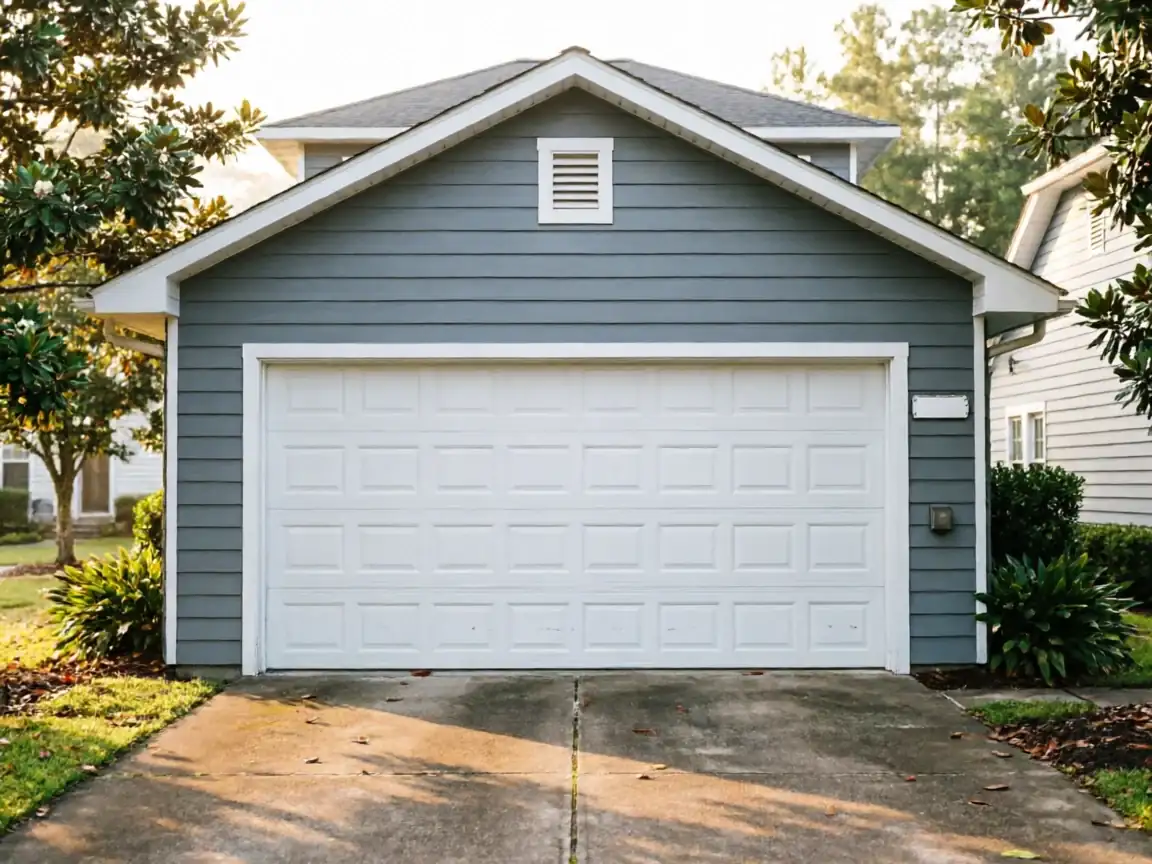
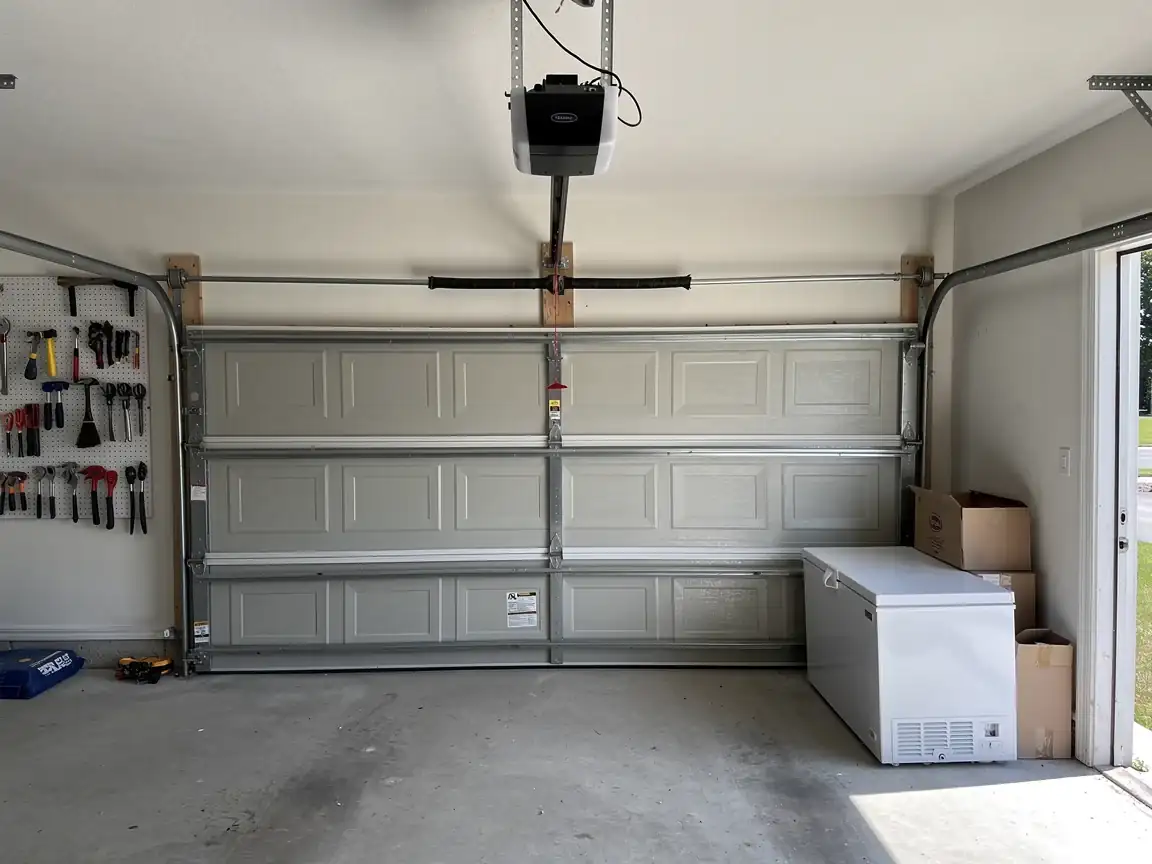
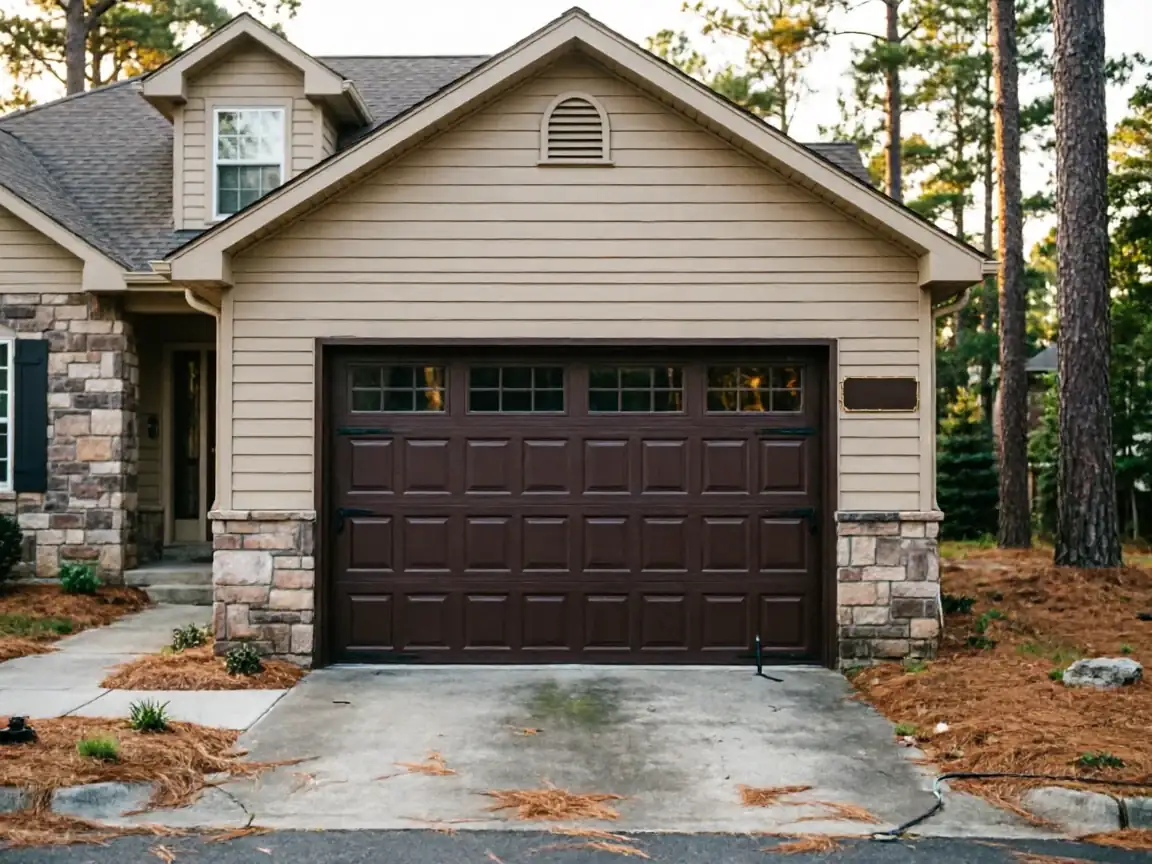
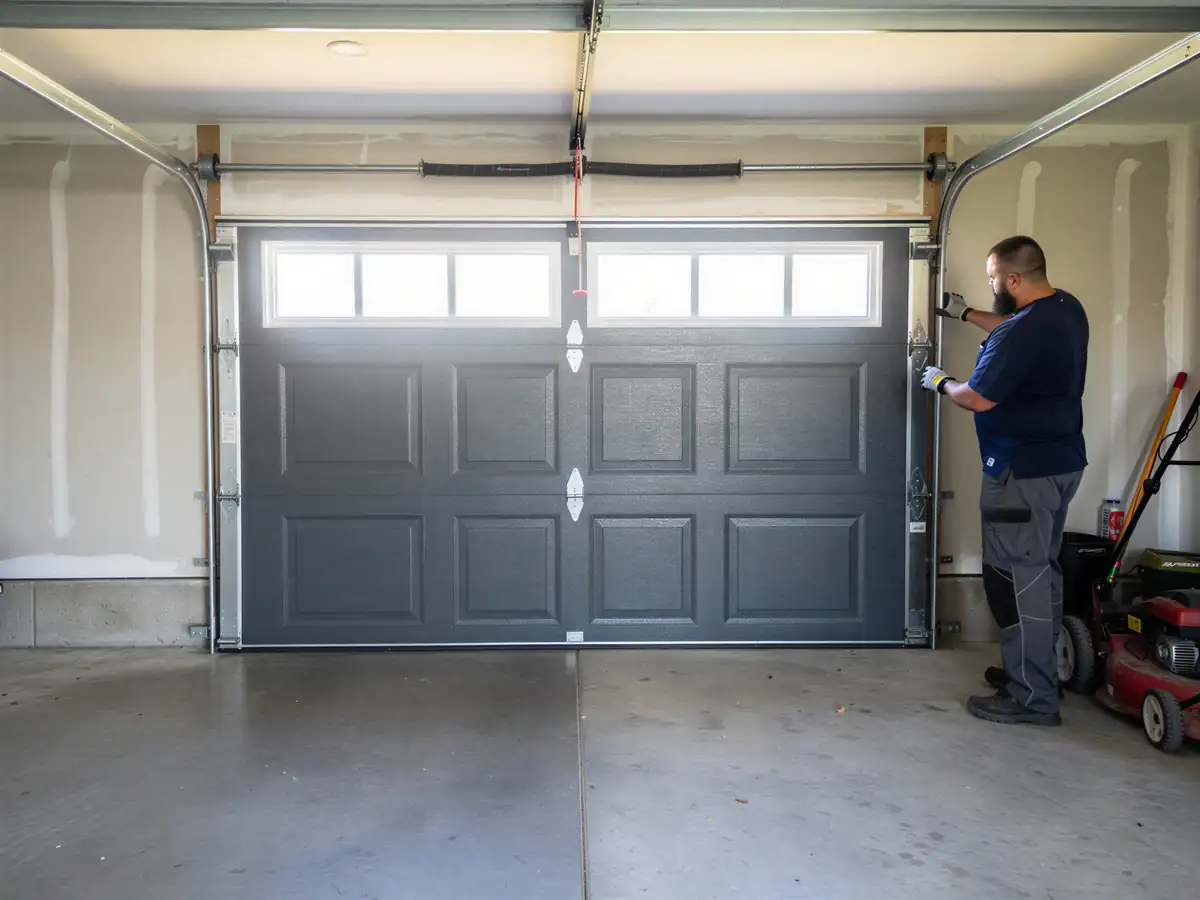
Theodore is one of the smaller pieces of the Mobile service area - 2,169 households total, which is a fraction of what you'd find in the bigger suburbs further out. That size matters for how work gets planned here: there's no depot or standing crew in Theodore itself, so every new-door job is a trip out from Mobile, about ten miles each way. It also means the work that comes up tends to repeat across a handful of house types rather than a wide mix, because a town this size grew up in a shorter building window. Most of what's on the ground here went up around 1988, give or take a few years either side, which lines up with the broader pattern across the area's older suburbs - homes mostly from the 1980s and 90s. That one era of construction means openings sized to the garage-door standards of the time: a little narrower than what gets framed today, header heights that assume a lighter door, and track hardware bolted to studs that have had three decades to shift. A new install here isn't a blank slate - it's a swap into a 35-year-old opening, and the first forty minutes of any job is making sure the replacement actually fits what's there, not what a catalog says should be there.
The Symptom
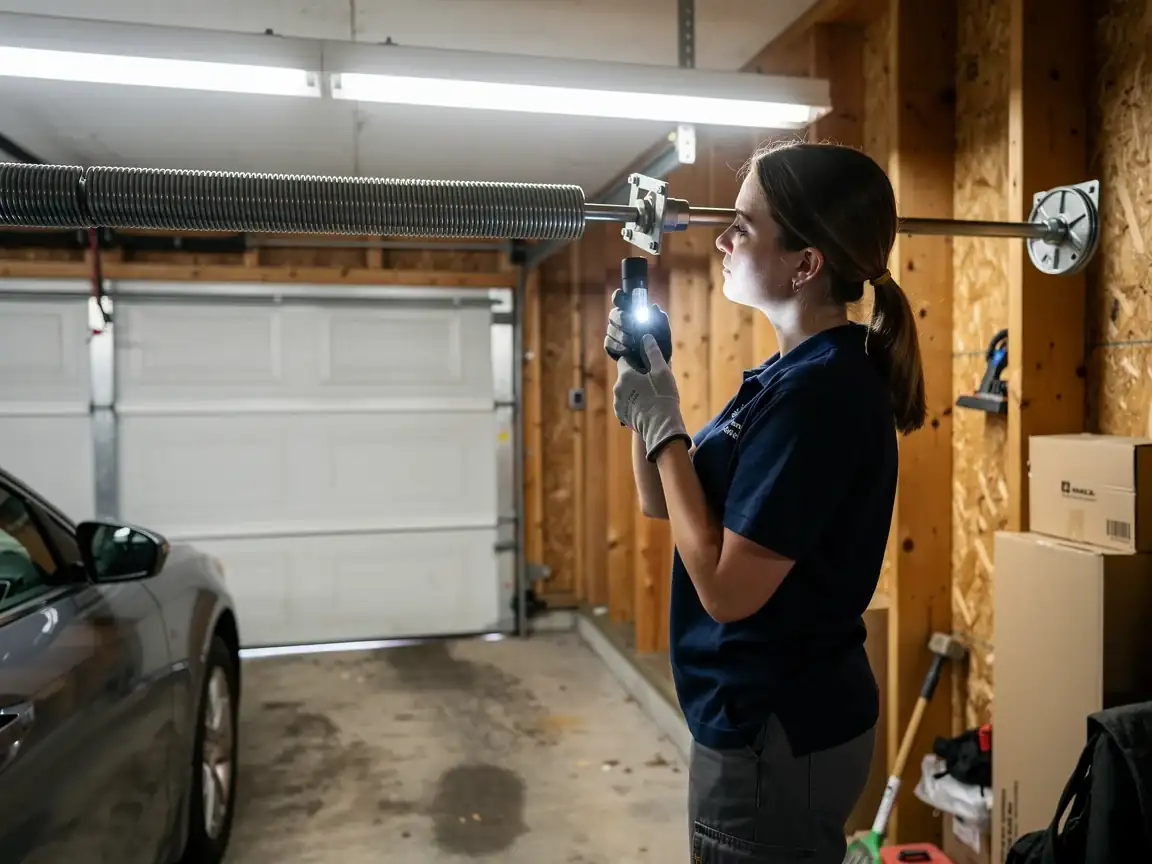
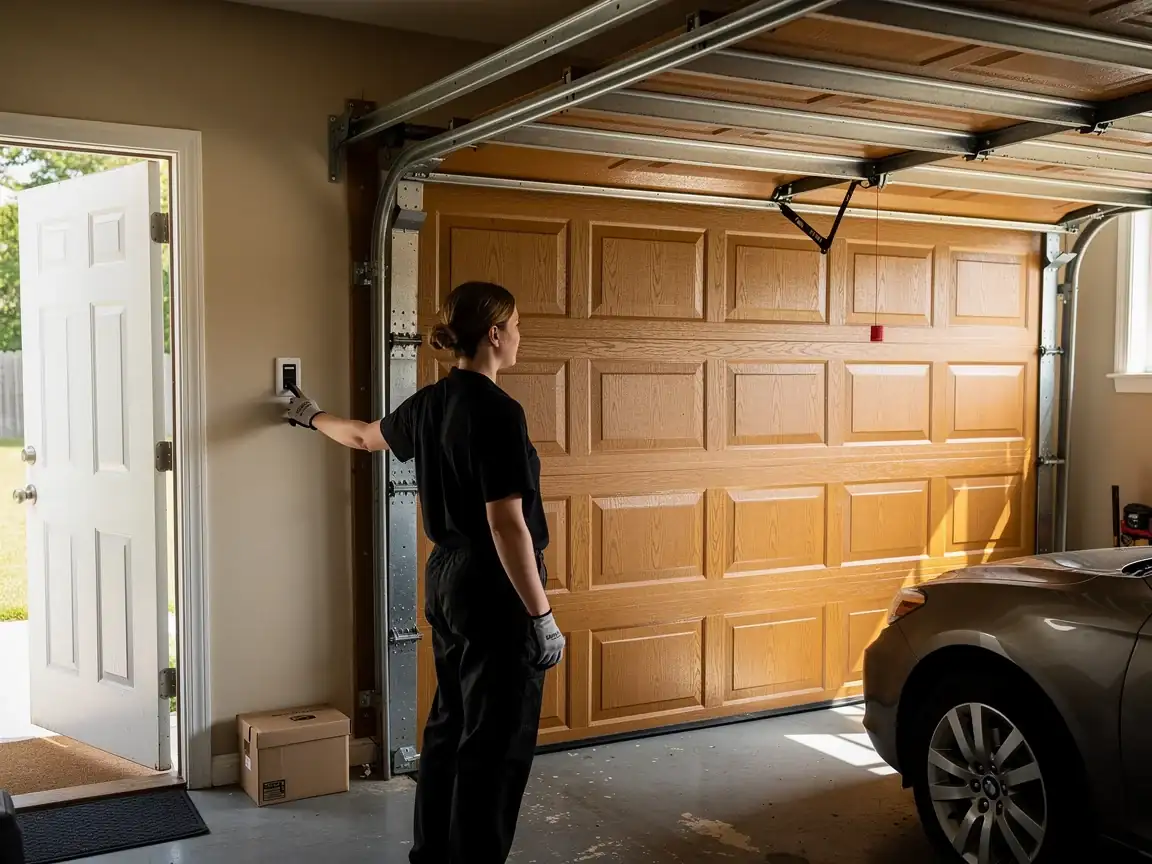
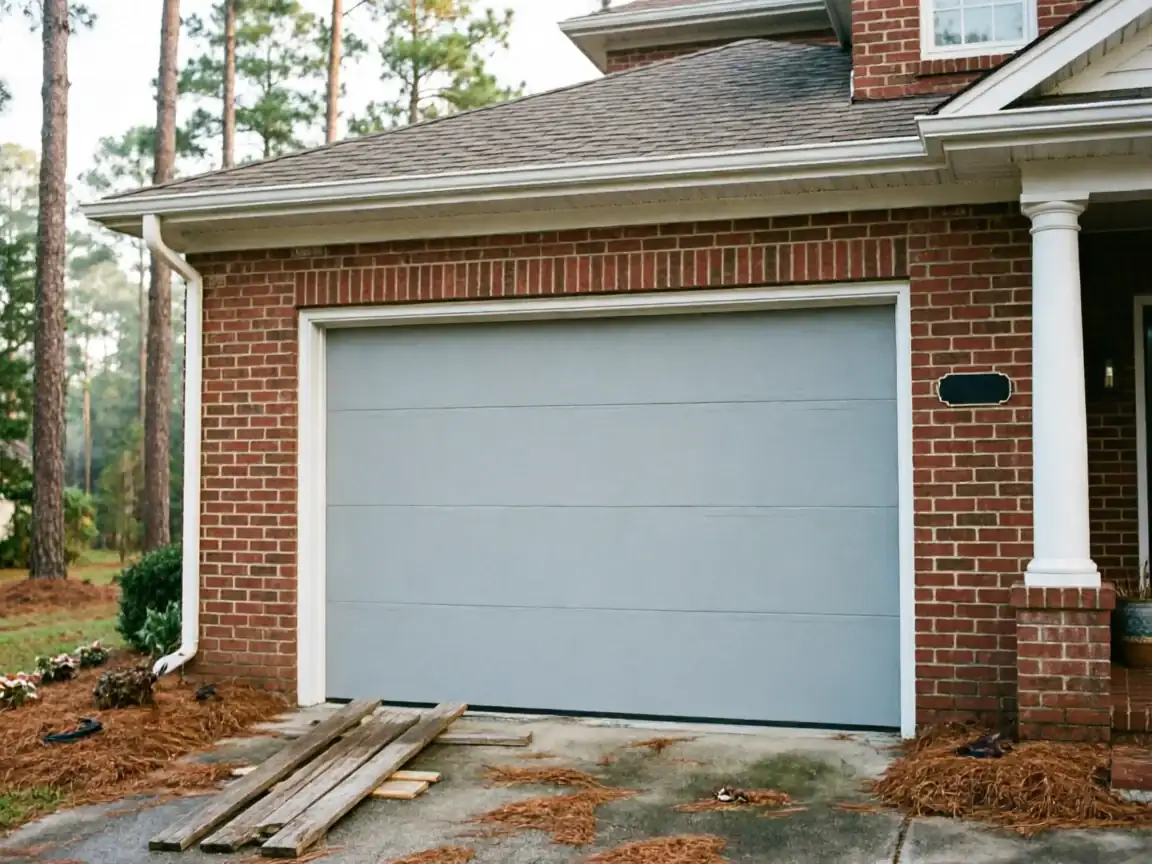
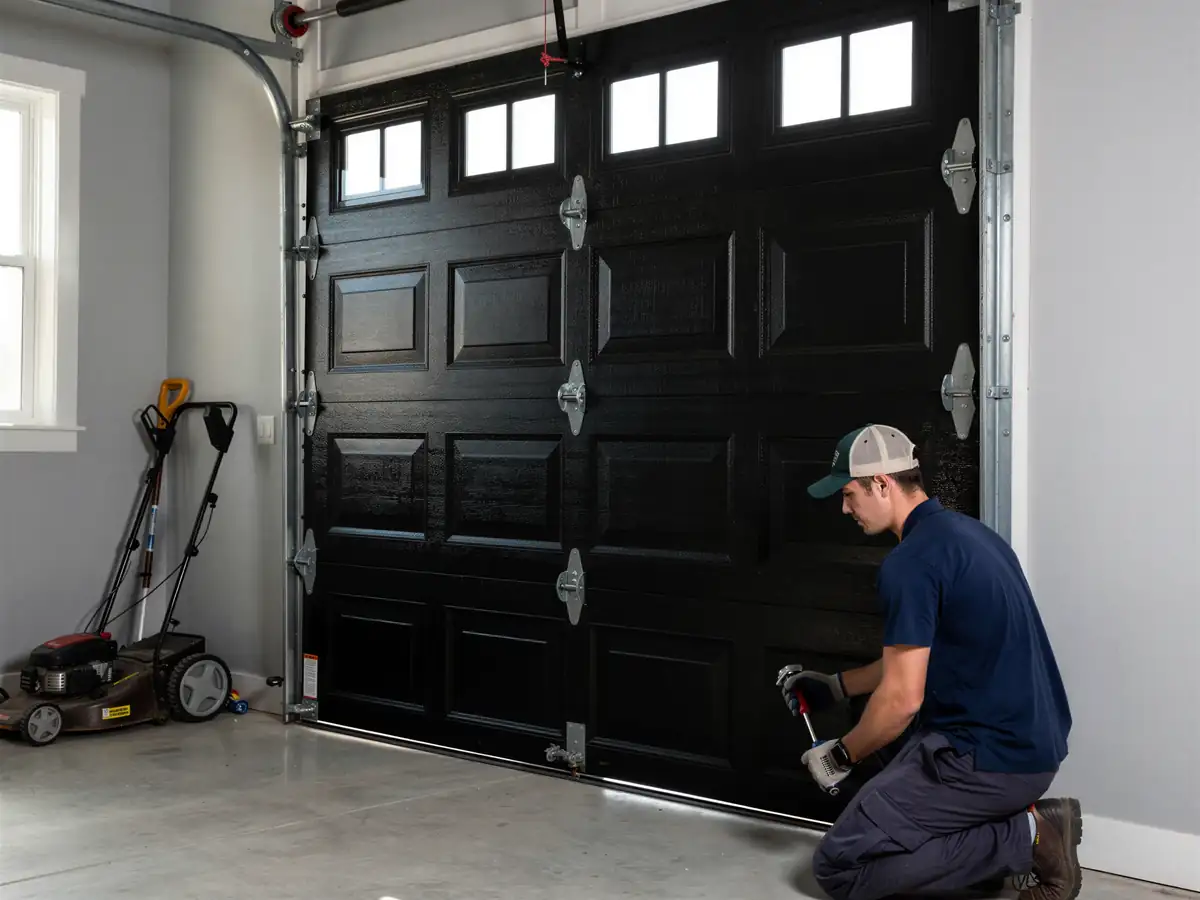
What we hear from Theodore homeowners calling about a new door is rarely "I want a new door" first - it's usually something that broke on an old one and the repair math doesn't work out. A single steel door from a late-80s build has had 30-plus years of spring cycles, and once the drum or the galvanized coating starts going, patching one part just means the next part goes within a year or two. The area's climate doesn't do much damage on its own - it's mild with only occasional freezes - but that off-and-on freeze cycle is enough to dry out and crack original weatherstripping that's never been replaced, and enough to let a slightly out-of-square frame rack further every winter. Owners usually notice the door first: it's heavier to lift by hand than it used to be, it shudders partway up, or the opener strains and reverses on cold mornings. Less often, it's cosmetic - a dented panel from a long time ago that was never a priority until now. Either way, by the time someone in Theodore is shopping for a new door rather than one more repair, the old hardware is usually past the point where a new door bolts onto it cleanly.
What You Pay
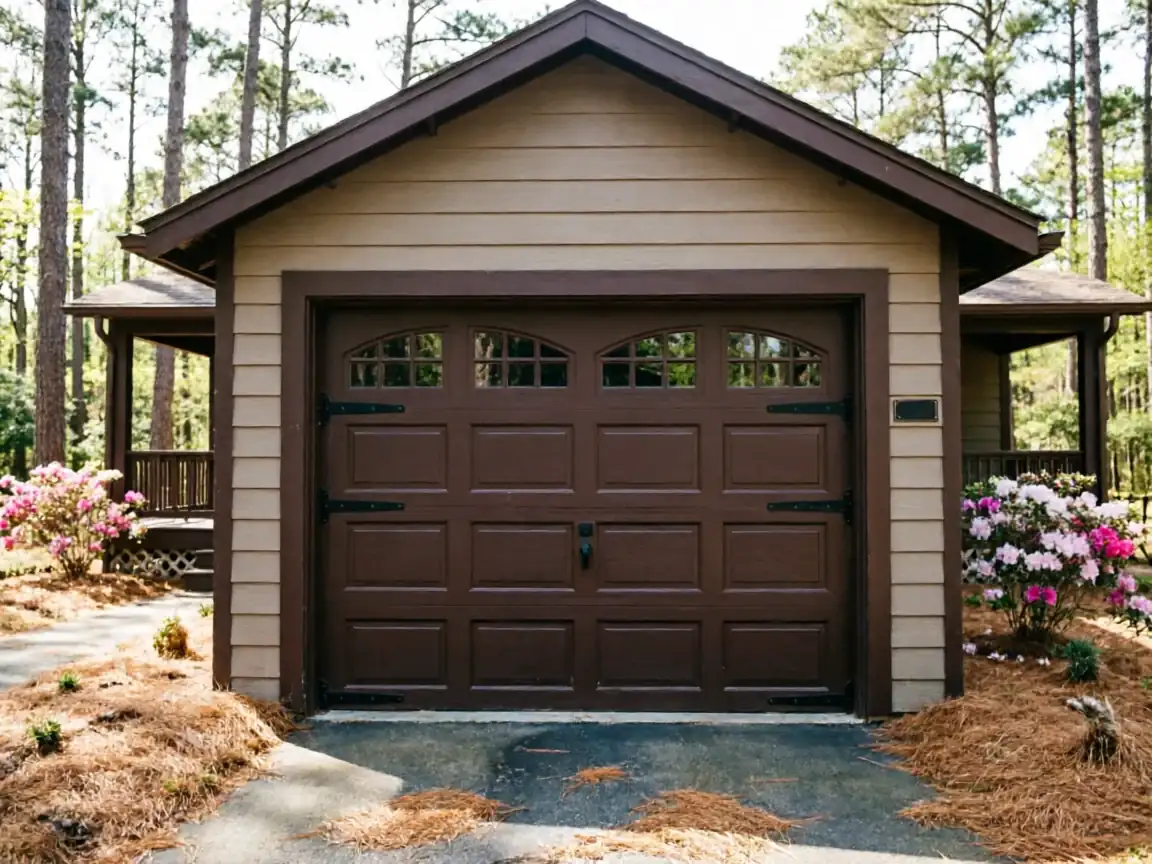
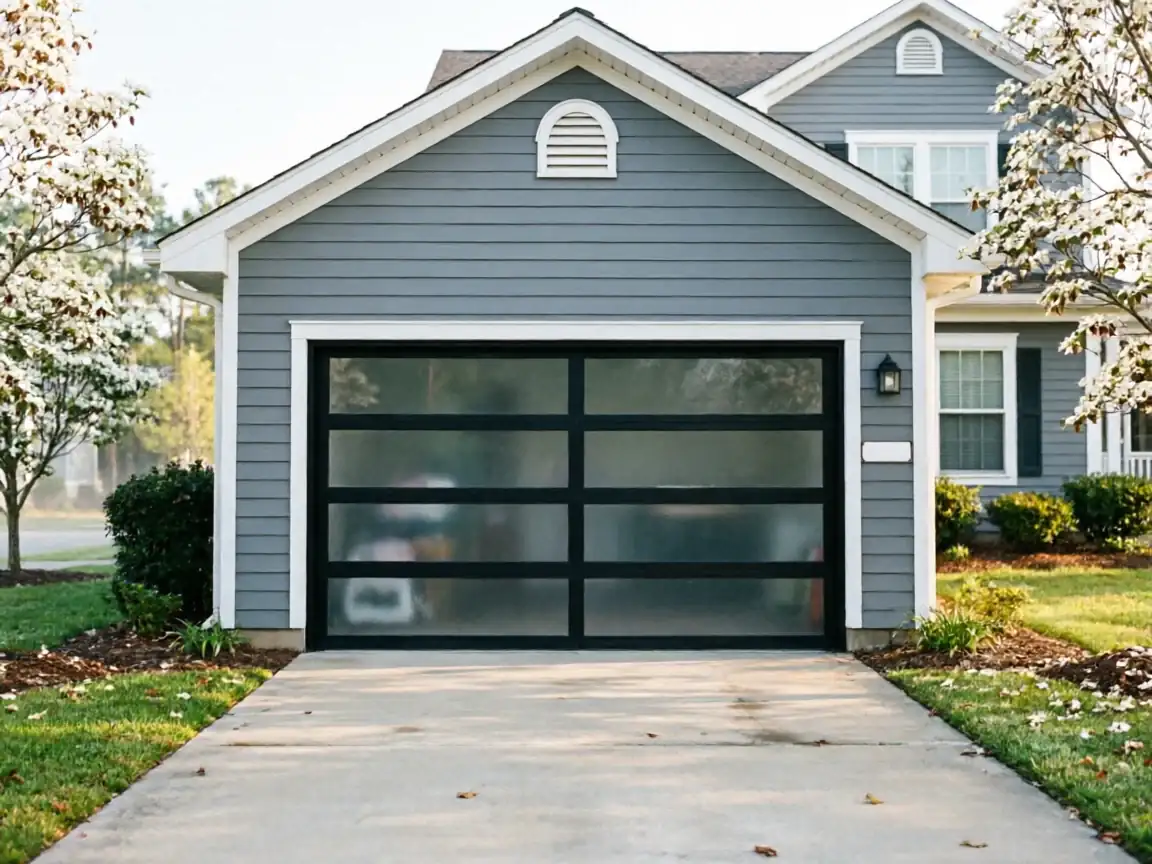
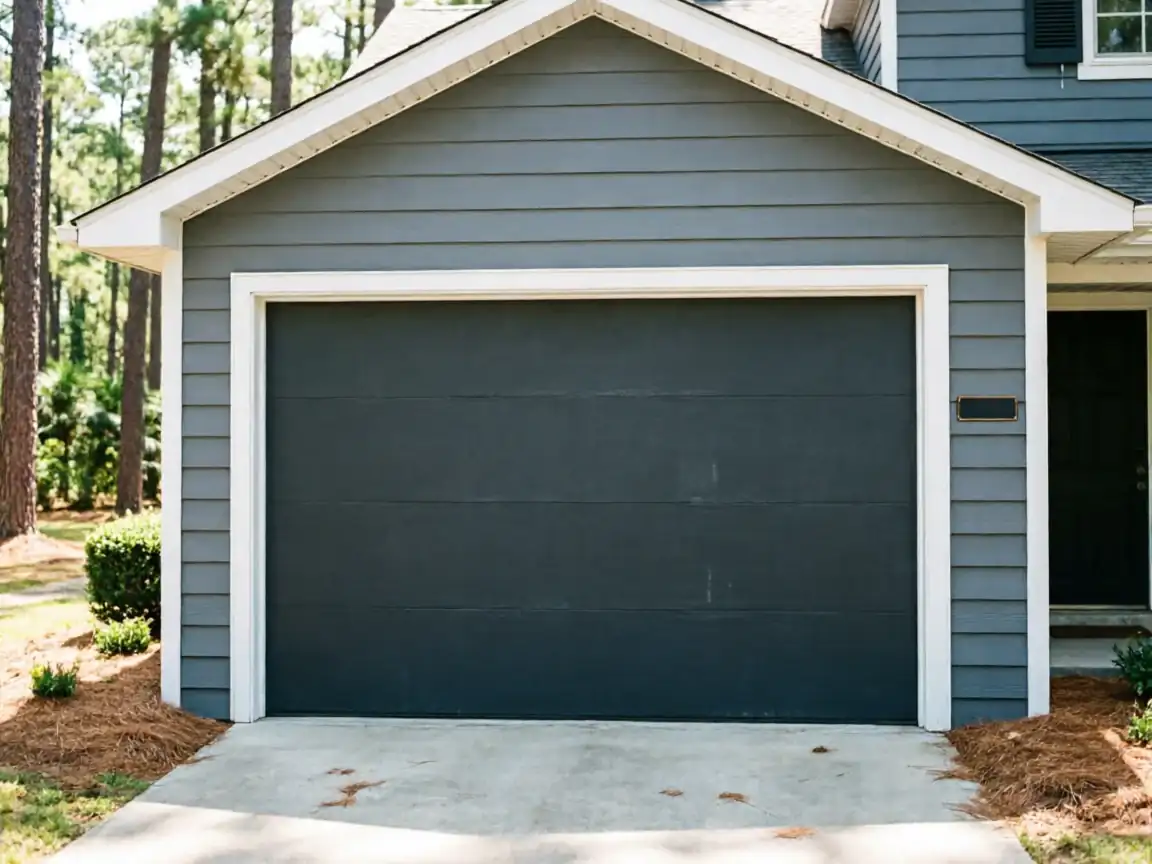
We don't have a flat number to quote here because new-door pricing depends on the door itself - steel, insulated, size, window options - more than on the town it's going into. What we can say is that Theodore's median household income, just under $61,000, sits a little below the wider Mobile-area figure of $62,318, and that shows up in what most owners here actually choose: a solid mid-tier steel door over the high-end insulated or custom-wood options that get more traffic in the pricier suburbs further out. That's not a ceiling - we'll quote and install whatever door an owner wants - but it means our default recommendation for a Theodore job leans toward the option that holds up well without paying for insulation ratings this climate doesn't demand. One honest limitation: we don't keep every size and finish in stock on the truck, so a non-standard width or a specialty window pattern usually means a short order wait before install day, same as it would from any installer in this area.
Why This Fails Locally
A generic national quote - the kind you get from a big-box install service that prices by zip code and ships a crew from wherever - tends to assume either new construction or the climate specs of wherever the price sheet was written. Neither matches Theodore. The openings here are mostly older, built to 1988-era framing, and the climate is mild with occasional freezes rather than the hard-freeze country that drives a lot of standard door specs further north. A door picked off a generic list might be rated for insulation loads this town doesn't need, or sized for a header clearance that doesn't exist in a house built in that window. The other failure point is logistics: Theodore doesn't have its own installer base the way the larger towns in this area do, so a company unfamiliar with the distance will often under-quote the trip or skip the framing check entirely and show up with a door that doesn't fit the opening. Getting it right here means treating the install as a retrofit into a specific, older opening, not a generic new-construction job - and that's the difference between a one-visit install and a return trip to fix a door that was never going to fit.