The Symptom
The door won't budge, or it feels like it weighs three hundred pounds the second the opener tries to lift it. Sometimes you hear a bang from the garage first - that's the spring letting go. Other times it's quieter: the door creeps up an inch, stalls, and the opener motor just strains and clicks.
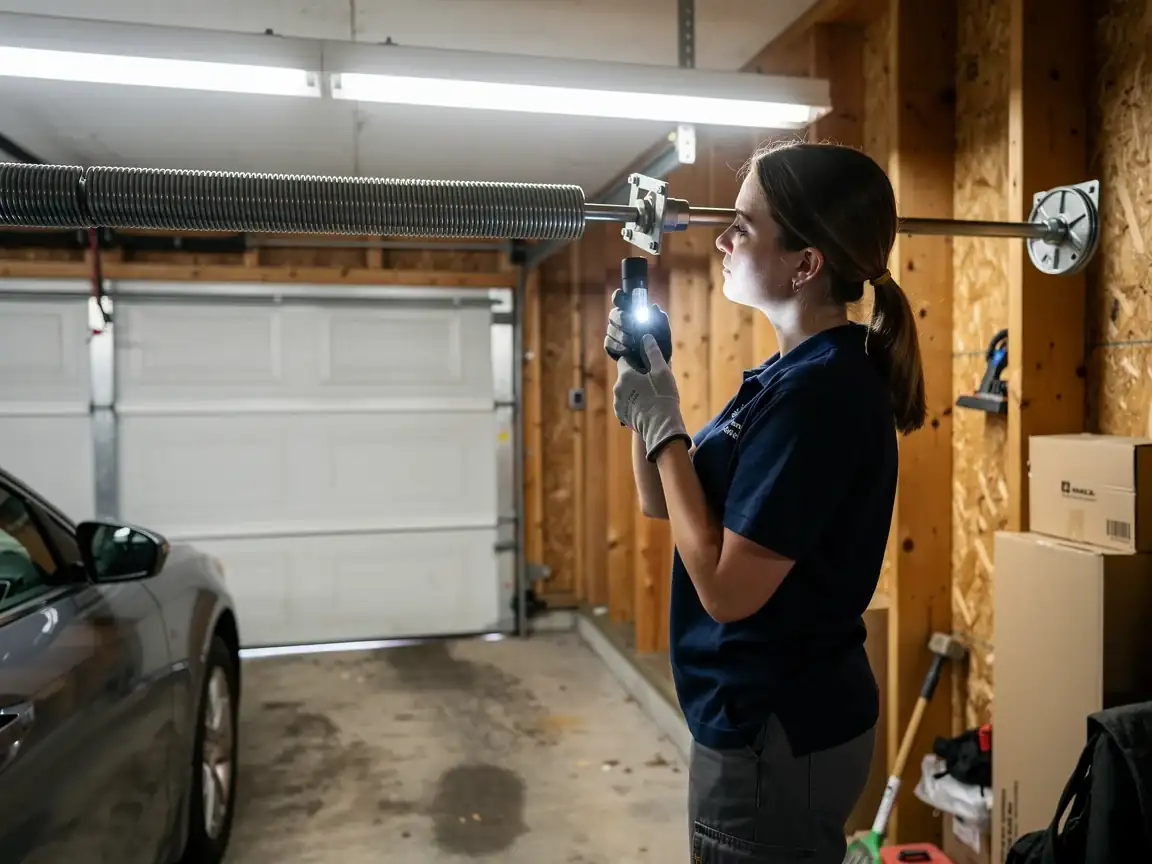
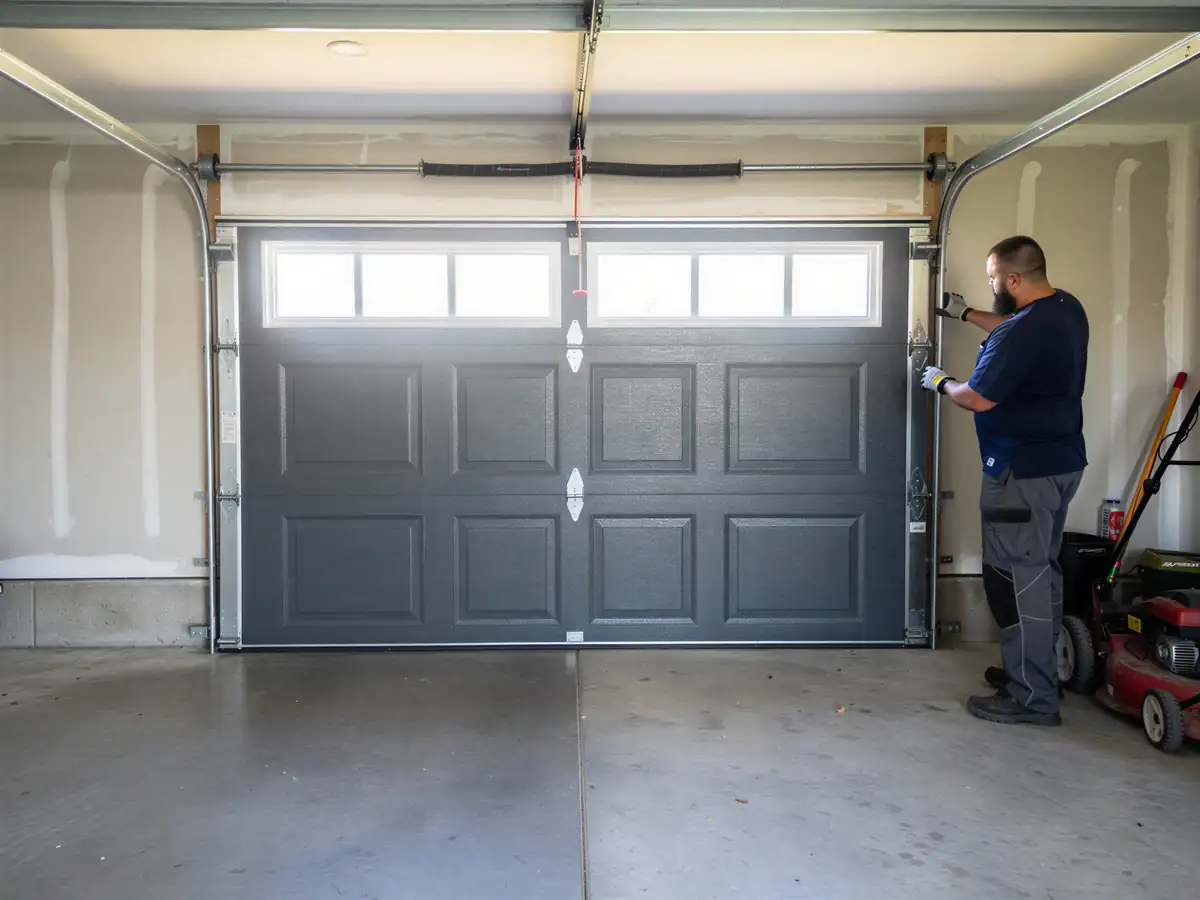
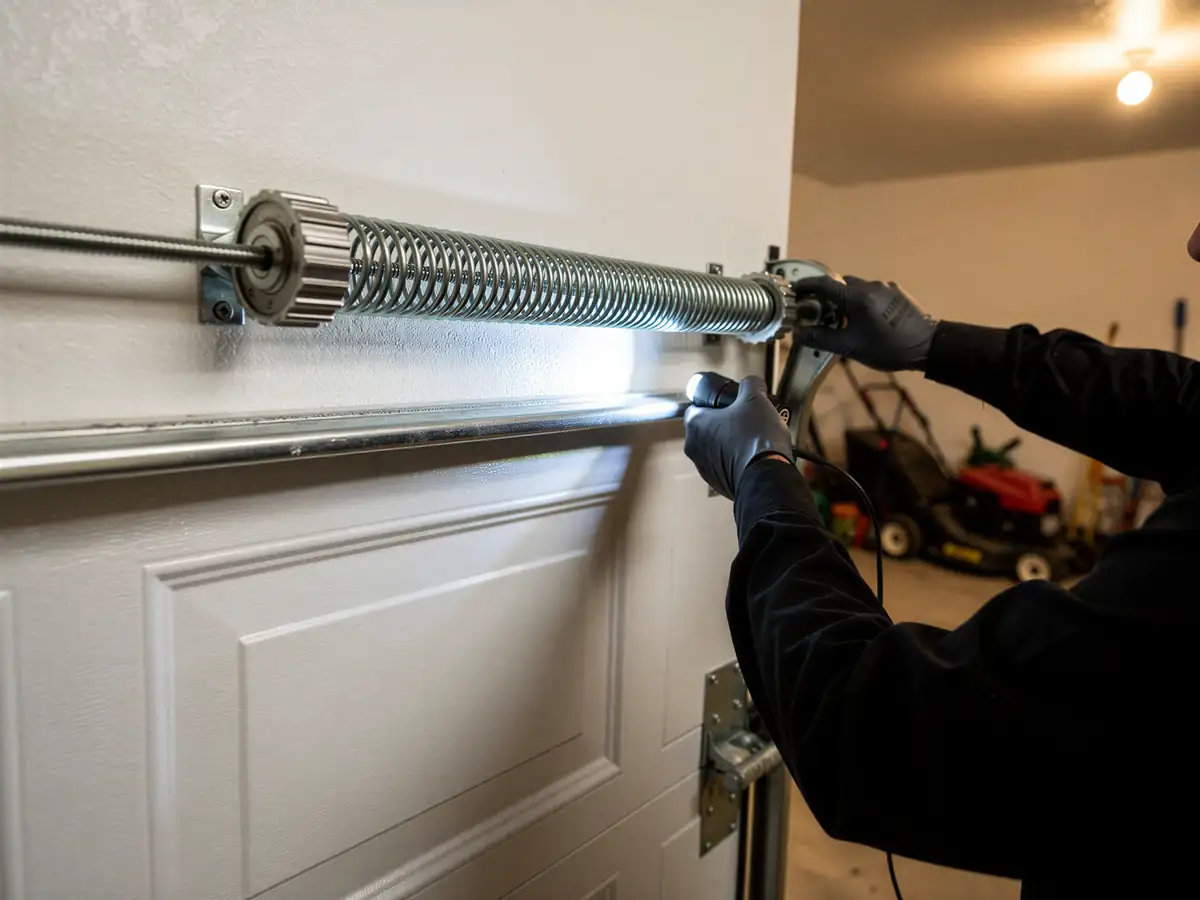
Most of what we get called out for on this is a broken torsion spring, the coiled spring mounted on a shaft above the door that does the actual lifting work. The opener was never built to lift a garage door on its own; it just pulls where the spring has already done most of the job. When the spring snaps, the opener is suddenly trying to do a task it can't handle, and you'll usually smell a faint burning odor from the motor if you keep trying it.
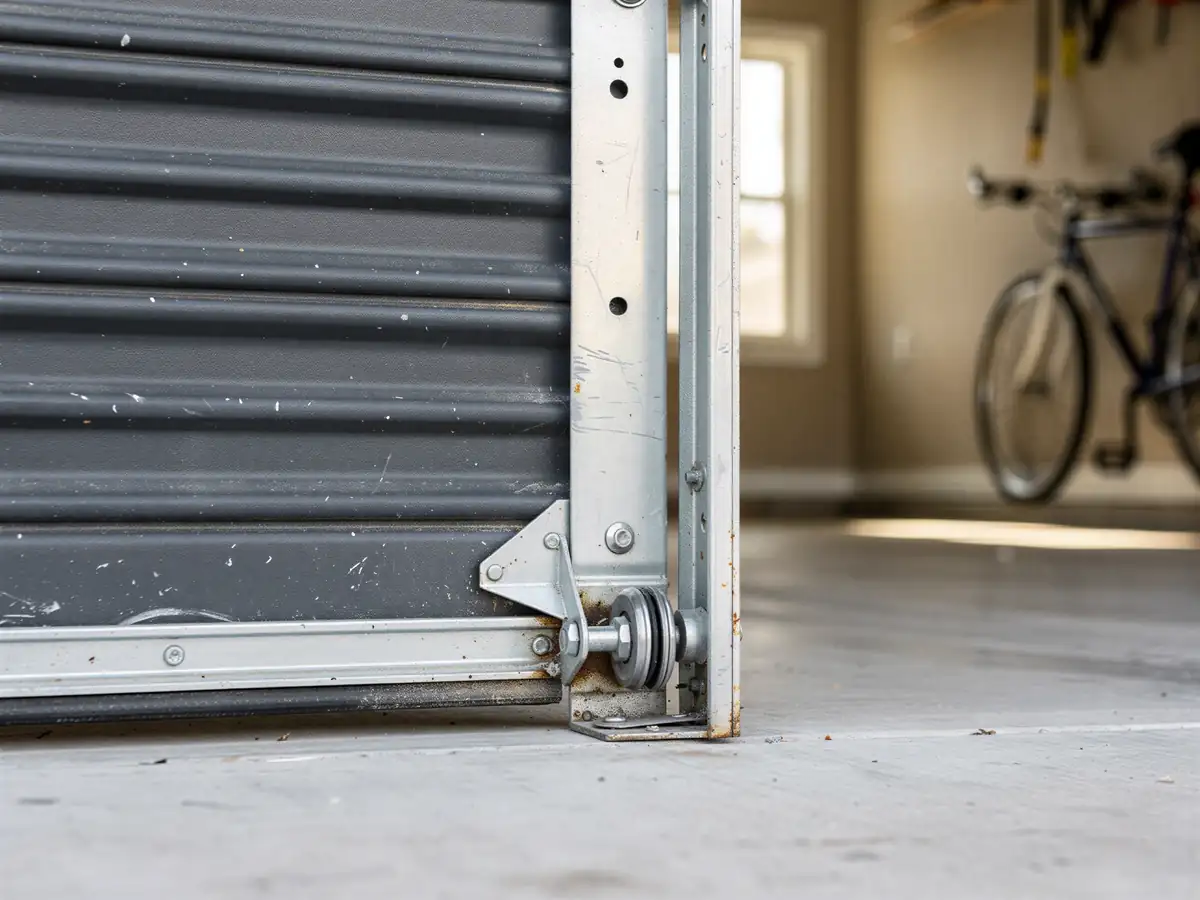
A cable can look like the same problem - a loose or frayed cable on one side will make the door hang crooked, or drop fast on one corner when you pull the release. That's a different repair with different parts, but the symptom from the driveway looks almost identical to a dead spring. If your door is tilted rather than just stuck, say so when you call; it changes what we bring on the truck.
The DIY Question
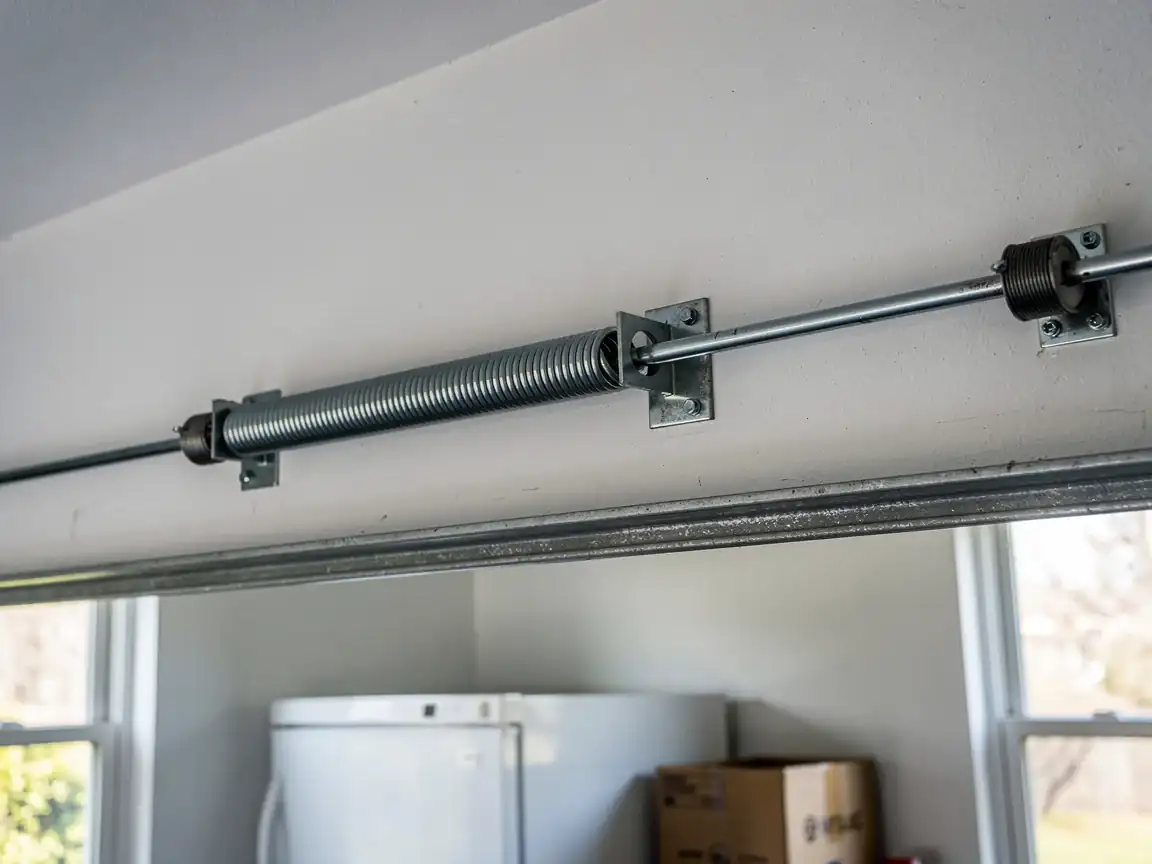
Torsion springs are wound under real tension - enough stored force to break fingers or worse if the winding bars slip. This isn't a job we'll walk you through over the phone, and it's not one we'd want you doing with hardware store bars and a ladder. Extension springs (the kind that stretch along the horizontal tracks on some older setups) are a bit more forgiving to look at but still carry the same risk when they let go.
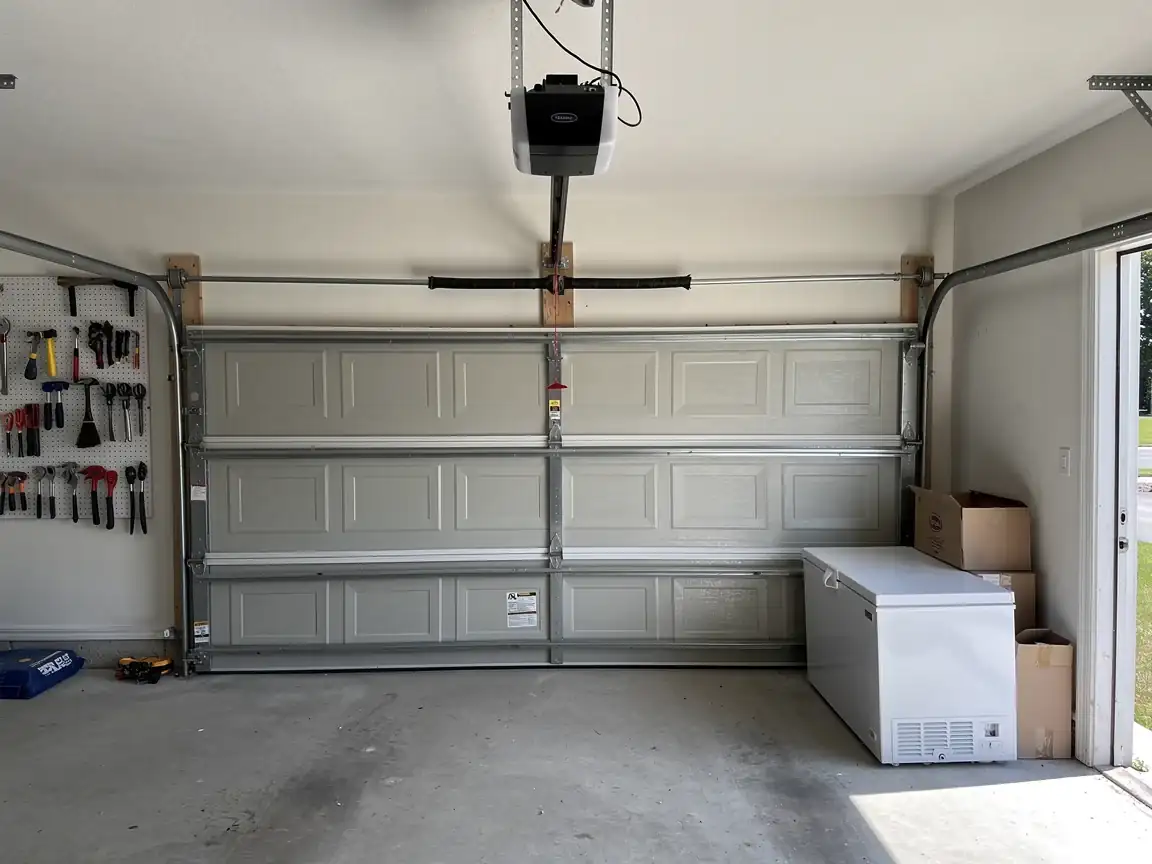
What you can safely check yourself: whether the door is a torsion-spring setup (one or two springs on a shaft centered above the door) or an older extension-spring setup (springs running along the tracks). That tells us what to load on the truck before we drive out, which saves a second trip. You can also look at the spring itself - a torsion spring with a visible gap in the coil is broken, full stop.
What we won't do is tell you it's a ten-minute fix with a wrench. It isn't. If you've already got the winding bars out and you're reading this from the garage, put them down and give us a call instead.
What You Pay
We don't publish a flat number for spring repair because the job isn't the same from house to house
Torsion versus extension springs, single door versus double, and whether the drums or cables need replacing alongside the spring all change the parts list. What we can tell you is what drives the cost: the spring size and wind (which depends on door weight and height), whether one spring is broken or both need replacing together, and whether the cable or roller on that side also failed when the spring went.
Across the service area, a lot of the doors we see are original to houses built in the 1980s and 90s, and on those, the drums and bearings are often as worn as the spring itself
Replacing just the spring on a 35-year-old shaft sometimes means you're back out again in a year for the bearing. We'll tell you straight if that's the case rather than quote a spring-only fix that won't hold.
Give us the door size and whether it's one spring or two and we can talk through it before we ever pull in the driveway
Why This Fails Locally
Housing in and around Mobile runs mostly 1963 to 1999, with a lot of it concentrated in the 1980s and 90s build-out across neighborhoods. Springs rated for that era's doors were never built to run past a few thousand cycles at today's garage use, so a lot of what we find is original hardware that's simply aged out - the owner just didn't know it had a service life.
The climate here matters too. Mobile sits in a mild band with occasional freeze, so you don't get the deep-freeze snap failures some northern markets see, but you do get steady humidity swings year-round. That moisture works into the coil over decades and causes metal fatigue even without a hard freeze to blame - it's slower, but it gets there. A spring that's rusted along the coil is weaker than it looks, and it tends to go without much warning.
Put the two together - 1980s-era hardware plus decades of humidity cycling - and spring failure on these doors isn't random bad luck. It's closer to the expected lifespan of the part finally catching up with the house.