The Symptom
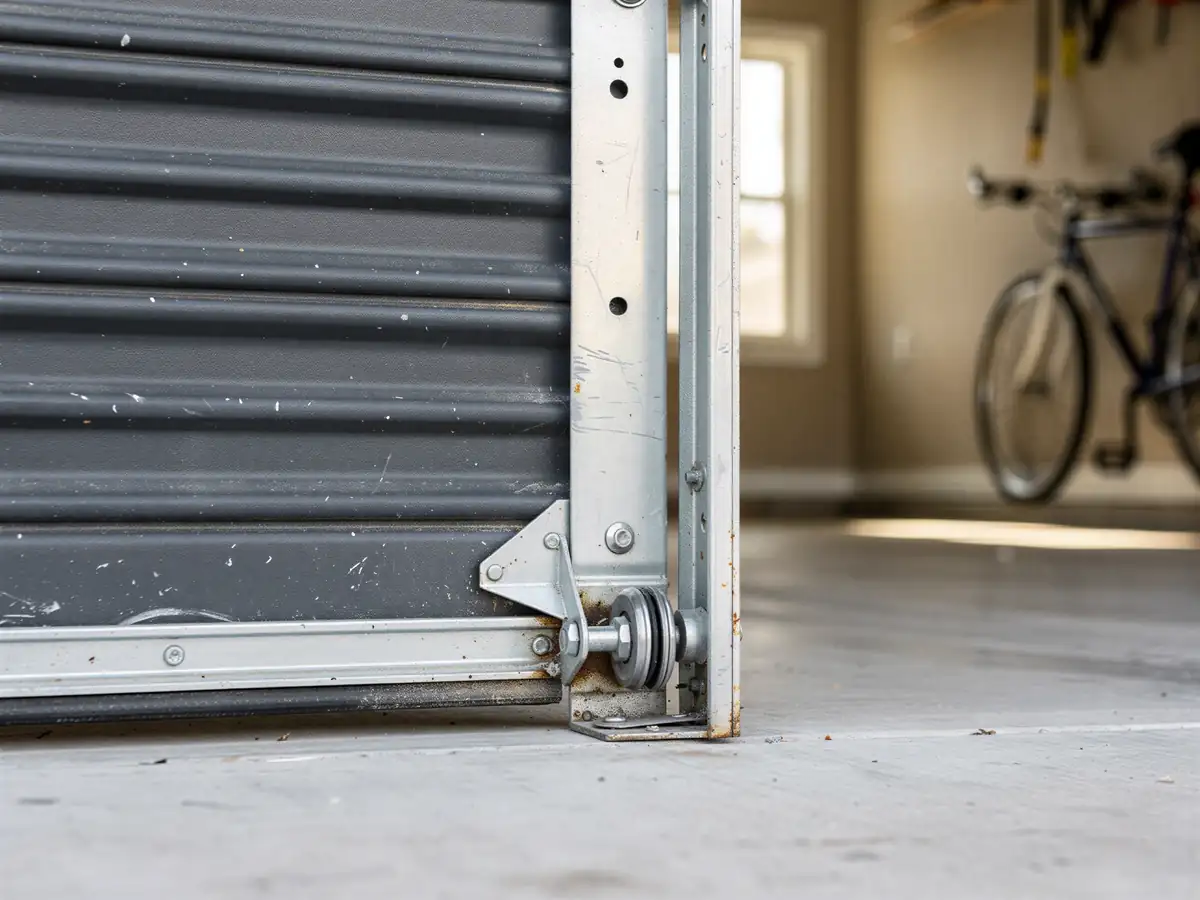
You hit the opener and the door shudders, cocks sideways, or stops halfway with one corner hanging lower than the other. Sometimes a roller has popped clean out of the track. Sometimes the track itself has pulled away from the jamb a quarter inch, enough for the roller to ride the edge instead of the channel. On older doors you'll often hear it before you see it - a grinding scrape on the way up, then a bang as something lets go.
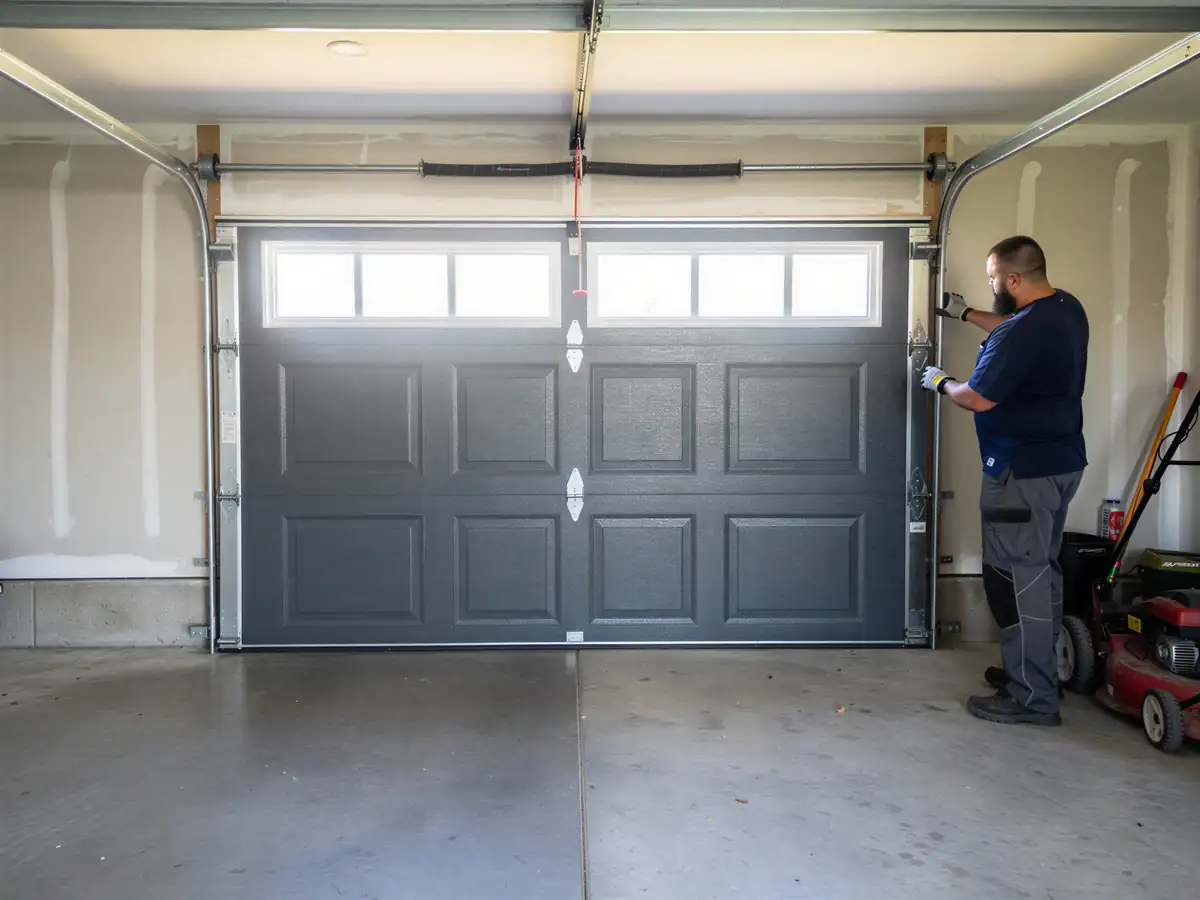
This isn't the same as a door that won't open at all. A door off track usually still has power to the opener and the spring is often fine - the problem is mechanical alignment, not the lift system. That said, a door hanging crooked on one track and seated on the other is under uneven tension, and running the opener again can bend the track further or pull the bracket out of the framing. If one side is visibly lower than the other, or a cable has come off the drum, that's a different failure mode layered on top of the track problem, and it changes what the fix involves.
Most calls we get for this start the same way: someone backed into the door, a roller finally gave out after years of wear, or the track bracket worked loose from the jamb. We look at which of those it is before touching anything.
The DIY Question
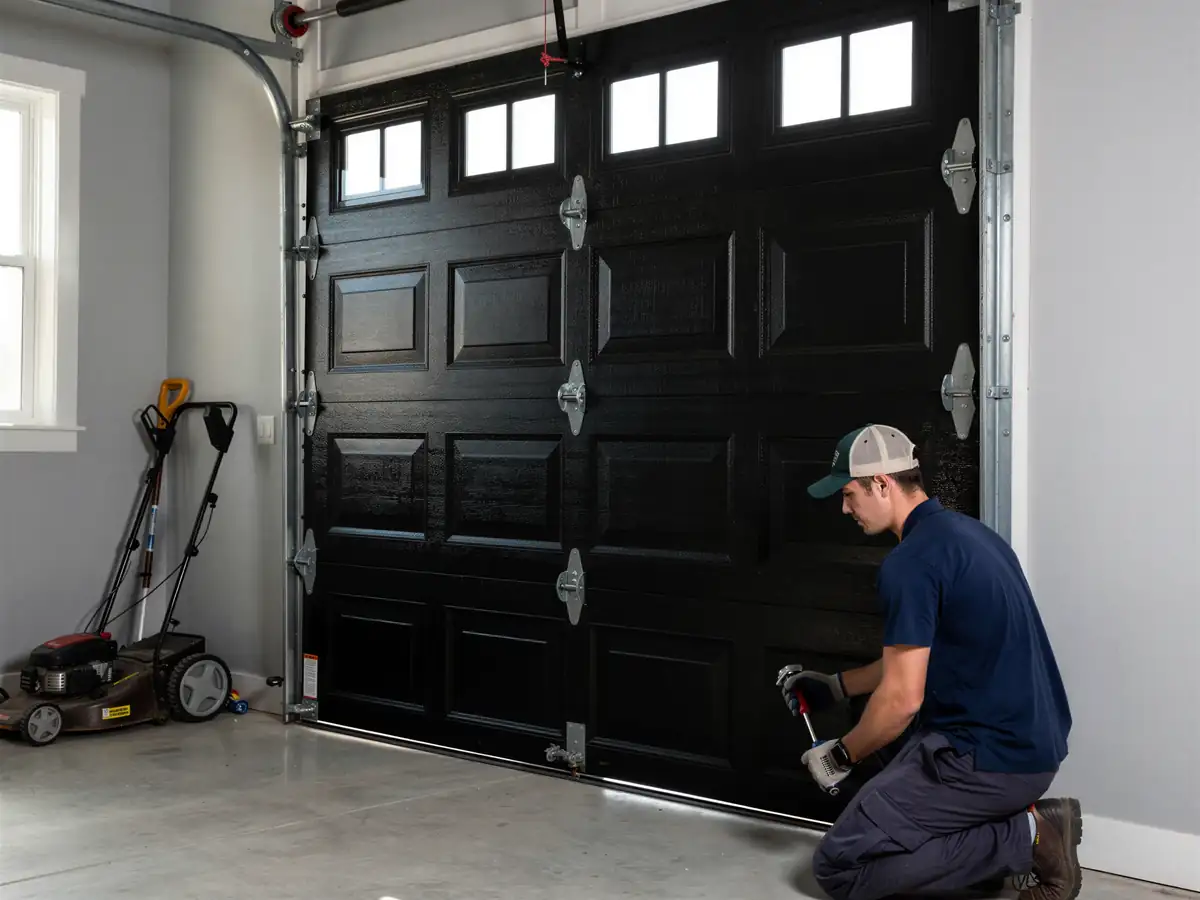
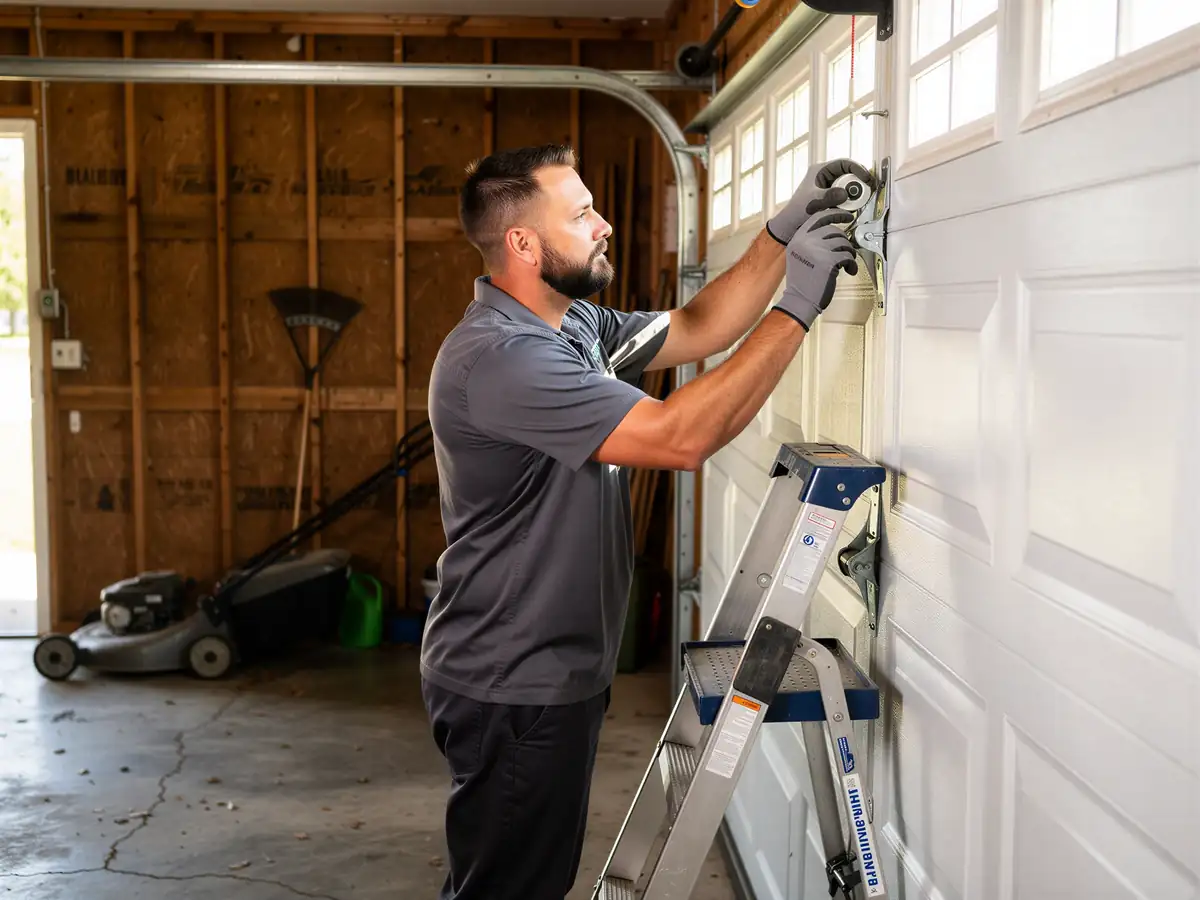
A door that's popped one roller near the bottom, with the panel still roughly square, is sometimes a job you can do yourself: loosen the track bracket, guide the roller back into the channel, retighten. We won't pretend otherwise.
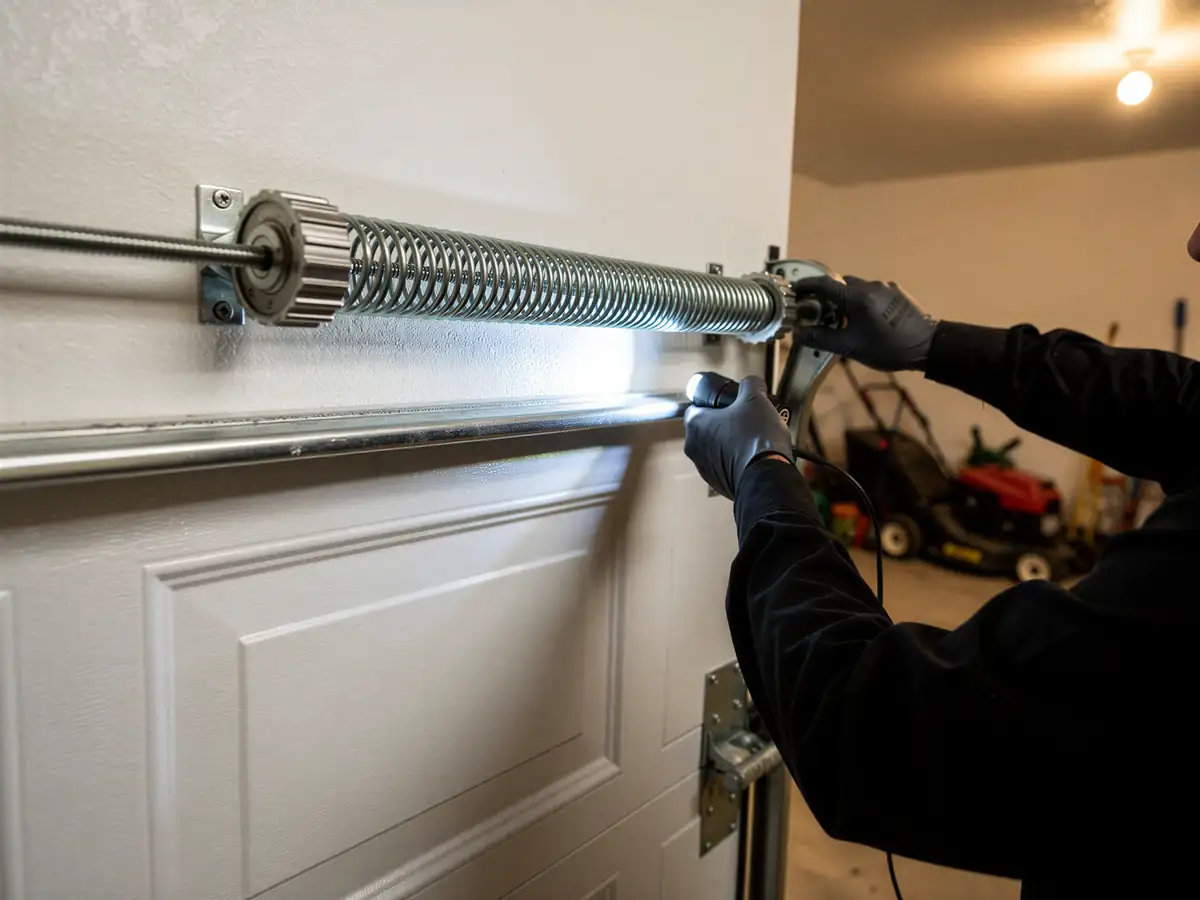
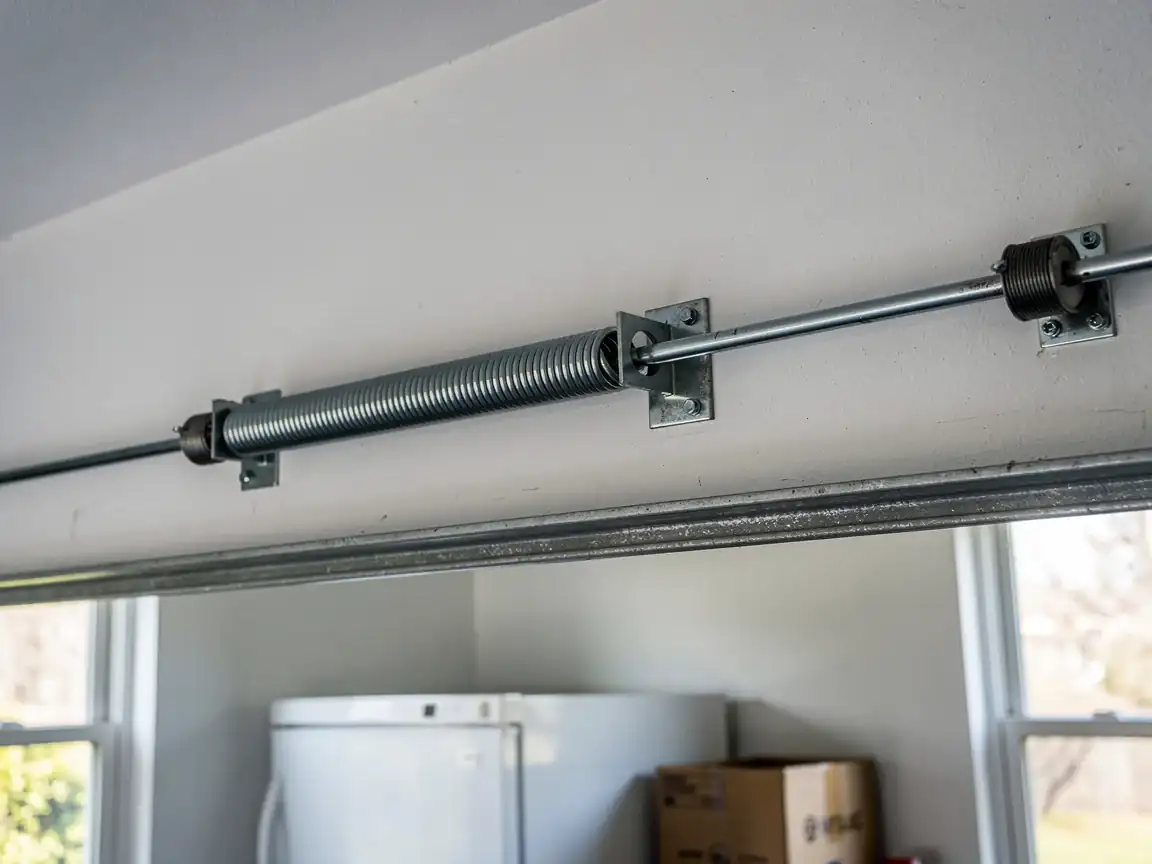
Where it stops being a DIY job is anything involving the top section, a bent track, or a door that's torsion-spring operated and wedged at an angle. Torsion springs hold real tension, and a door jammed off track is often fighting that tension unevenly - pulling a bracket or forcing a track back into shape while the spring is still loaded is how people lose fingers or get hit by a swinging panel. If the track is bent rather than just knocked loose, bending it back rarely holds; it needs replacing, and that's not a task for vice-grips and a Saturday afternoon.
Our honest limit here: we don't walk people through torsion-side repairs over the phone, and we won't tell you a bent track can be hammered straight, because it can't - it comes back out of true the first cold morning it contracts. If your door is a single panel, low to the ground, and the spring is extension-style (visible coils along the horizontal track, not a coiled bar above the door), a careful DIY reseating is reasonable. Anything else, call before you force it.
What You Pay
We don't post a flat number here because the job varies too much
A roller reseated in ten minutes isn't the same call as a track section replaced on both sides plus a bent bracket re-anchored into old framing. What drives the cost is which parts failed, how many, and whether the track itself needs replacing or just realignment.
What we can tell you is how people around here tend to decide
Mobile's median household income is $62,318, and most of the calls we take are from owners who want the door running true again, not a full system replacement - realigning a track and swapping a roller or two is the common outcome, not a new door. We'll tell you up front if what we're looking at is a track problem alone, or if the track damage is a symptom of something upstream, like a cable that jumped the drum or a bent hinge pulling the panel out of square. Those add parts and time.
- $62,318 median household income
If the track is original to a house built decades ago and the mounting holes have worn oversized in the jamb
Sometimes the more honest fix is a new track section rather than re-anchoring into wood that won't hold a screw anymore. We'll say so rather than patch it and have it loosen again in a year.
Why This Fails Locally
Most of the housing across this service area went up between 1963 and 1999, with a lot of it dating to the early 1980s, and that era of garage door is part of why off-track calls are common here rather than rare. These doors were built with lighter steel track and smaller mounting brackets than what goes in today, fastened into jamb framing that's now three or four decades old and has shrunk, shifted, or softened at the fastener points.
Across the thirteen named areas we work in, most of the stock is still that same 1980s-90s build, running on track that's never been replaced since the house went up. With 29,831 owner-occupied houses in this area, a lot of them from that same window, a loose bracket or worn roller isn't an isolated bad-luck case - it's what happens to track hardware of that age.
The climate adds to it. Mobile sits in a mild band with only occasional freezes, so we don't get the hard freeze-thaw cycling that cracks foundations elsewhere, but the humidity swings swell and shrink the wood jambs these old brackets are screwed into. Over enough years that movement works screws loose a sixteenth of an inch at a time, until the bracket shifts under load and the track pulls just far enough out of line for a roller to jump it.