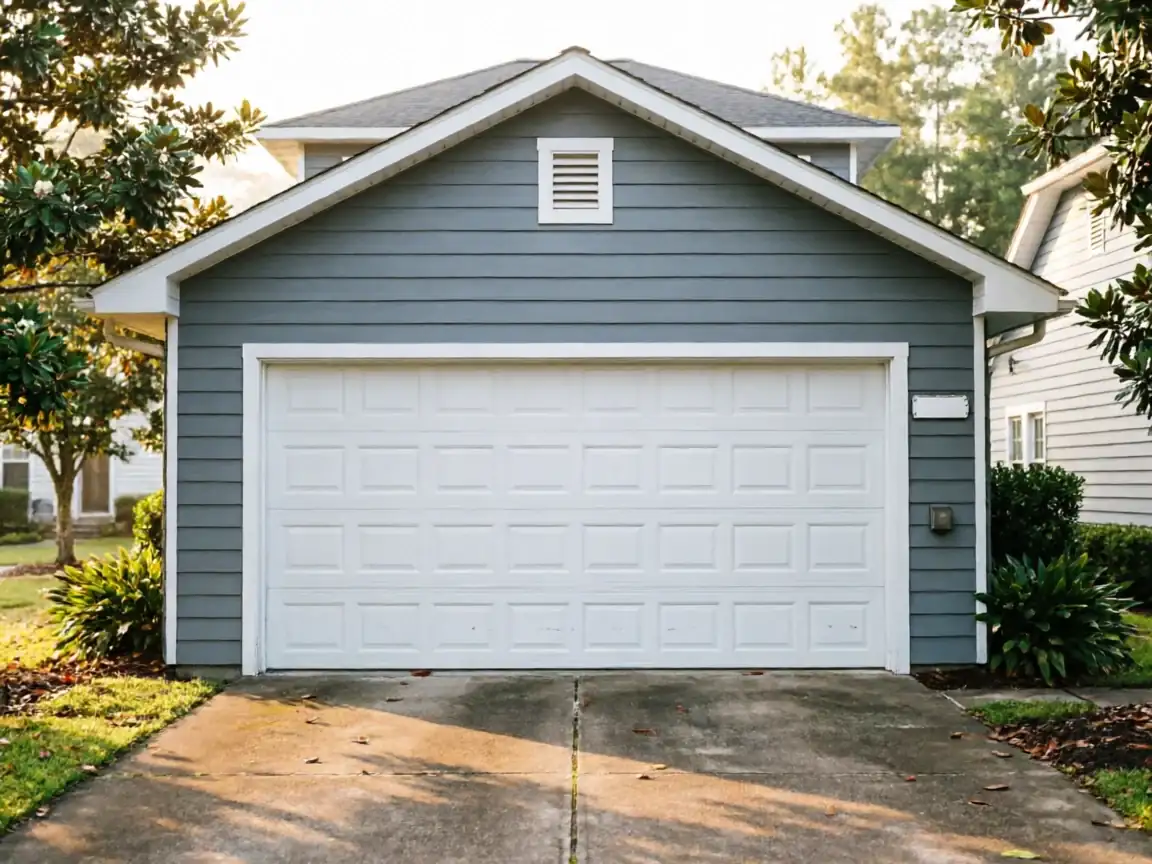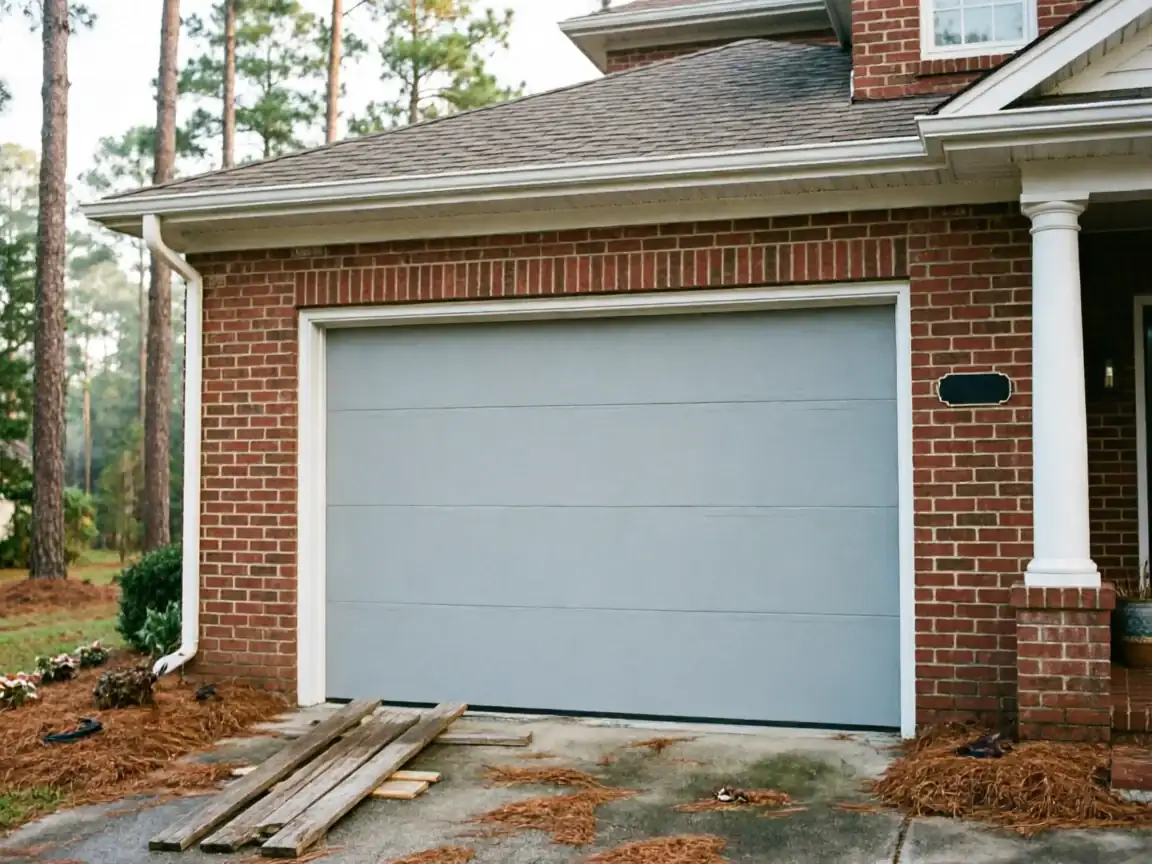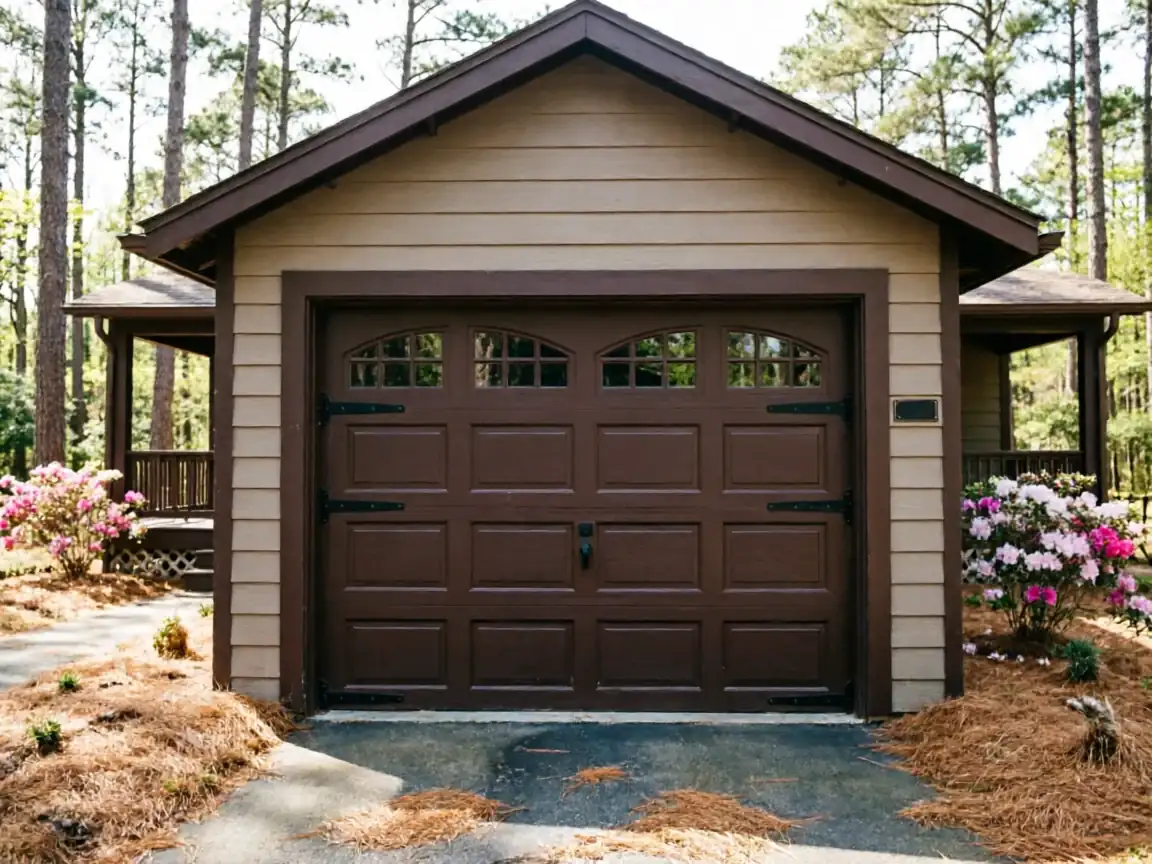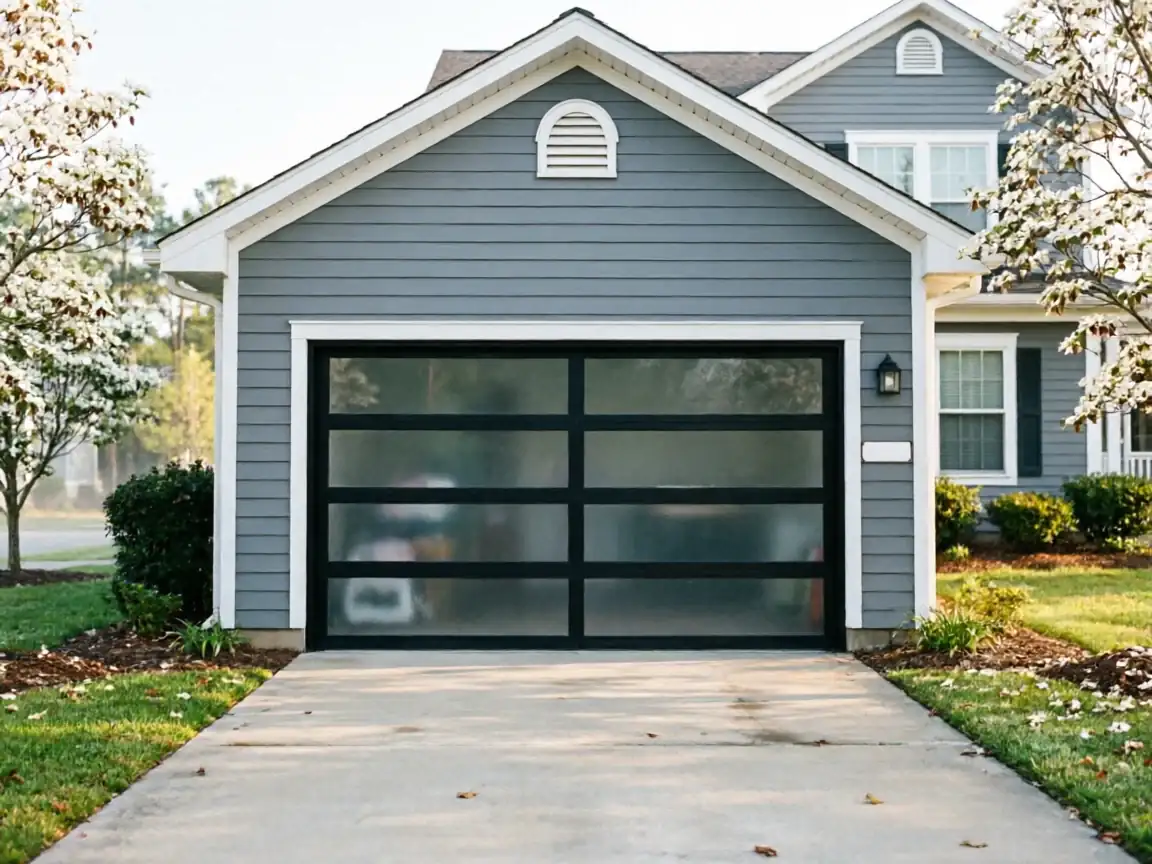
The Complications
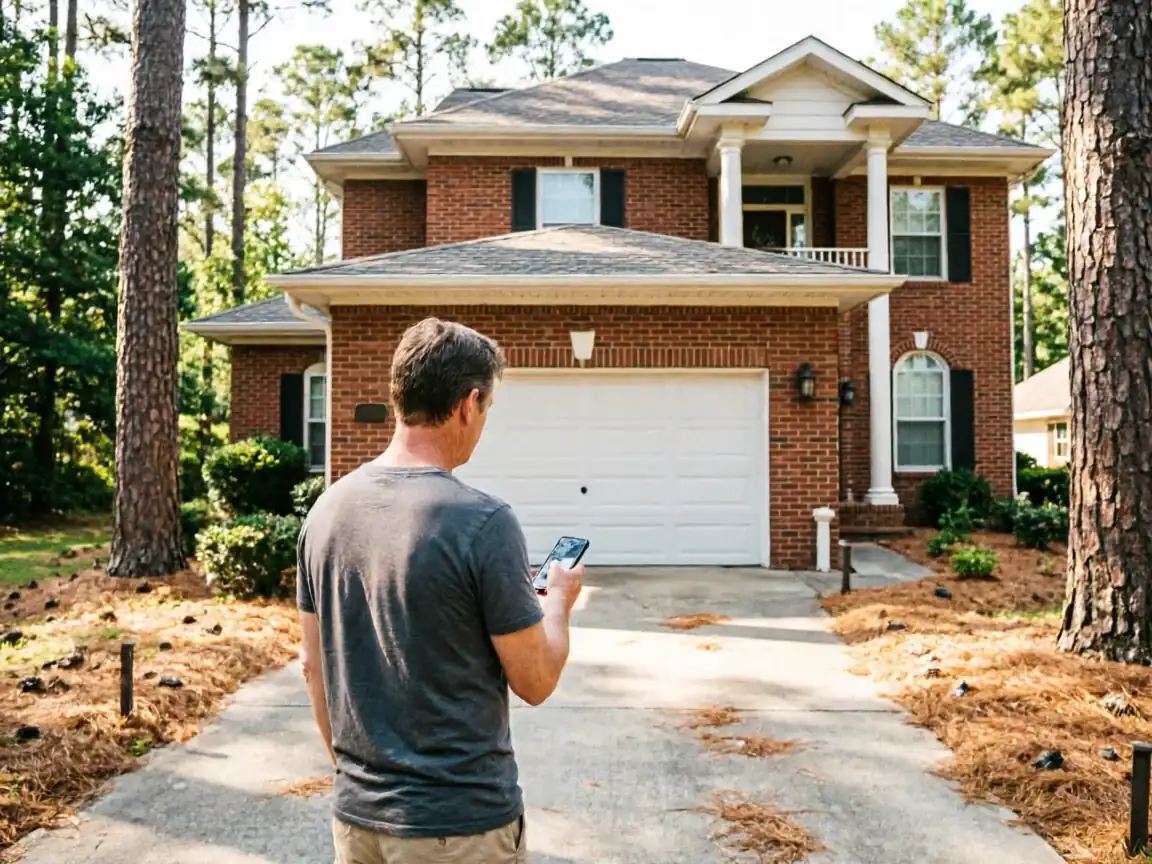
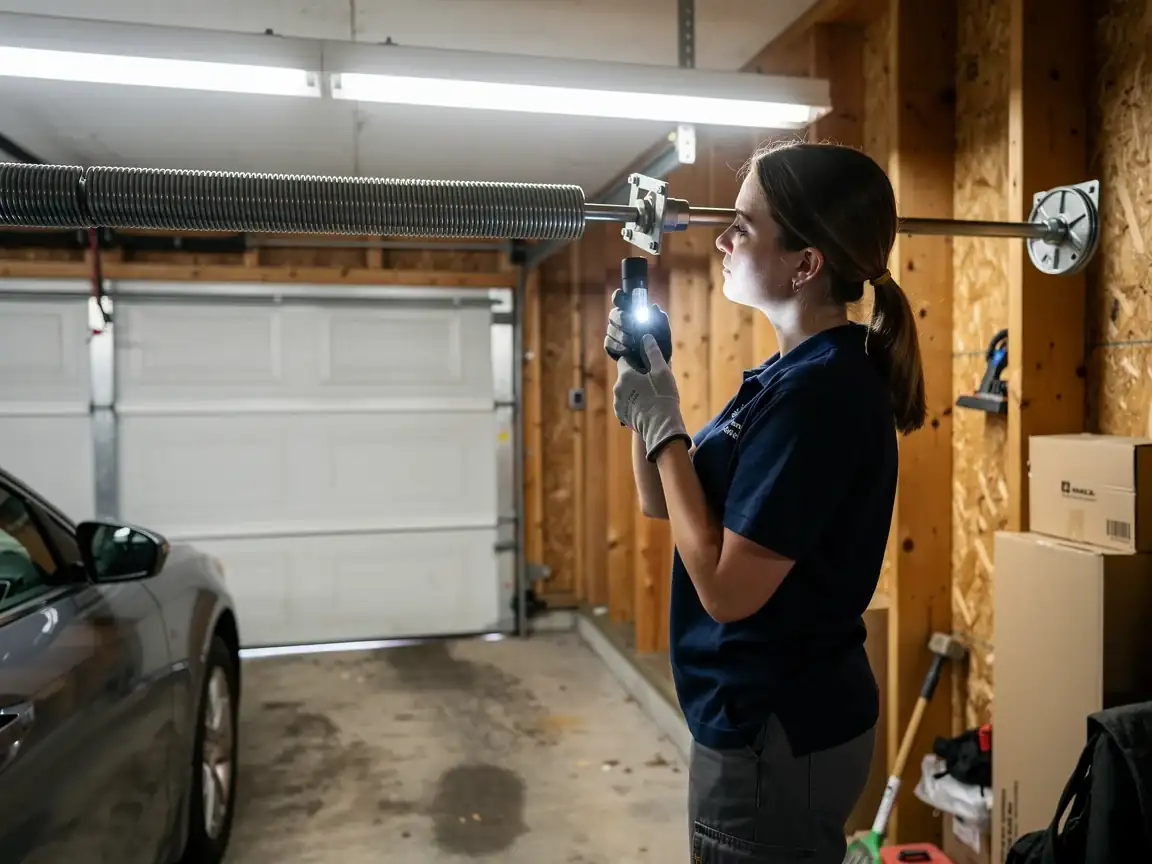
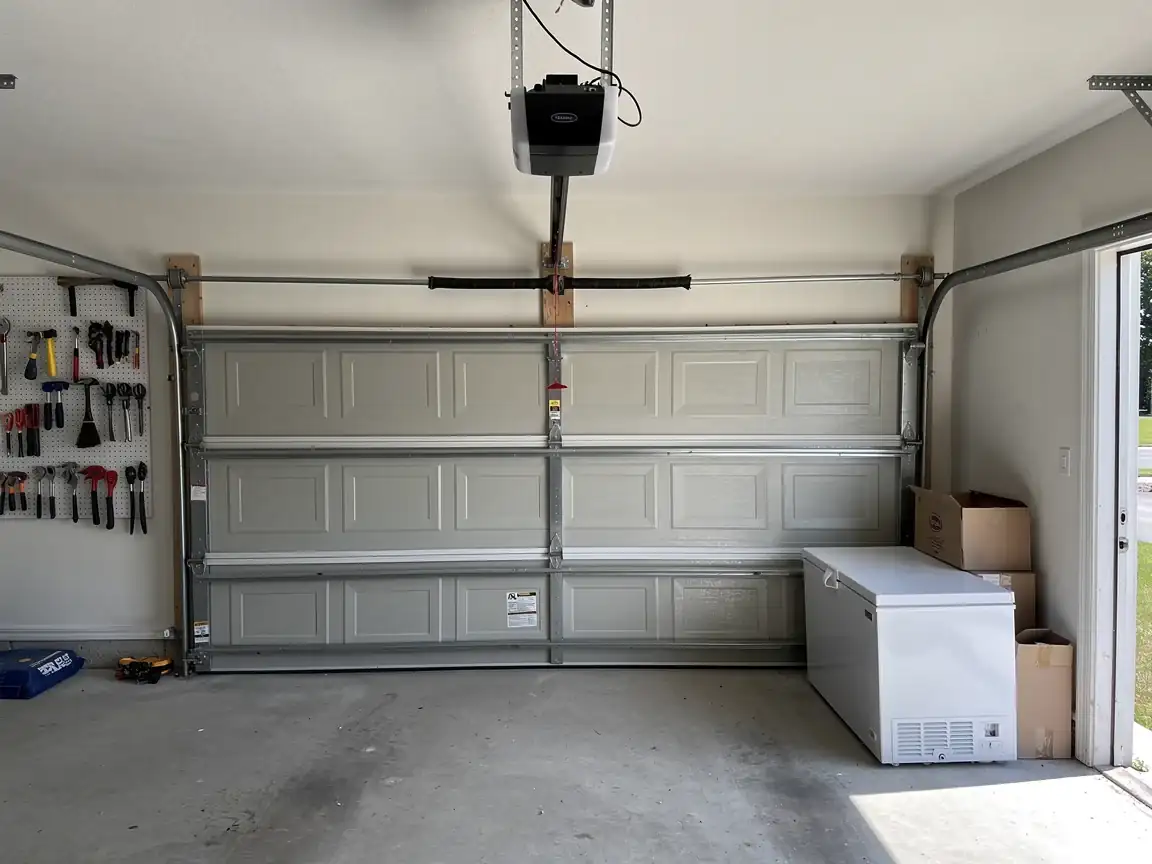
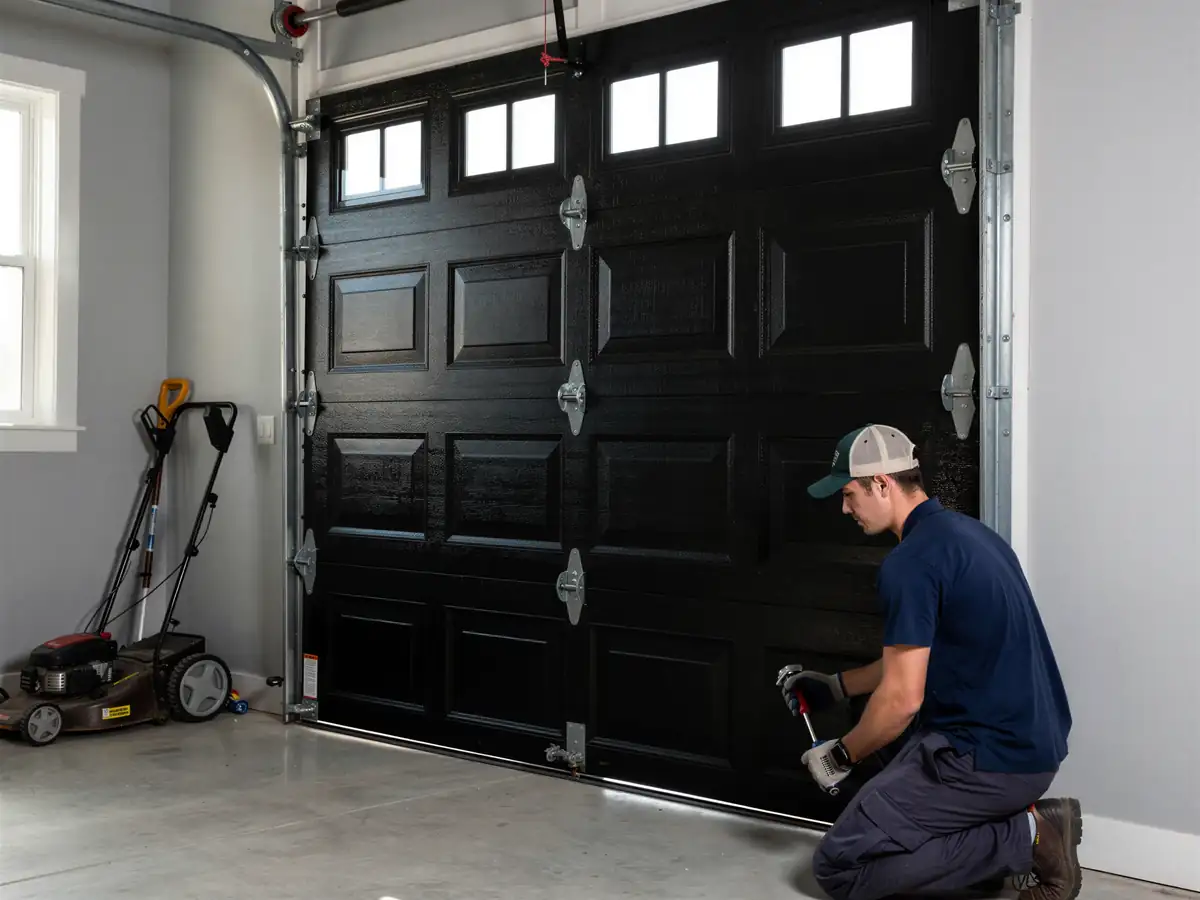
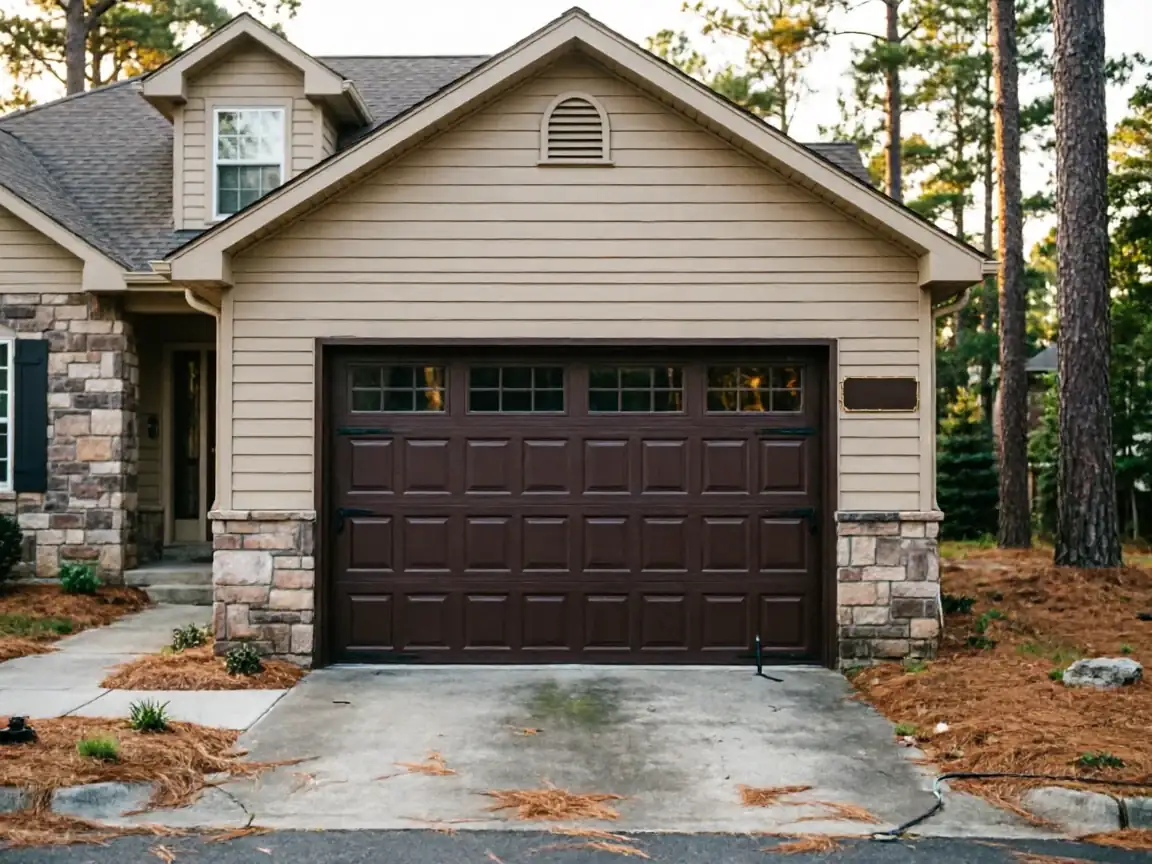
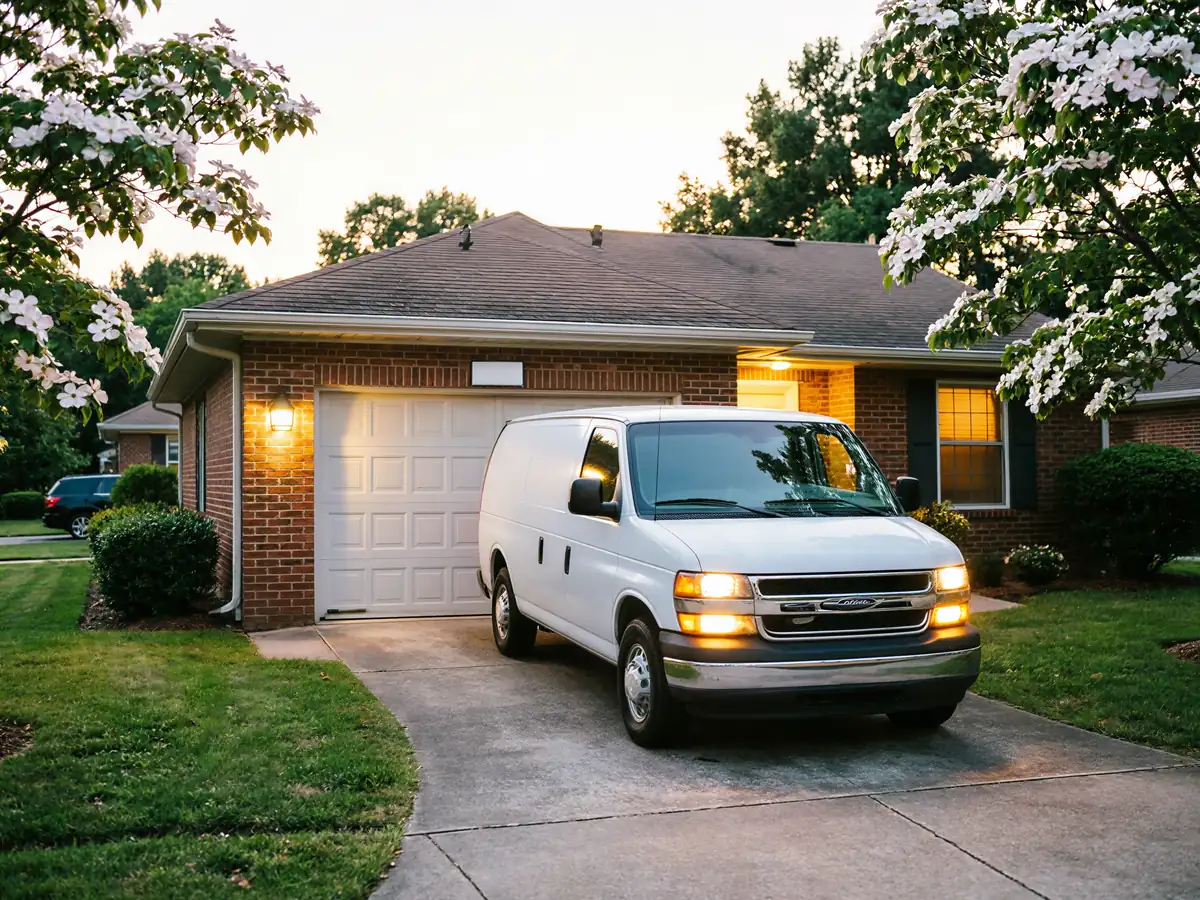
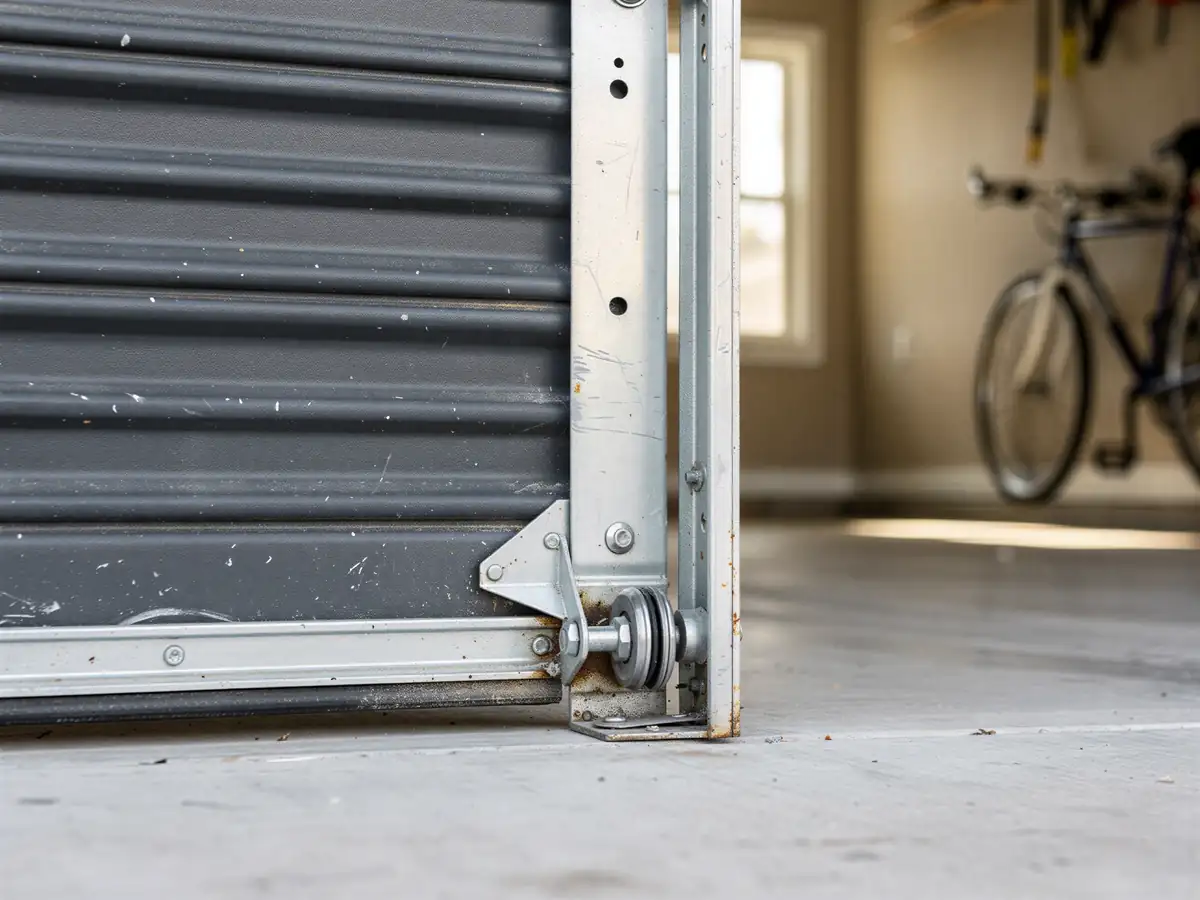
Saraland sits about 13 miles from our shop in Mobile, which matters less for the fix than for the drive - we're not parked around the corner, so we plan the trip and bring what the job needs the first time. Most houses out here went up around 1980, smack in the middle of the 1963-1999 range that covers this whole service area. That era means steel doors on tracks that were bent to a tighter standard than what gets installed today, and after forty-plus years those tracks have usually taken a few hits from a bumper, a bike, or just decades of a door banging the same spot on the way down. An off-track door in a house this age is rarely a one-roller problem. The track itself has often worked loose from the jamb, or the bracket holding it has rusted thin. We've also seen original rollers still in service on these doors - steel, not nylon - and they wear the track unevenly in a way that eventually pulls the whole panel sideways. Diagnosing which of these is actually happening is the first fifteen minutes of any call, and skipping that step is how a cheap fix turns into a second visit.
The DIY Question
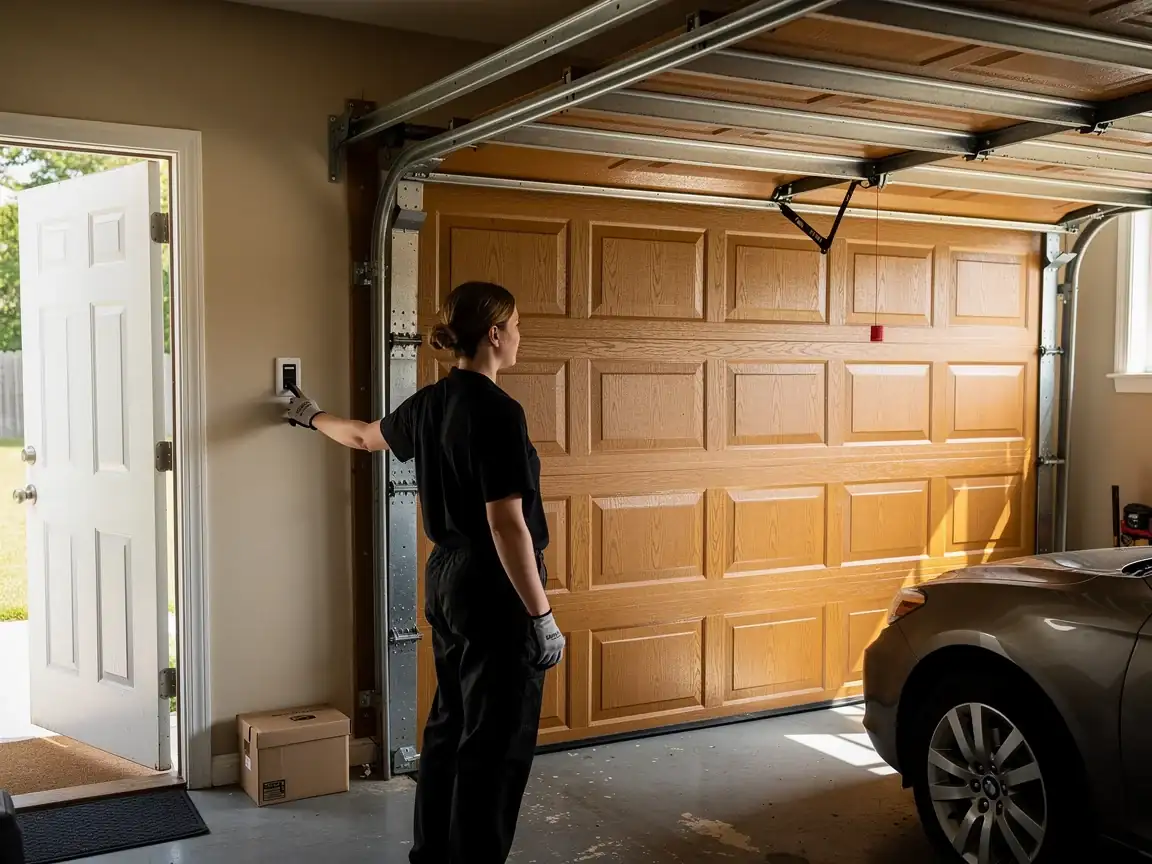
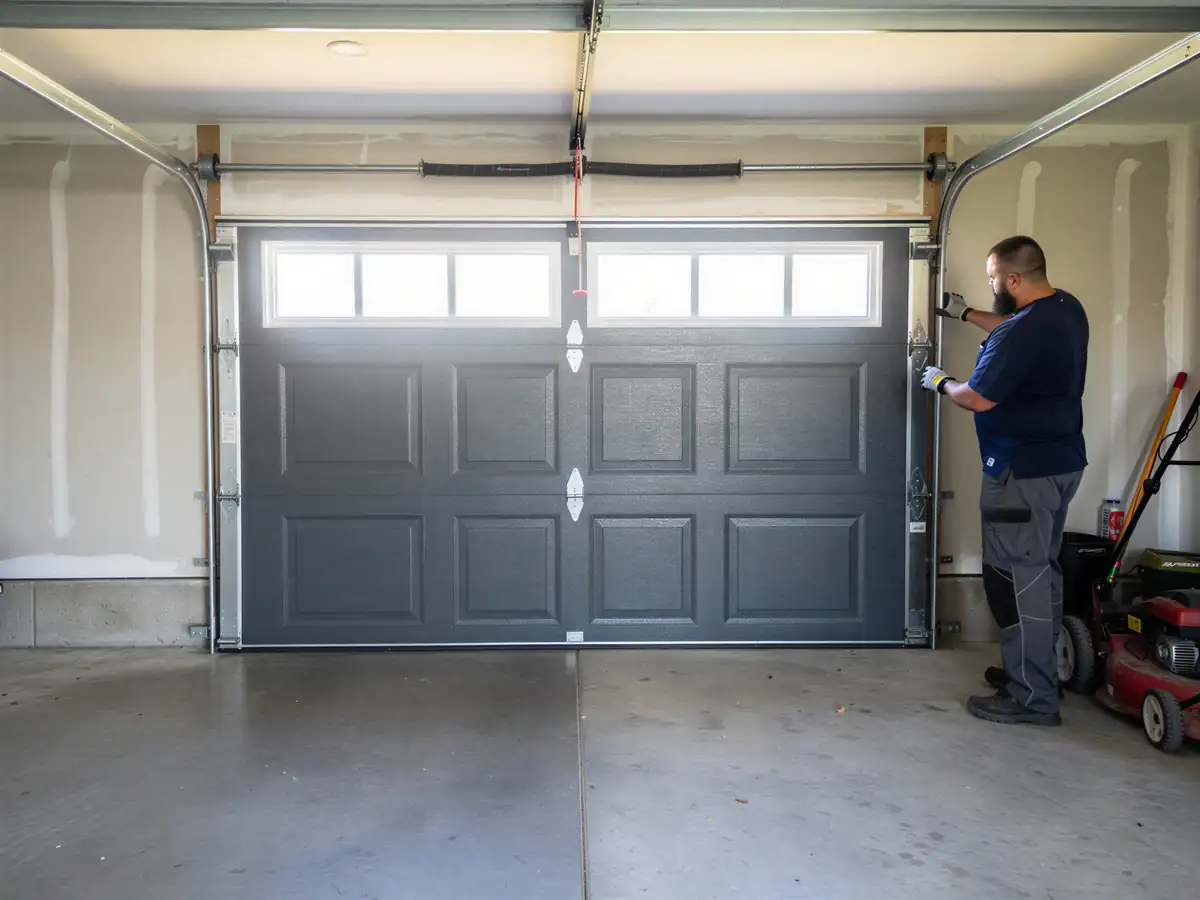
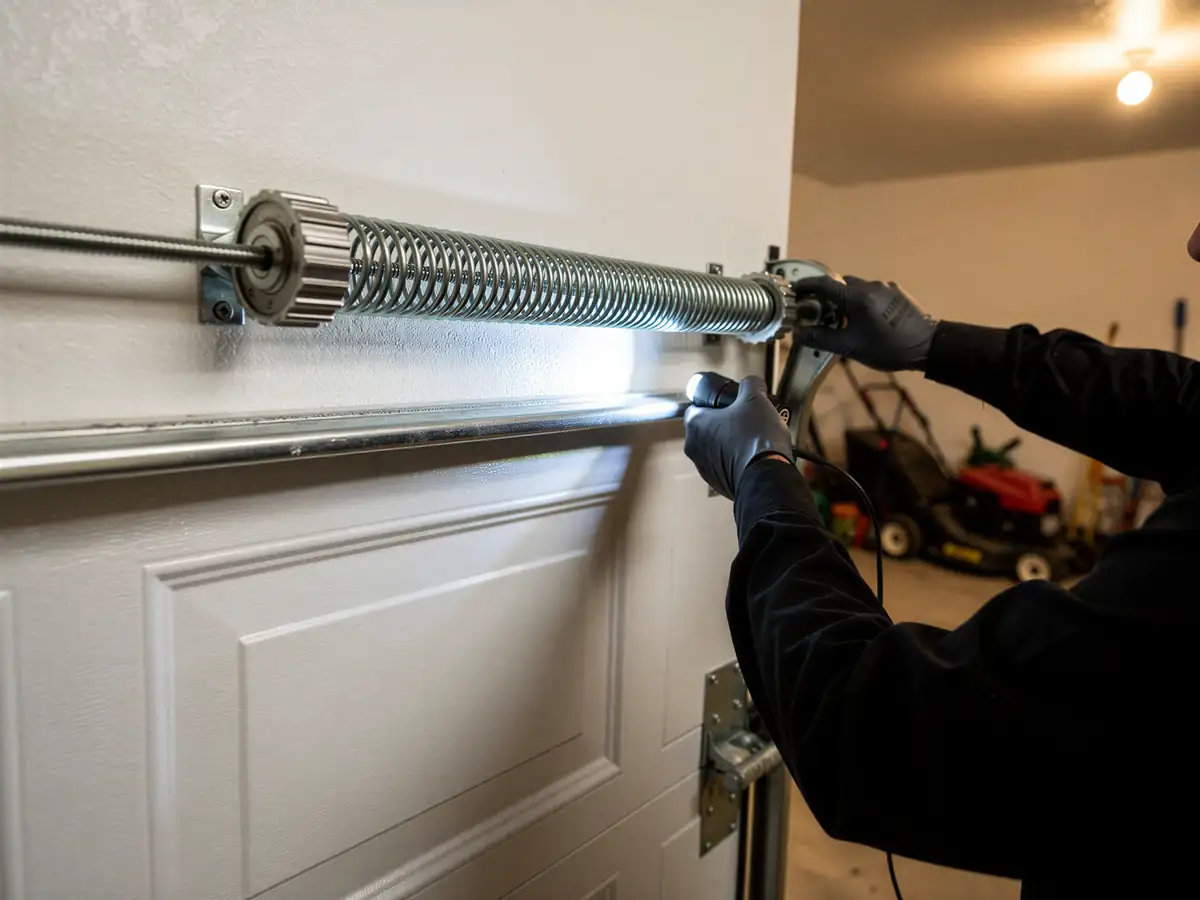
You can pop a door back onto its track yourself if it slipped cleanly and the track isn't bent - loosen the bracket, guide the roller back in, retighten. That's a real option and we won't talk you out of it. What you shouldn't do is force a door back on when the track is visibly bowed or the bottom bracket has pulled away from the frame, because that bracket is holding one end of a spring under real tension. On a house built around 1980 like most of what's out here, we also run into doors that were never upgraded past their original torsion setup, and those springs can be older than you'd guess from the outside. If the door won't move freely by hand with the opener disconnected, stop and call - that resistance usually means something's binding, not just off the rail.
How Long It Takes
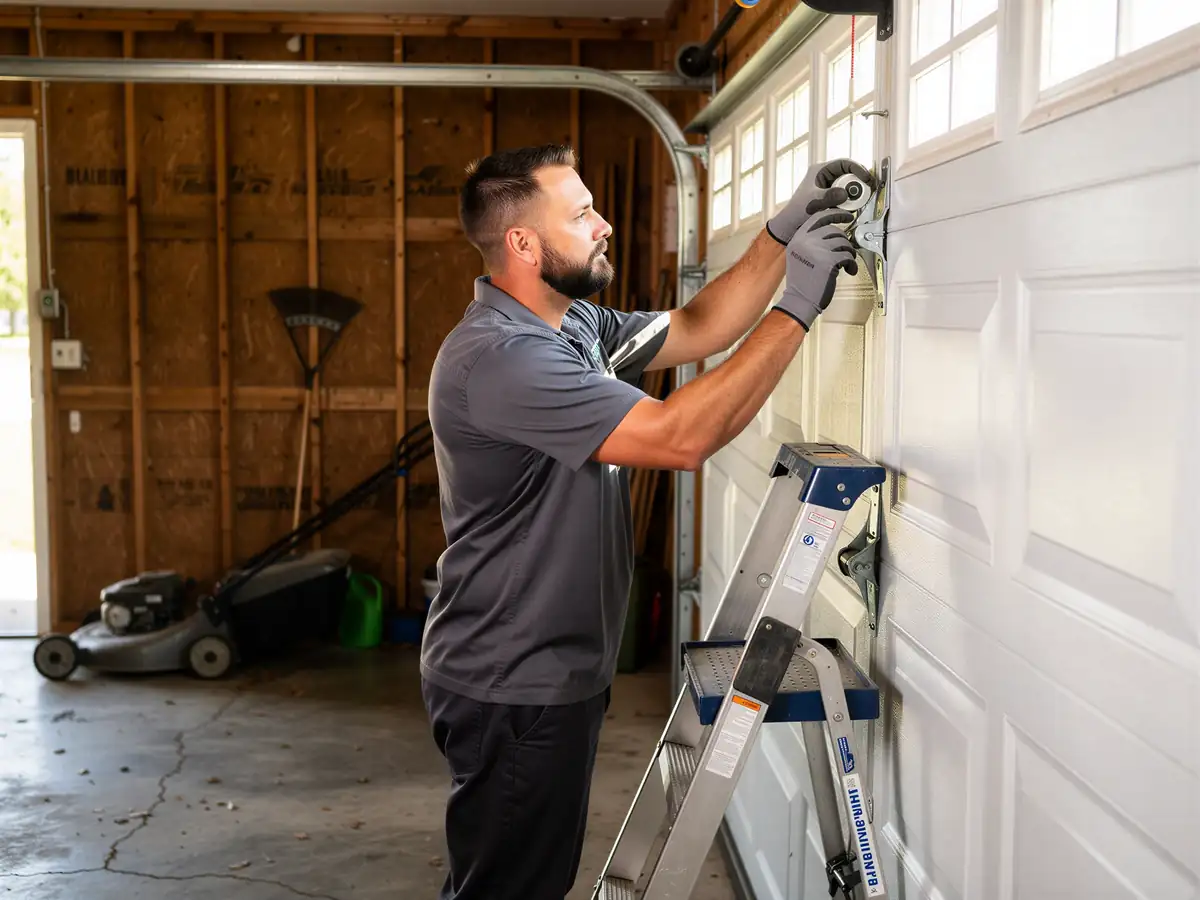
A straightforward off-track reset, where the track is intact and it's one or two rollers out of place, is usually finished in well under an hour once we're on site. Bent track adds time, since it means pulling the old track, resetting the vertical and horizontal sections, and checking the door's travel at each step rather than just reinstalling. Houses from the 1980-ish build era out here sometimes have brackets fastened straight into older framing that's shifted slightly over the decades, and squaring a new track to a doorway that's no longer perfectly square takes patience we build into the estimate rather than rushing.
What You Pay
Saraland's median household income runs about $60,577, a little below the wider service area's $62,318, and that number is exactly where the repair-or-replace line usually sits. For most off-track calls here, repair is the right call - resetting rollers and squaring a track costs a fraction of a new door, and there's no reason to replace a sound panel over a bent track or worn roller. Where replacement starts to make sense is when the track damage is the third or fourth sign of a door that's original to a house built around 1980: rusted brackets, a spring nobody's touched in decades, and panels that have been dented and re-hung more than once. At that point sinking repair money into one more component is throwing good money after a door that's going to need the next part replaced within a year or two anyway. We'll tell you which situation you're in before we quote anything, not after.