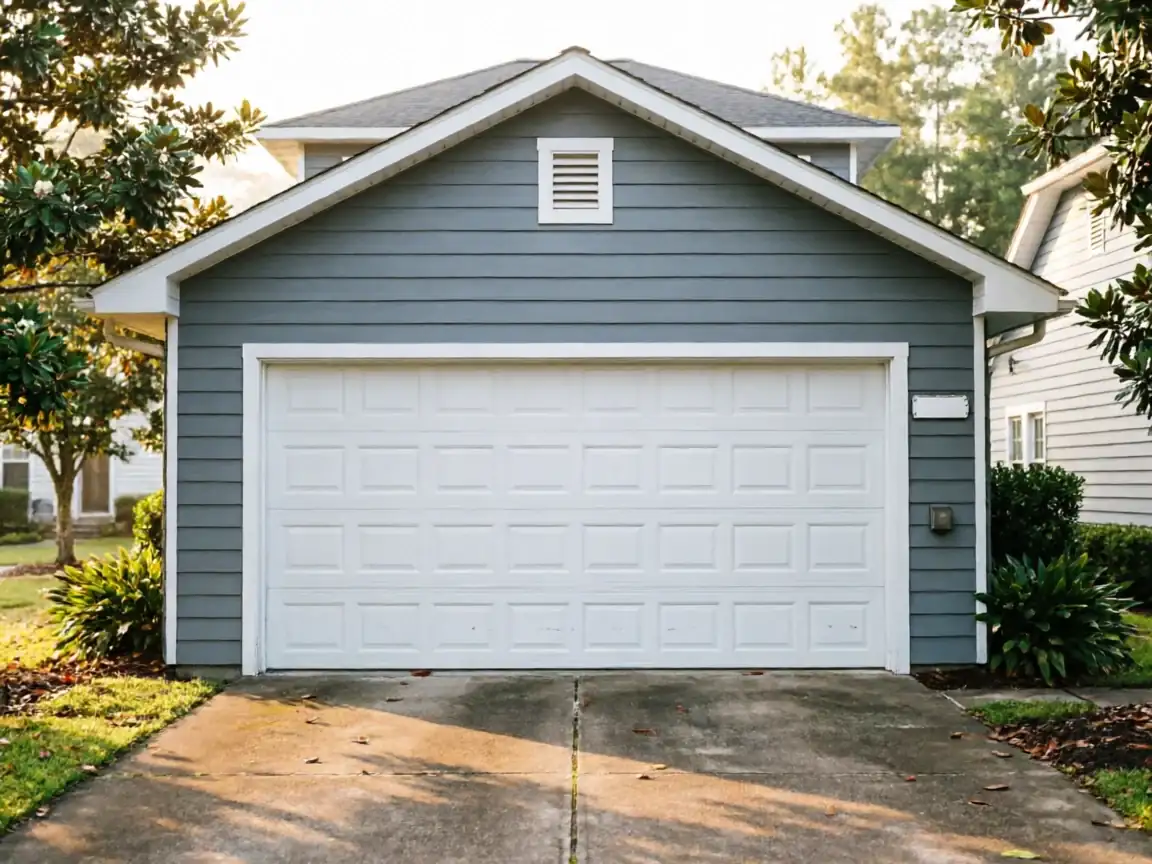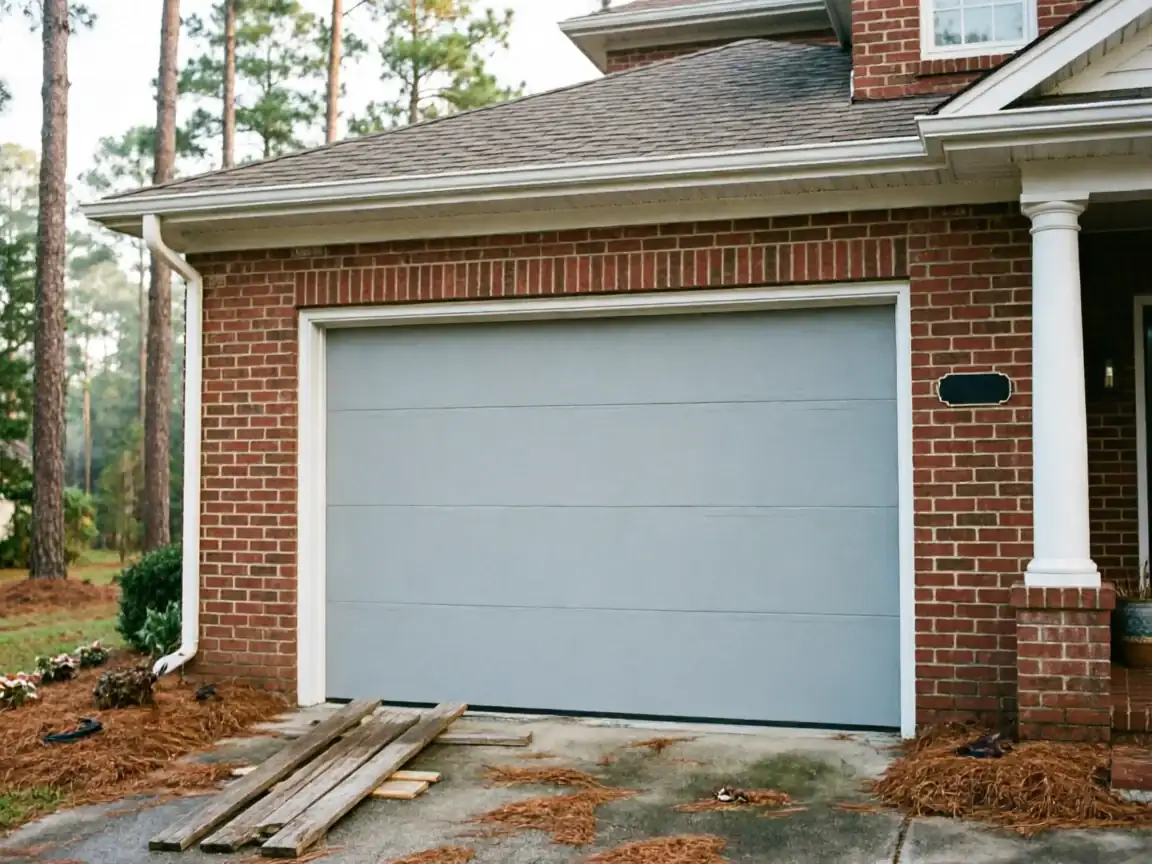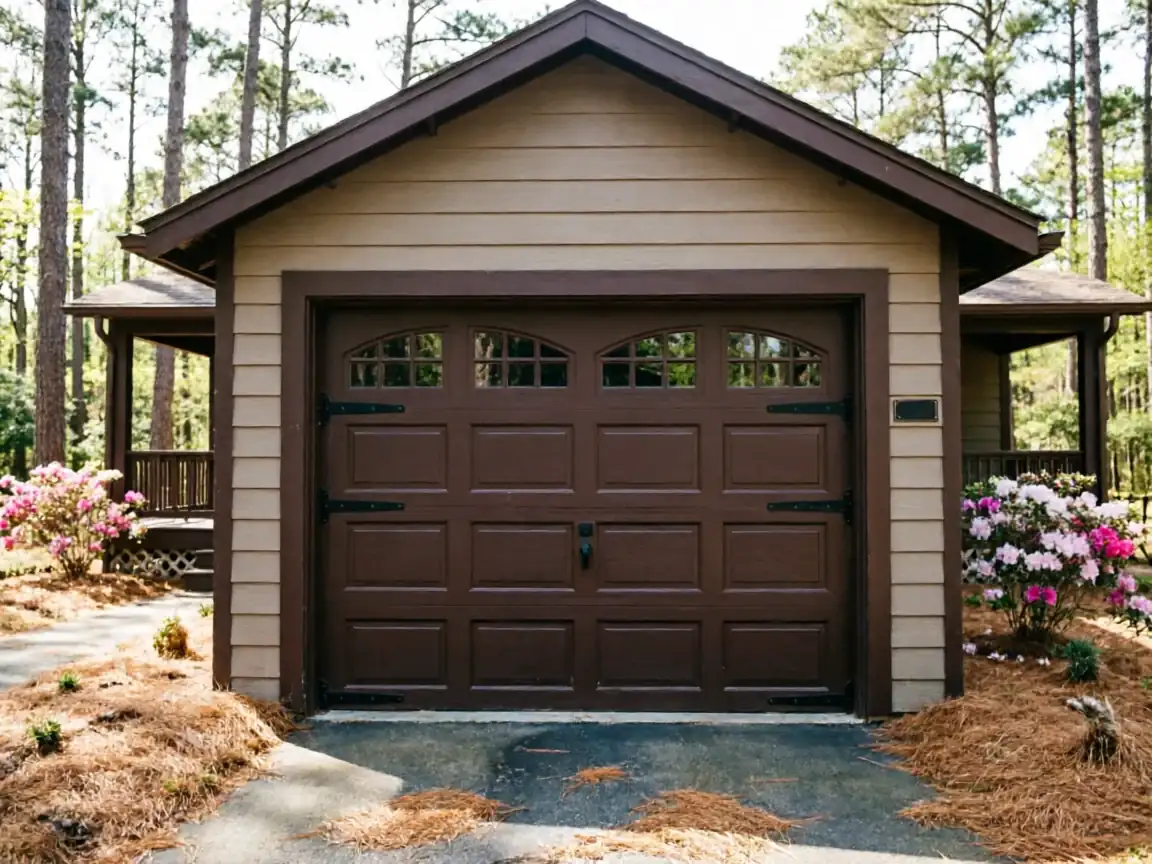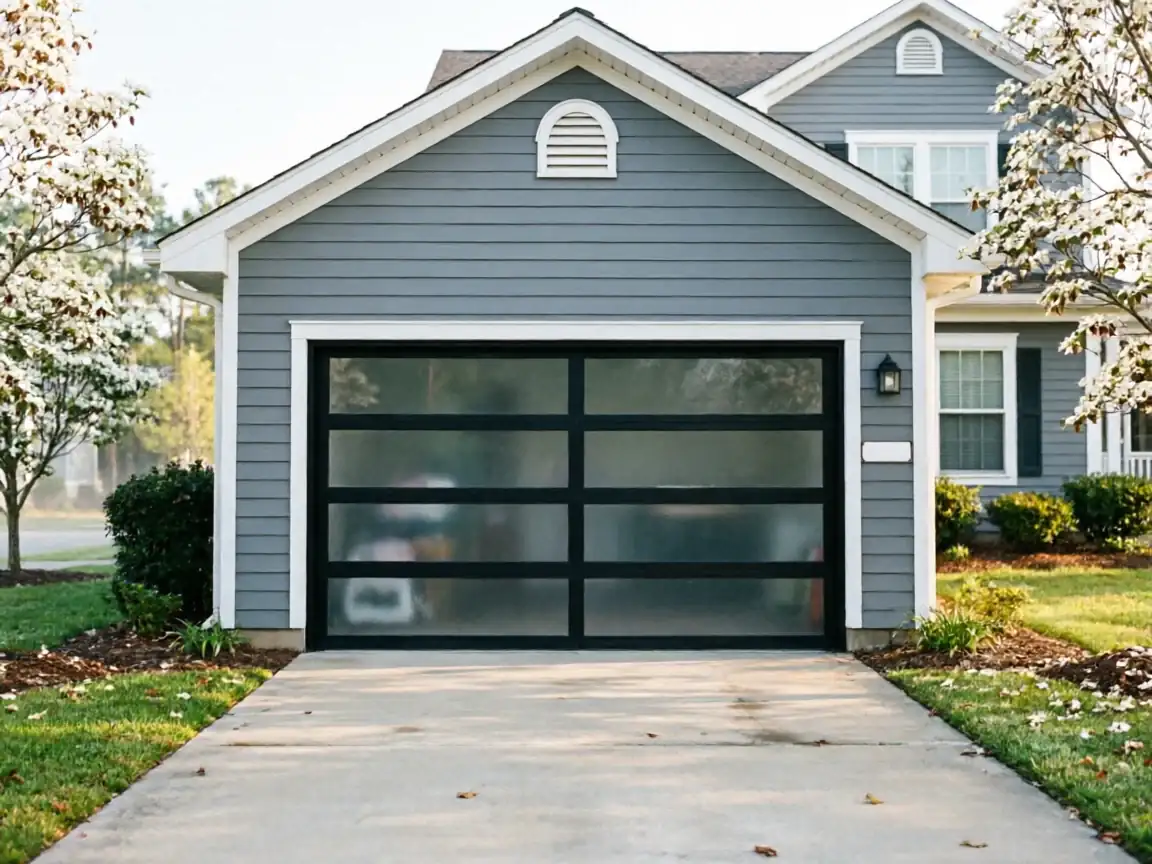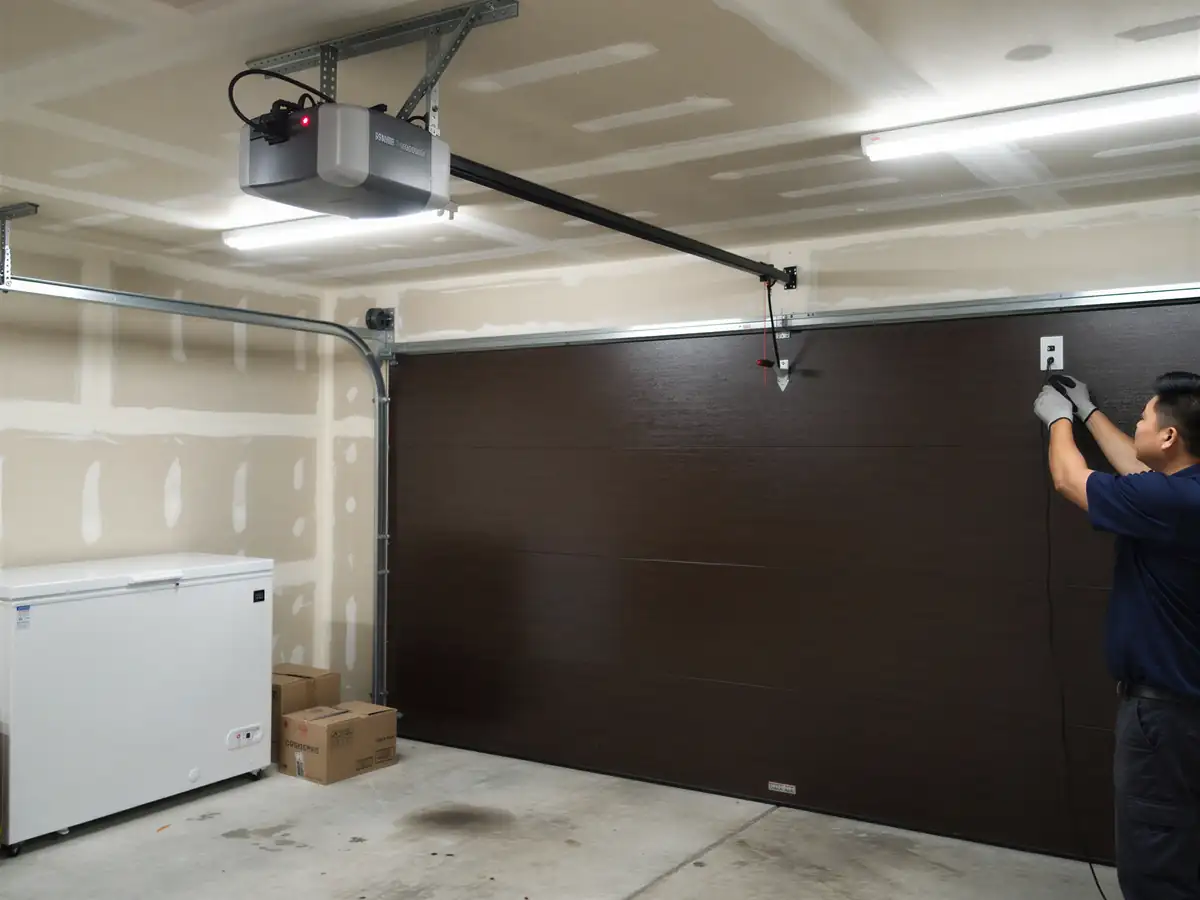
The Complications
Saraland sits about 13 miles out from our shop in Mobile, which changes how we run an installation call here compared to something closer in. We don't carry a satellite stock of doors on that side of town, so the job starts with a real measurement visit, not a guess over the phone. Get the track height, the headroom, and the opening width wrong on the first trip and you're waiting on a second truck run before anything gets hung.
The bigger complication is the houses themselves. Most of Saraland went up around 1980, a touch earlier than the 1983 median you'd find across the wider service area. That means openings built to older rough-framing standards - sometimes a quarter inch off square, sometimes a header that was never meant to carry a heavier insulated door. A new door has to get cut in and shimmed to that actual opening, not to the spec sheet.
We also deal with the humid, mild-with-occasional-freeze climate this part of the Gulf Coast sits in. It's not brutal cold that wrecks hardware out here - it's moisture working on unprotected steel tracks and bare hinges year after year, which matters when we're picking what goes back in.
The DIY Question
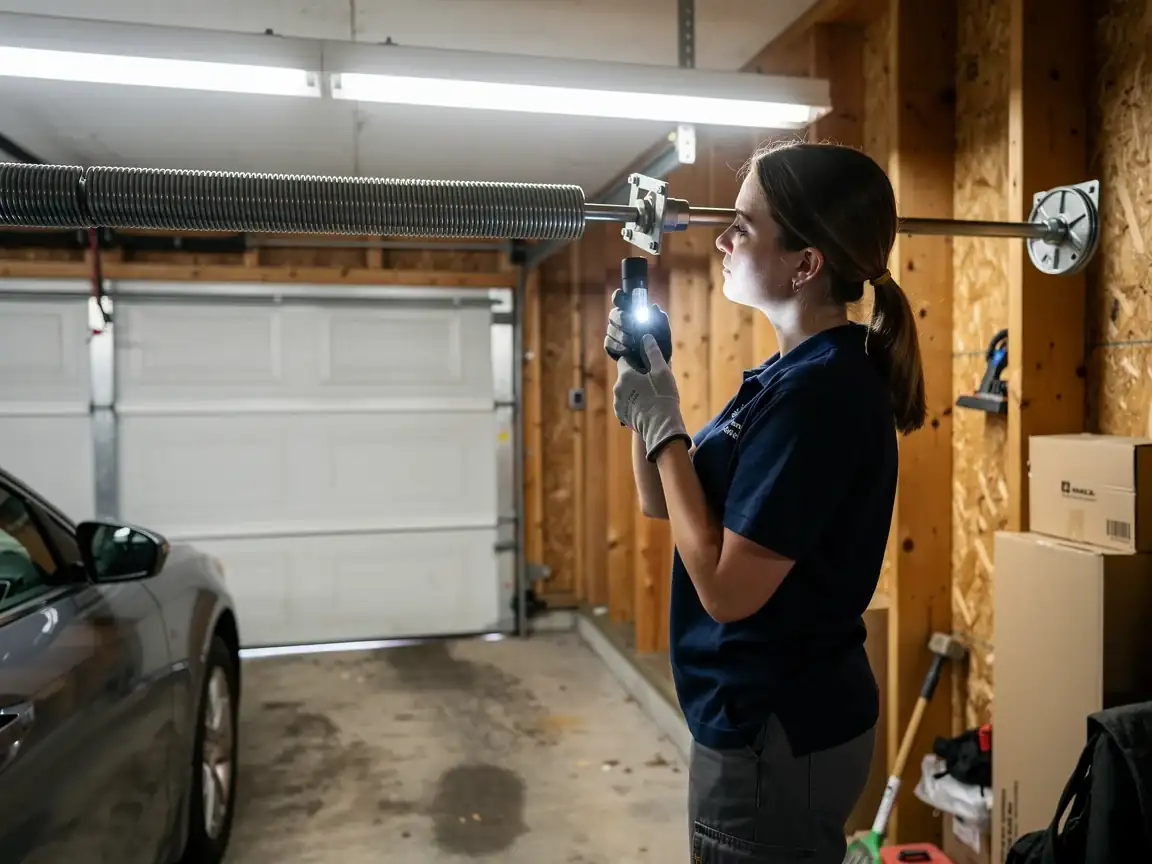
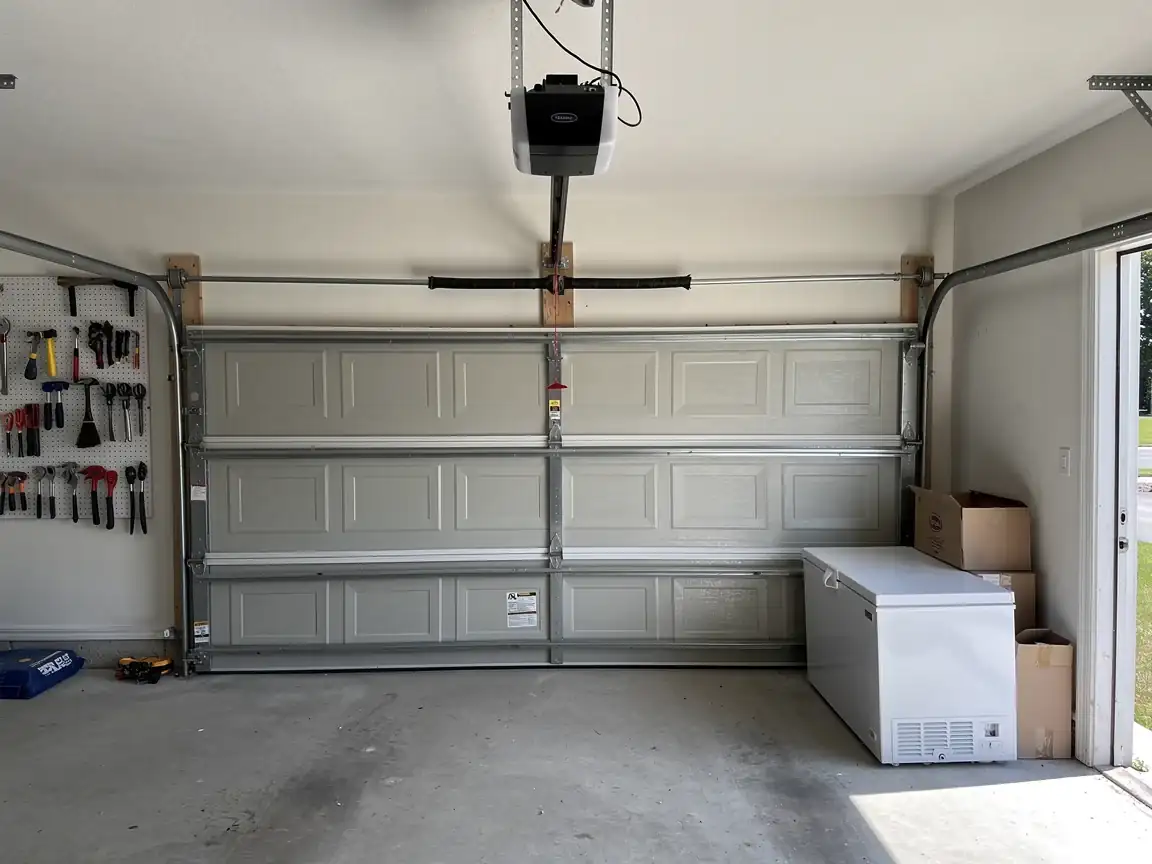
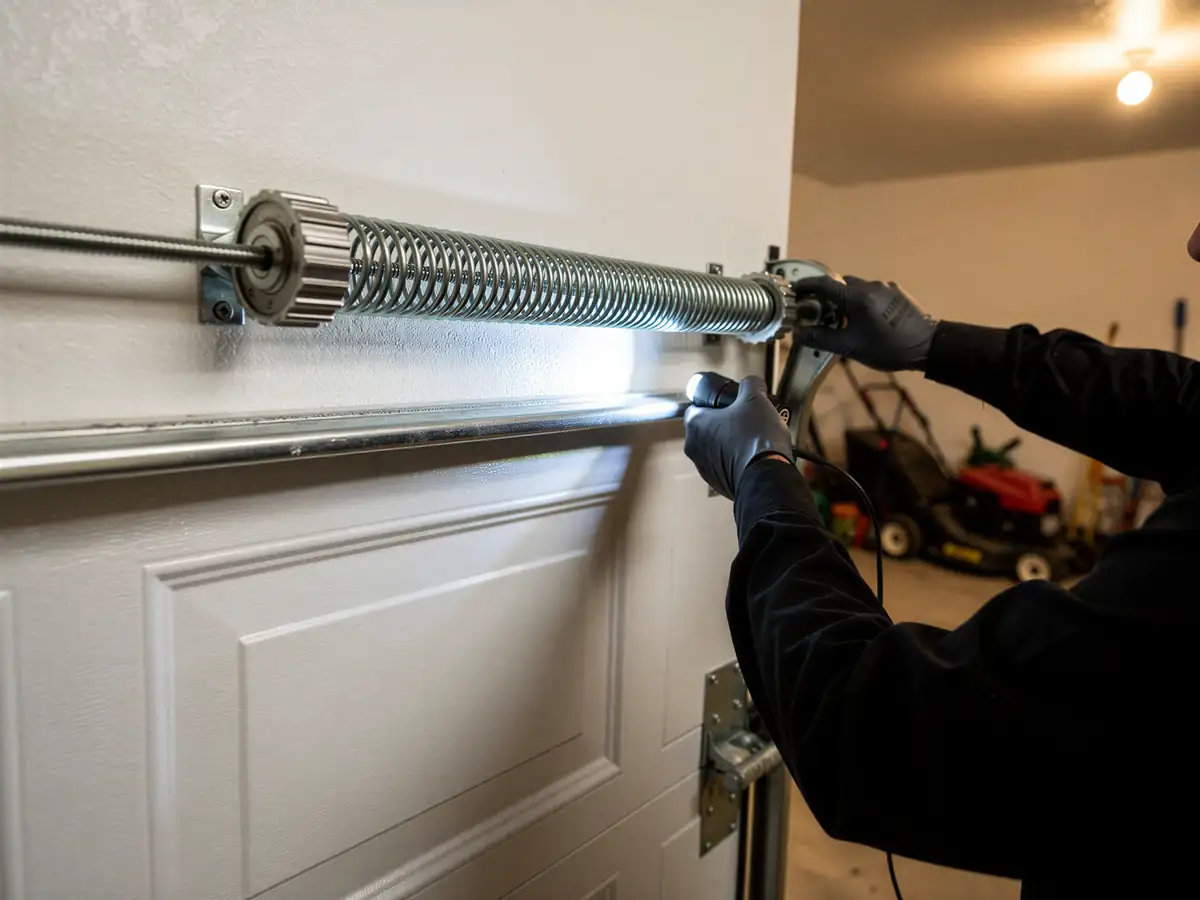
A sectional garage door weighs more than most people expect, and a torsion spring holds enough stored tension to break a finger or worse if it lets go while you're working on it. We're not going to pretend a careful homeowner can't swap a lightweight panel or an opener bracket. But a full door replacement means resetting track alignment, spring tension, and often cable routing all at once, on an opening that, in a 1980-built Saraland house, may not match the manufacturer's stock dimensions exactly.
The honest limit here: if your opening is square and standard-width, a kit door from a box store might go in fine with the right tools and a second set of hands. If the framing has settled or the header's undersized for what you want to hang, that's not a weekend fix - it's a job where getting it wrong means the door binds, the opener strains, and you're back to square one in six months. We'd rather tell you that up front than sell you a service call you didn't need.
How We Fix It
We start with the opening, not the door
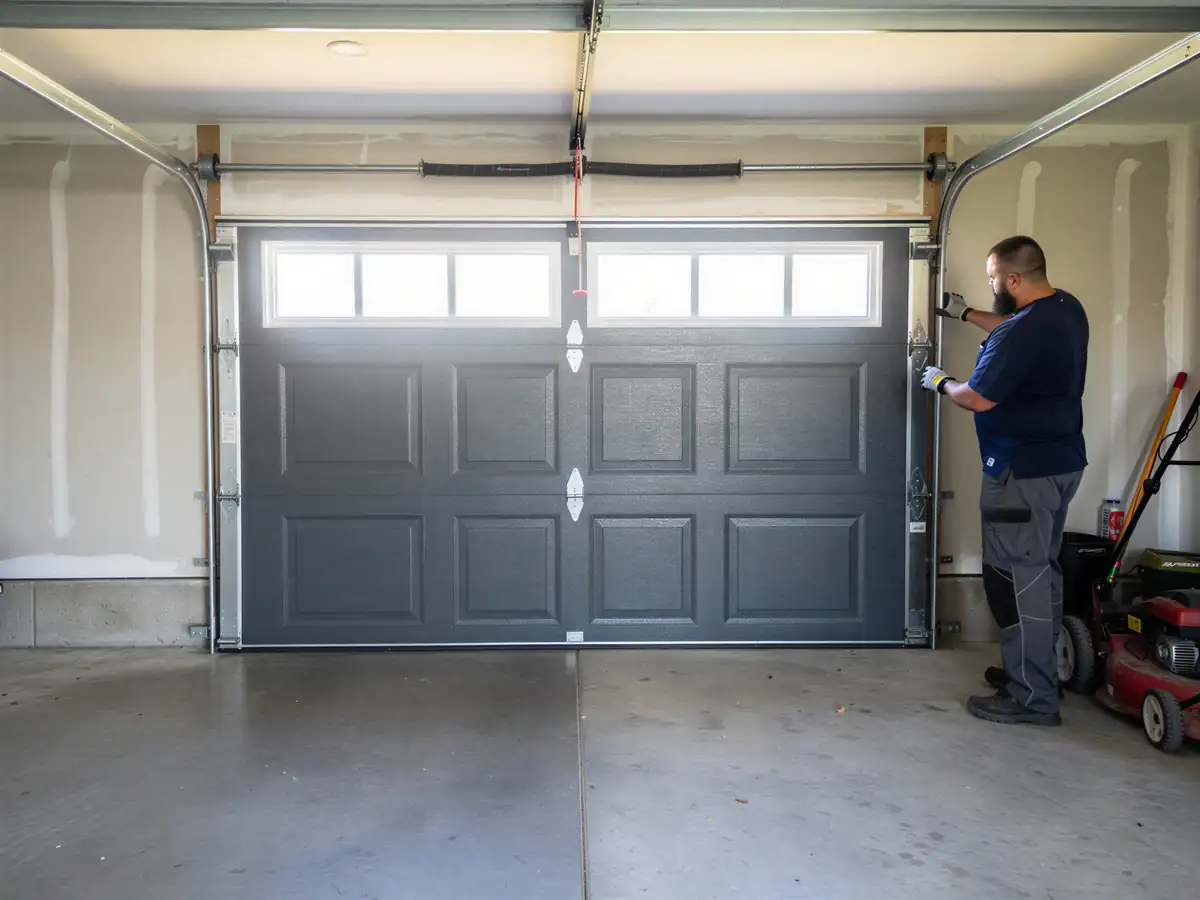
On a Saraland job that usually means checking a 40-plus-year-old frame for square, measuring headroom for the track style that'll actually clear it, and confirming the wall space needed for the spring system. From there we size the door, the track, and the opener as one package rather than matching pieces separately - that's where a lot of comeback calls on older houses start.
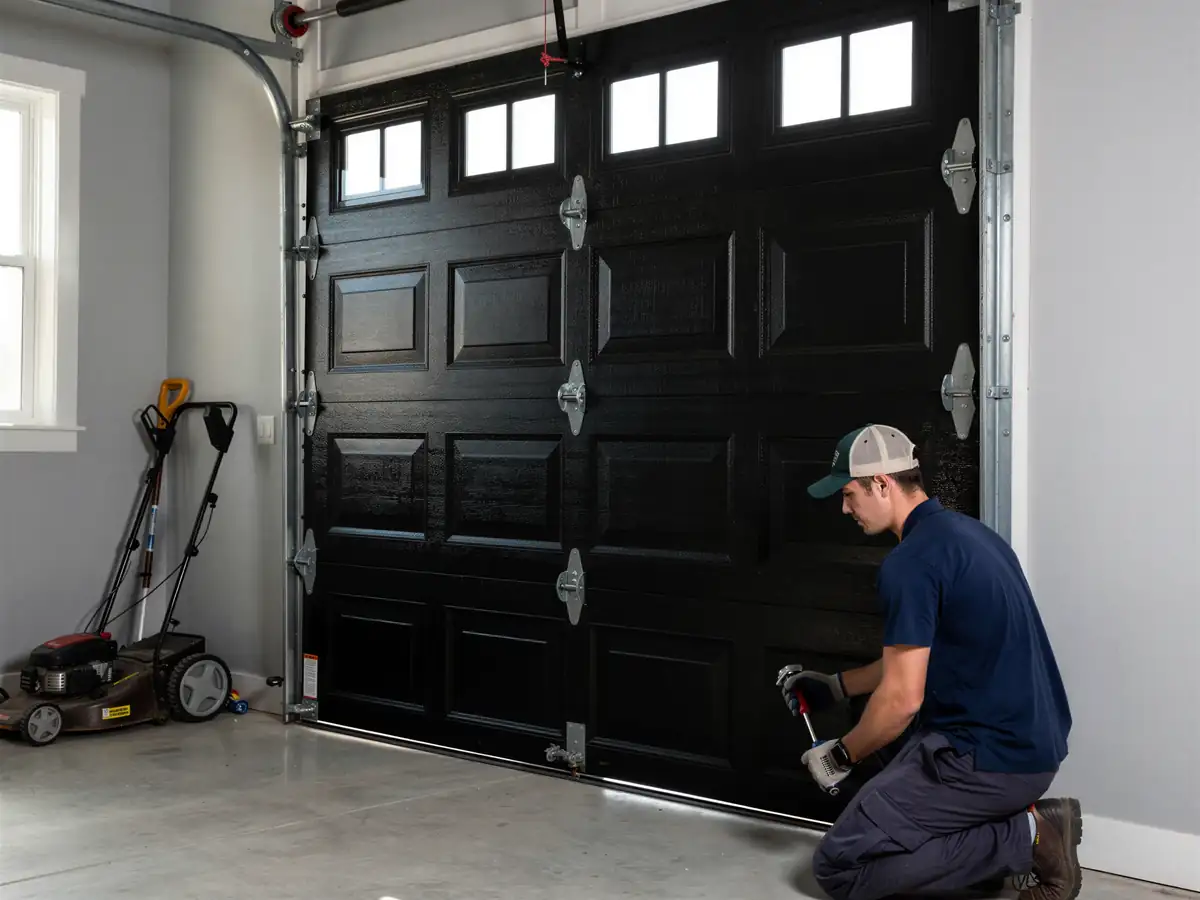
Installation itself is torsion spring set to the door's actual weight (not a catalog average)
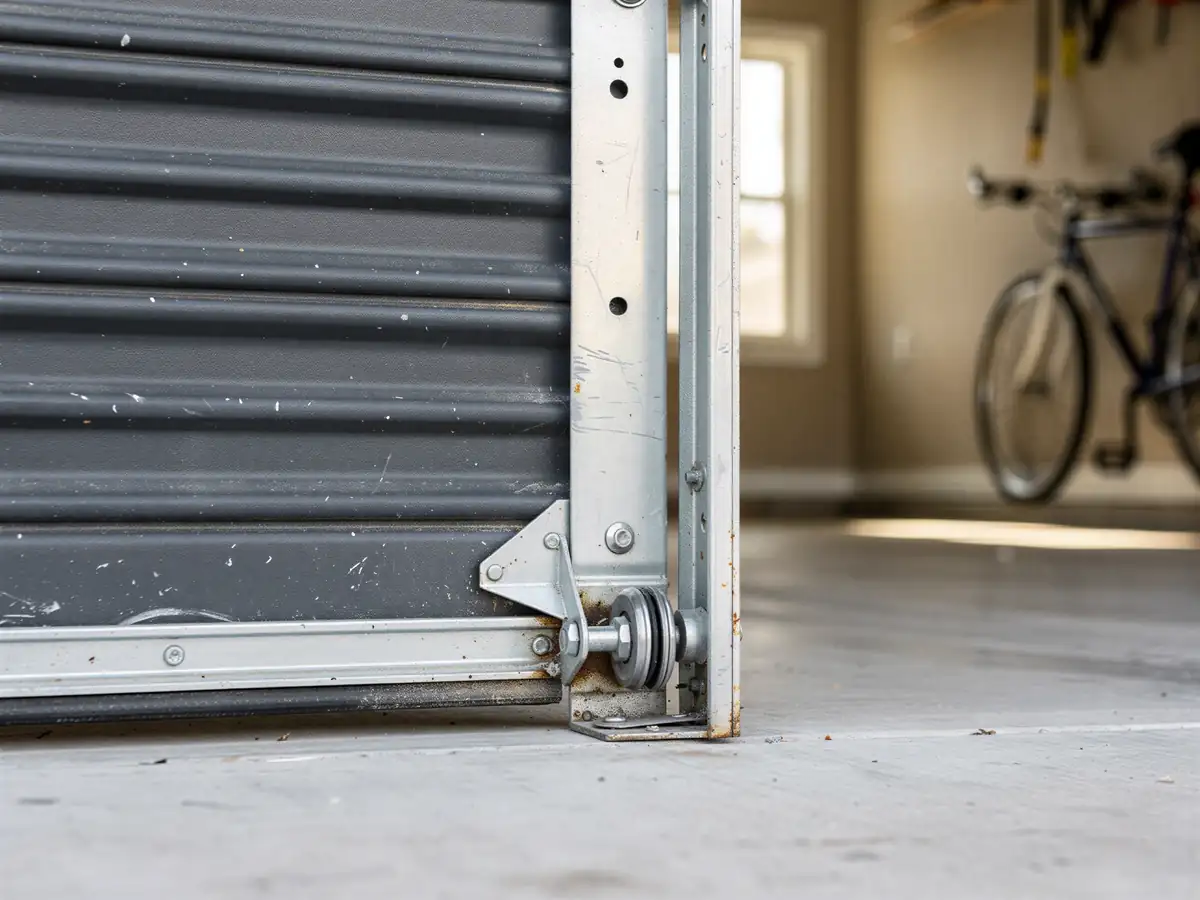
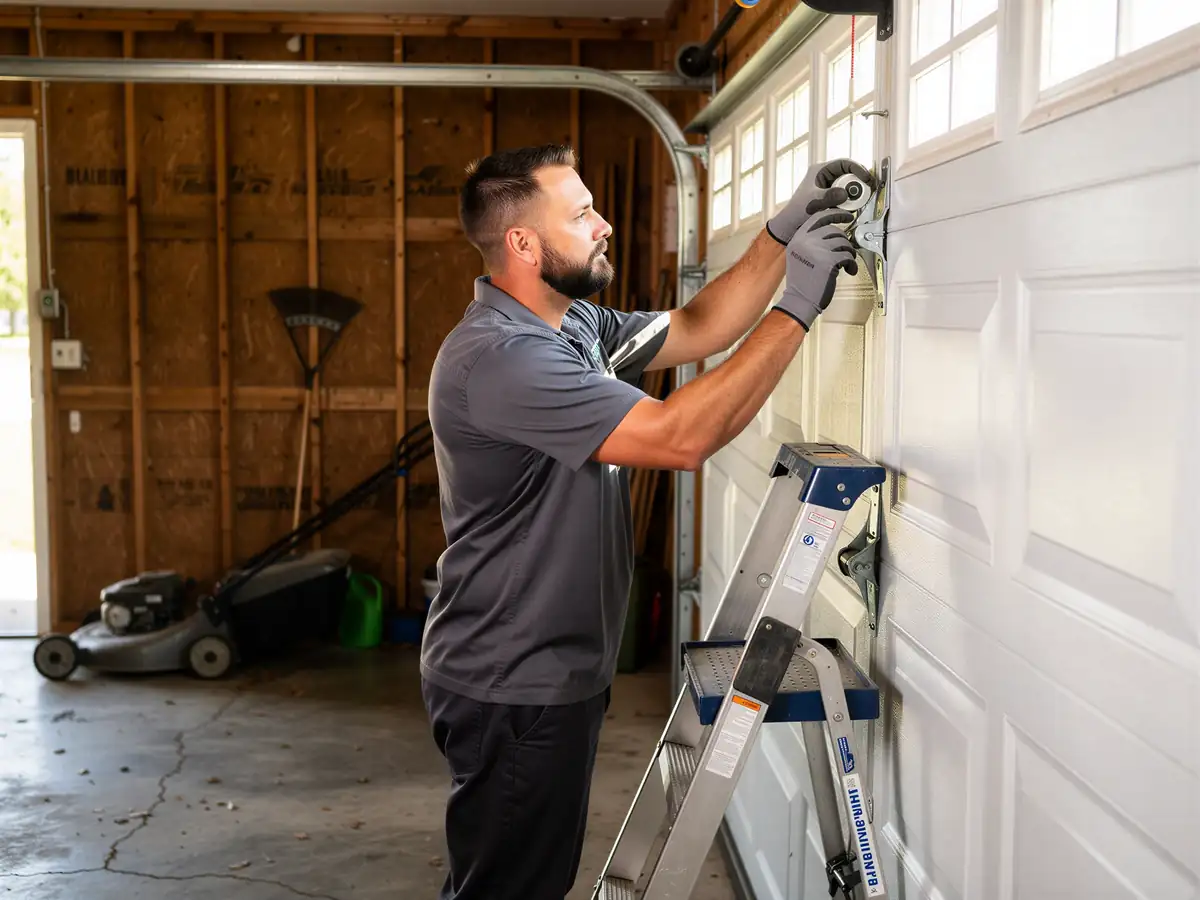
Track bolted and leveled against the real opening, then the opener synced and balance-tested by hand before we call it done. Given the moisture this area sees, we pay attention to hardware finish - galvanized or coated components hold up better here than bare steel over the years ahead.
We don't stock every size on the truck
So uncommon widths or custom insulated panels sometimes mean a short order wait before the second visit. That's the one piece of the timeline we can't shorten.
How Long It Takes
For a standard single or double door in a stock size, the install itself runs a single visit once the door's on the truck. The measuring trip comes first and is separate - we don't cut a door order from a phone description of a 1980-built opening, because those openings vary enough that a guess costs you a return trip either way.
Where the timeline stretches is ordering. If your opening needs a non-standard width, a specific insulated R-value, or a custom color, that's a supplier lead time on top of the drive out, and we'll tell you the window as soon as we know it rather than giving a number we can't back up. Given the 13-mile run each way, we also try to batch the measure visit and install into as few separate trips as the order allows, so you're not burning two mornings waiting on us when one would do.
What You Pay
We don't have a flat number to post here that would hold up across every door, opening, and finish - a steel flush door on a standard 1980s opening costs differently than a custom insulated panel on a framing that needs correction first. What we can tell you is what drives the number up or down on a Saraland job specifically: whether the existing opening is square or needs shimming, whether the spring system has to be upsized for a heavier insulated door, and whether the order is a stock size or a custom cut.
The area's median household income sits at $60,577, and most of the installs we quote here land toward the practical end of the range rather than the premium end - solid steel or insulated steel doors sized to fit without reframing the opening. We'll give you the real number after we've measured, not before.
The Symptom
The usual reason a Saraland homeowner calls about a new door instead of a repair isn't a dramatic failure
It's a door from the original 1980 build that's been patched once or twice already: a replaced spring here, a new roller there, an opener that's been swapped out but still straining against a panel that's warped or dented past square. At some point the door itself, not any one part, is the problem.
The tell is usually that the door doesn't sit flush at the bottom anymore
Or it takes longer than it used to for the opener to pull it shut, even after a tune-up. On a door this age, that's the frame of the panel itself sagging, not a part you can swap your way out of. That's the point where a new install costs less over five years than another round of patch repairs on hardware built for a lighter, older door.