Stocked Parts
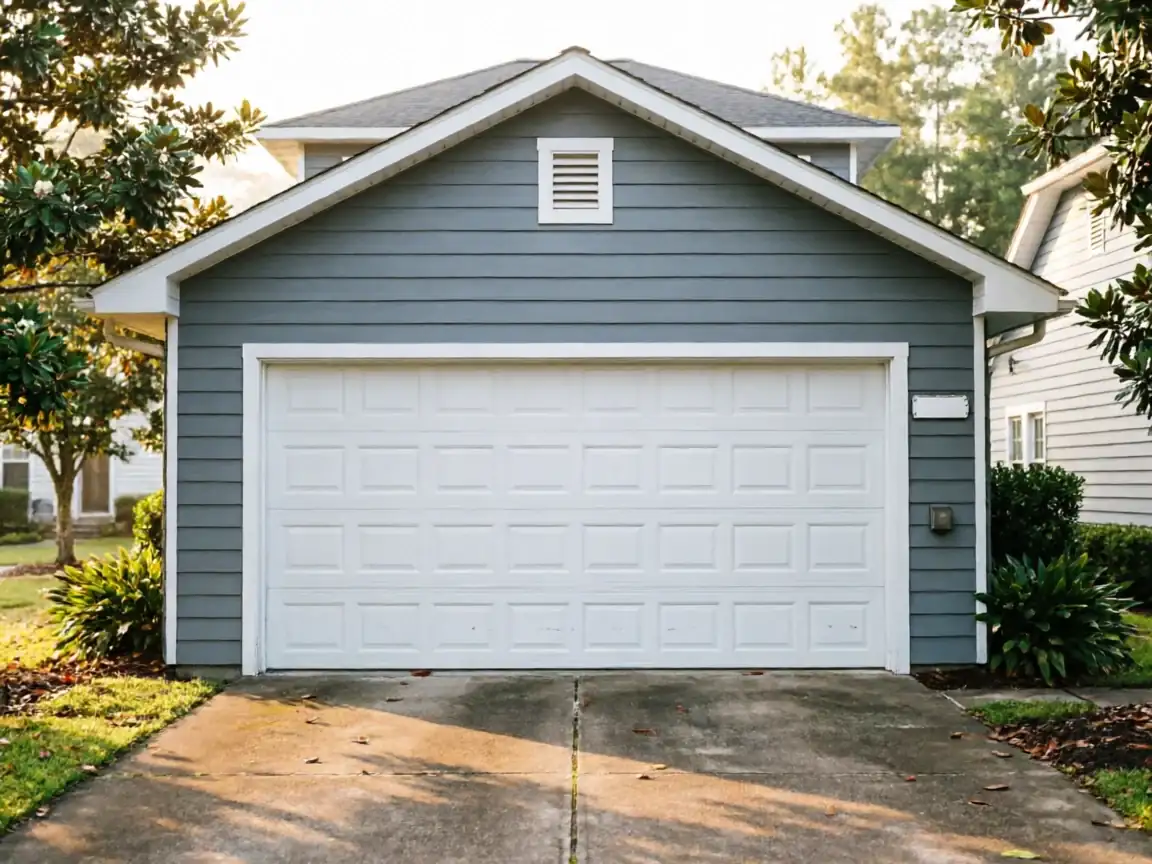
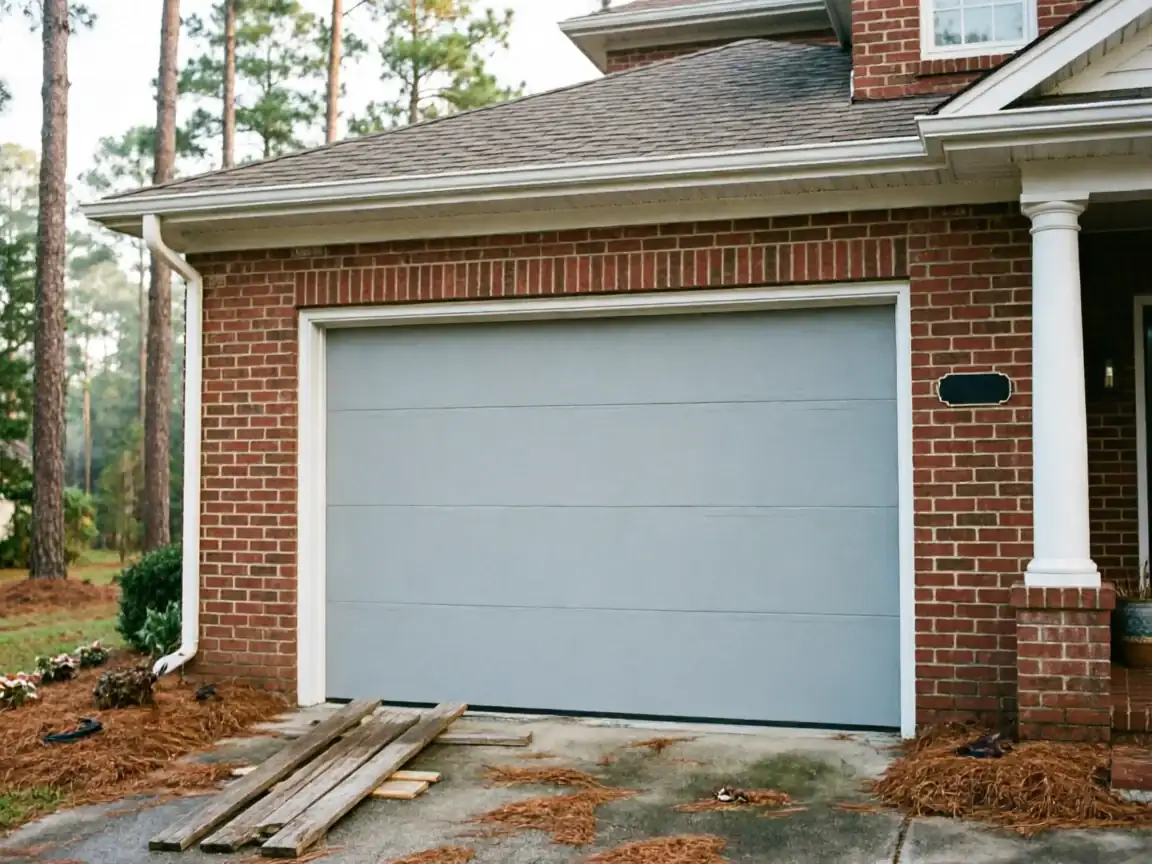
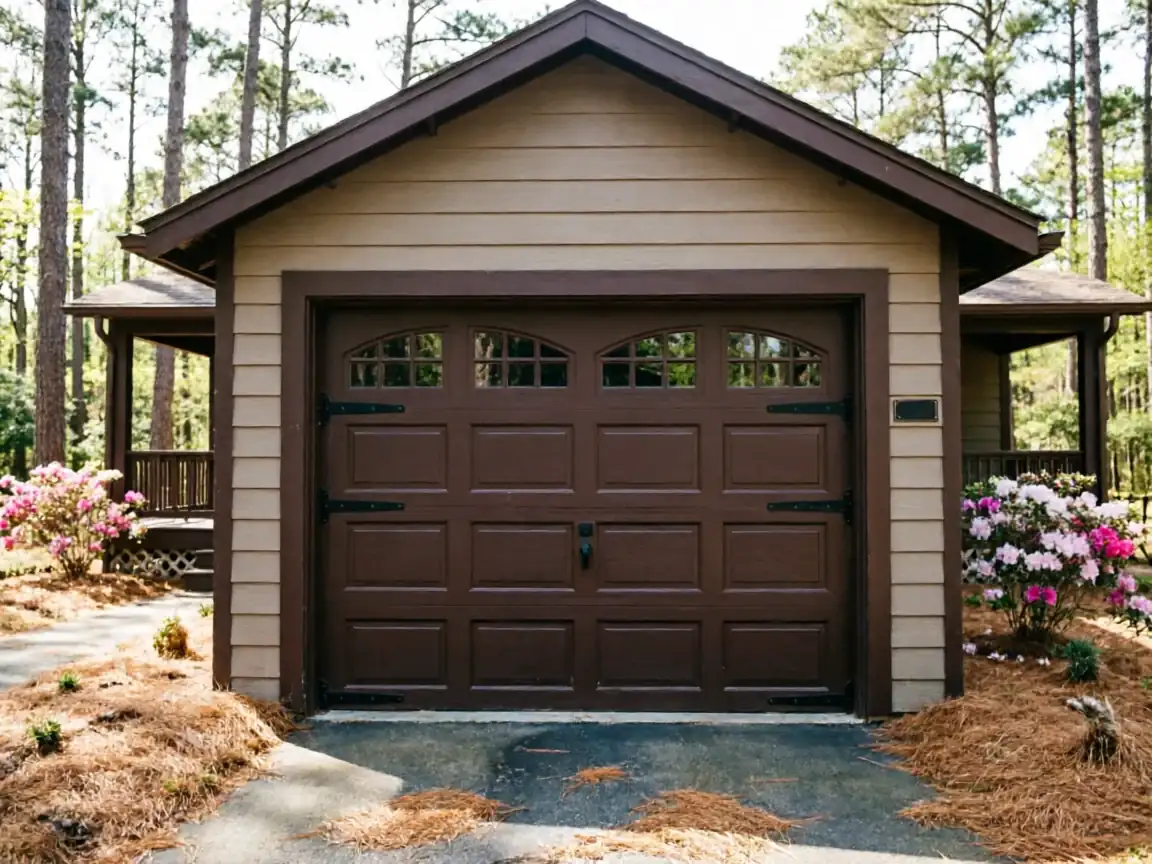
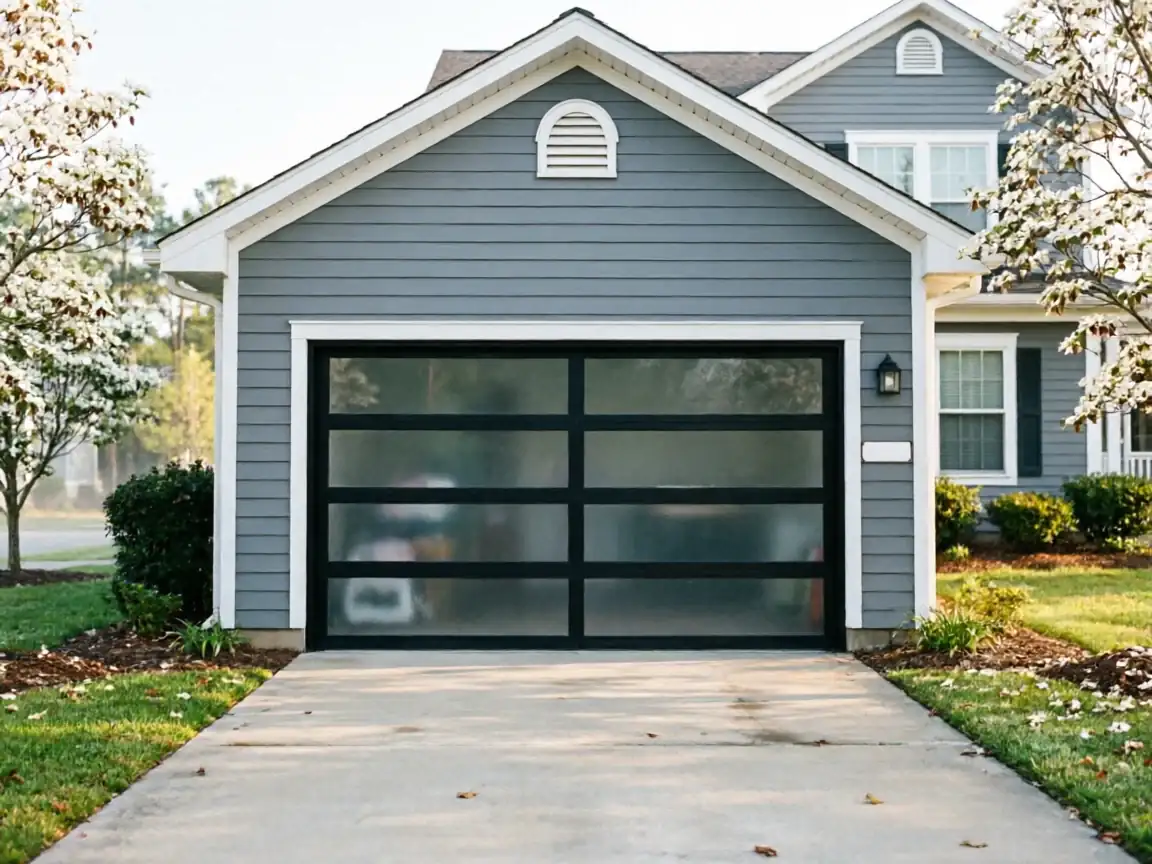
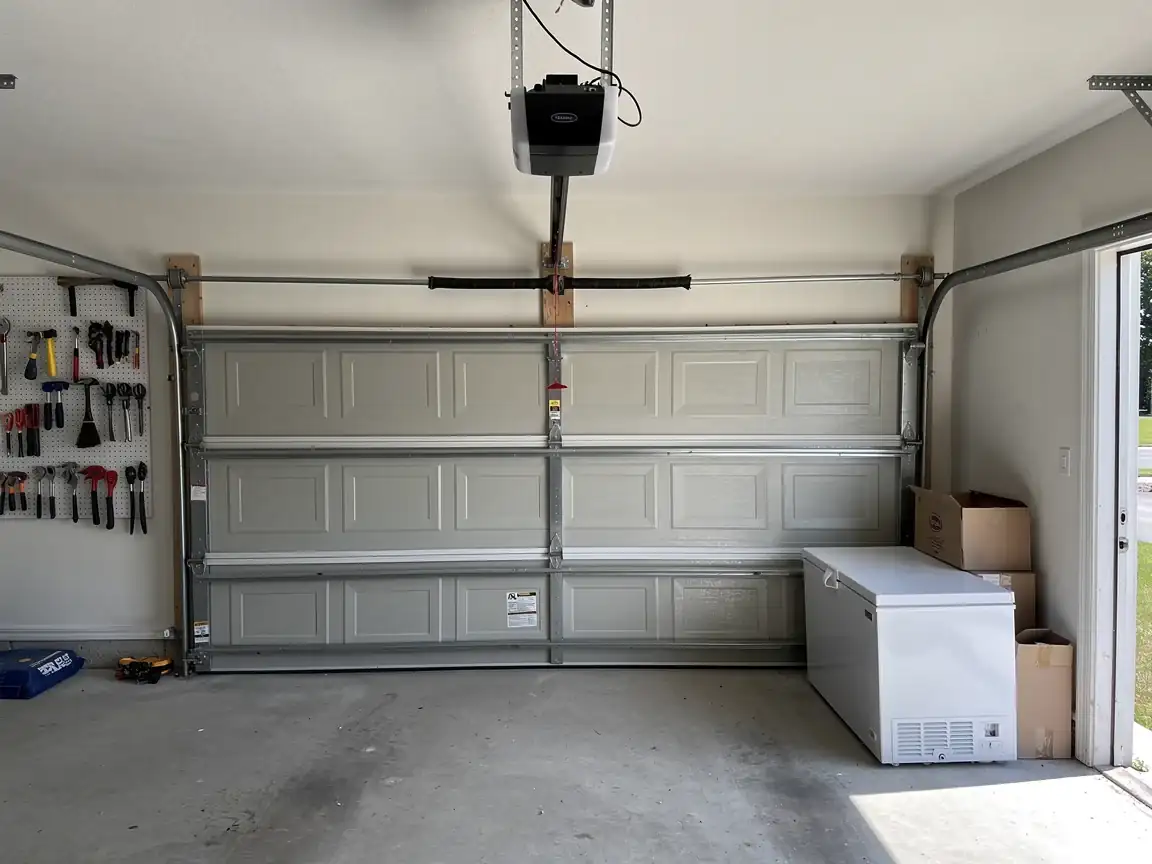
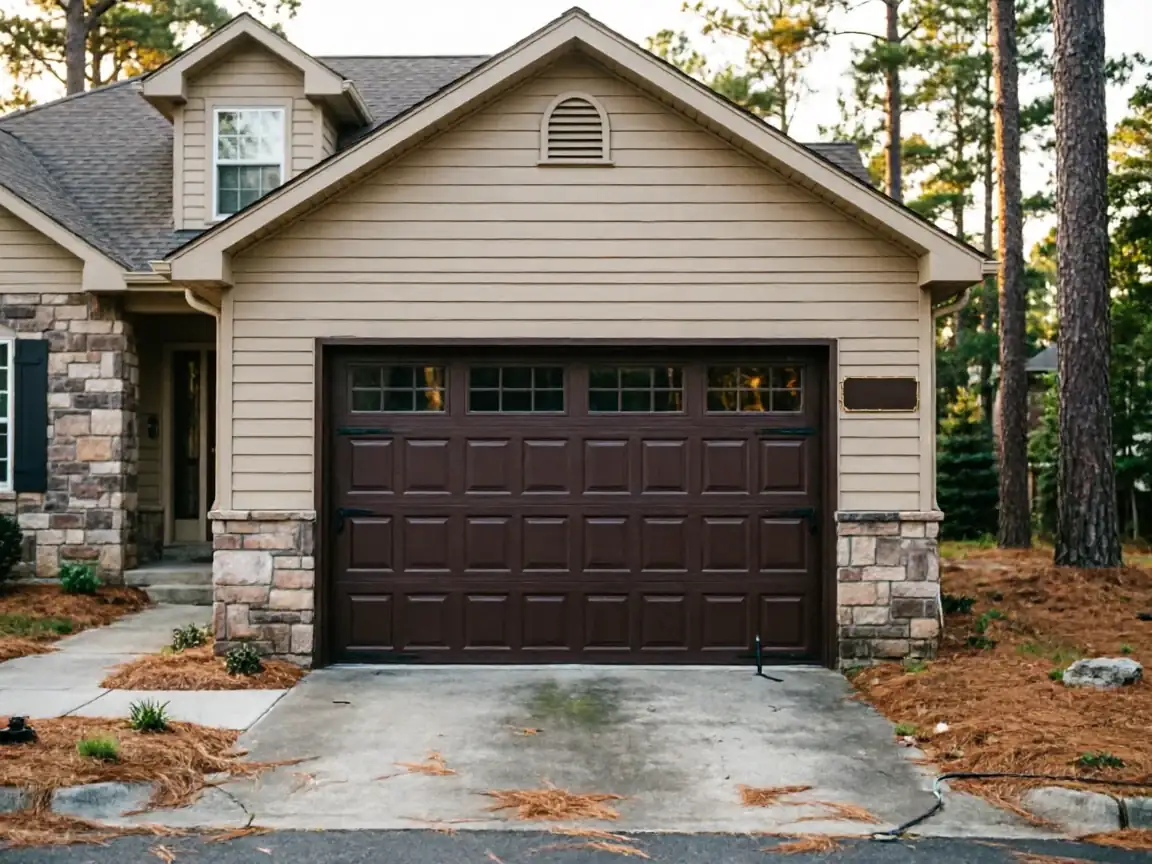
Tillmans Corner sits right at the median build year for the whole area we serve: 1983. That's not a coincidence of timing, it's the era most of this part of the county got built, and it means most garage doors here are steel sectional doors on torsion springs sized for the lift weights common to that decade, not the lighter aluminum or the heavier insulated steel panels you see on newer builds further out. We carry torsion springs in the wire sizes that match those doors, along with extension springs for the smaller run of older single-car doors that never got upgraded off that hardware. What we don't stock on the truck is anything custom - oversized doors, odd drum setups, non-standard spring lengths. Those get ordered, and that's a wait, not a same-visit fix. If your door is original to a house built in the early '80s, odds are good we're carrying the right spring already. If it's been replaced once since then with something off-brand, we may need to look at it first before we know for sure.
We don't guess at spring size over the phone. Wire diameter, coil length, and wind direction all matter, and getting it wrong means a door that's hard to lift or slams down too fast.
What You Pay
We're not going to put a number here that isn't grounded - what a job runs depends on whether it's one spring or a matched pair, torsion or extension, and whether the drums or cables need replacing alongside the spring itself. What we can tell you is that household income in Tillmans Corner runs lower than the average across the full area we cover - $52,249 here against $62,318 area-wide - and that shows up in how people decide. More owners here ask for a single spring swap instead of replacing both springs on a double door at once, even though the second spring is usually close behind the first once one has failed. That's a reasonable call on a budget, but it's worth knowing going in: you'll likely be back for the second one within a year or two if you only do one.
We'll tell you straight whether a single-spring fix makes sense for your door or whether you're better off doing the pair now and skipping a second trip later.
How We Fix It
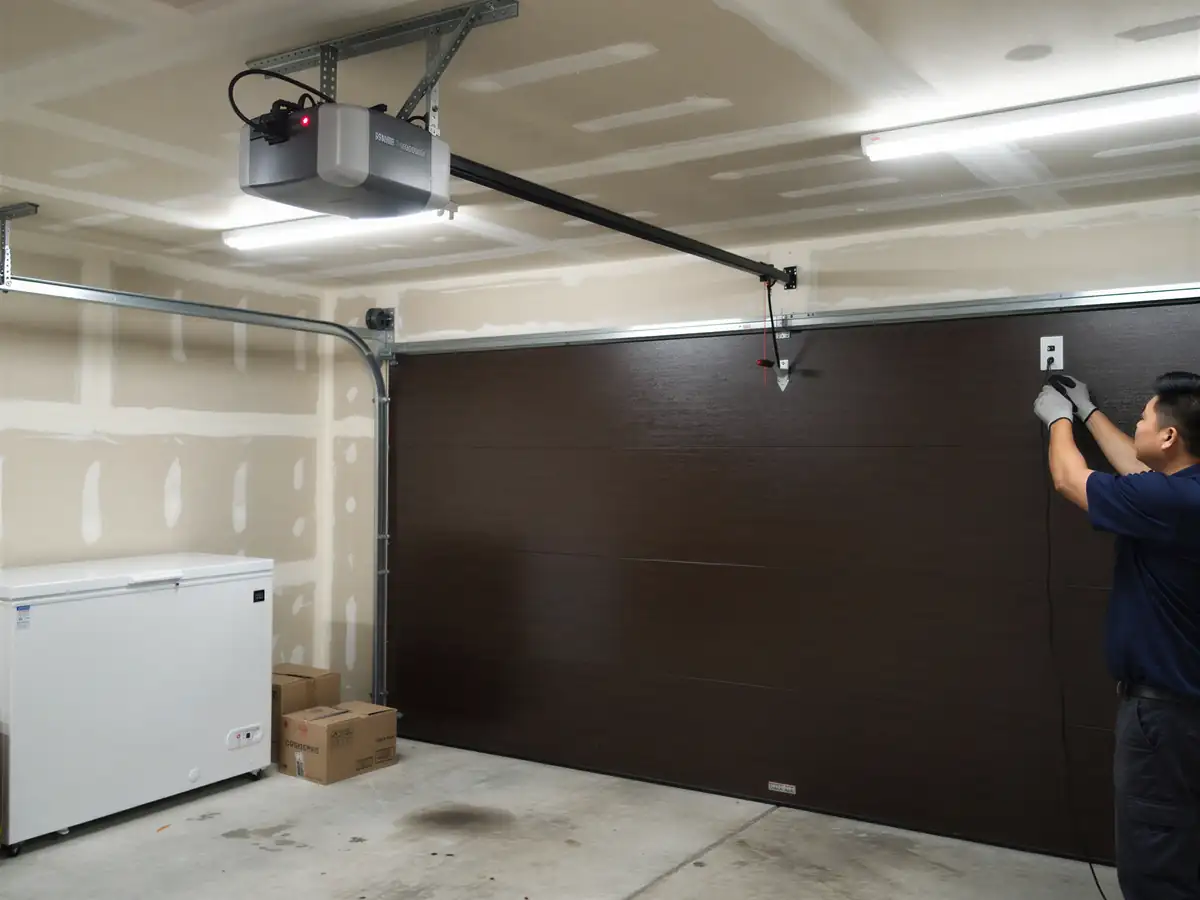
We unplug the opener first, every time
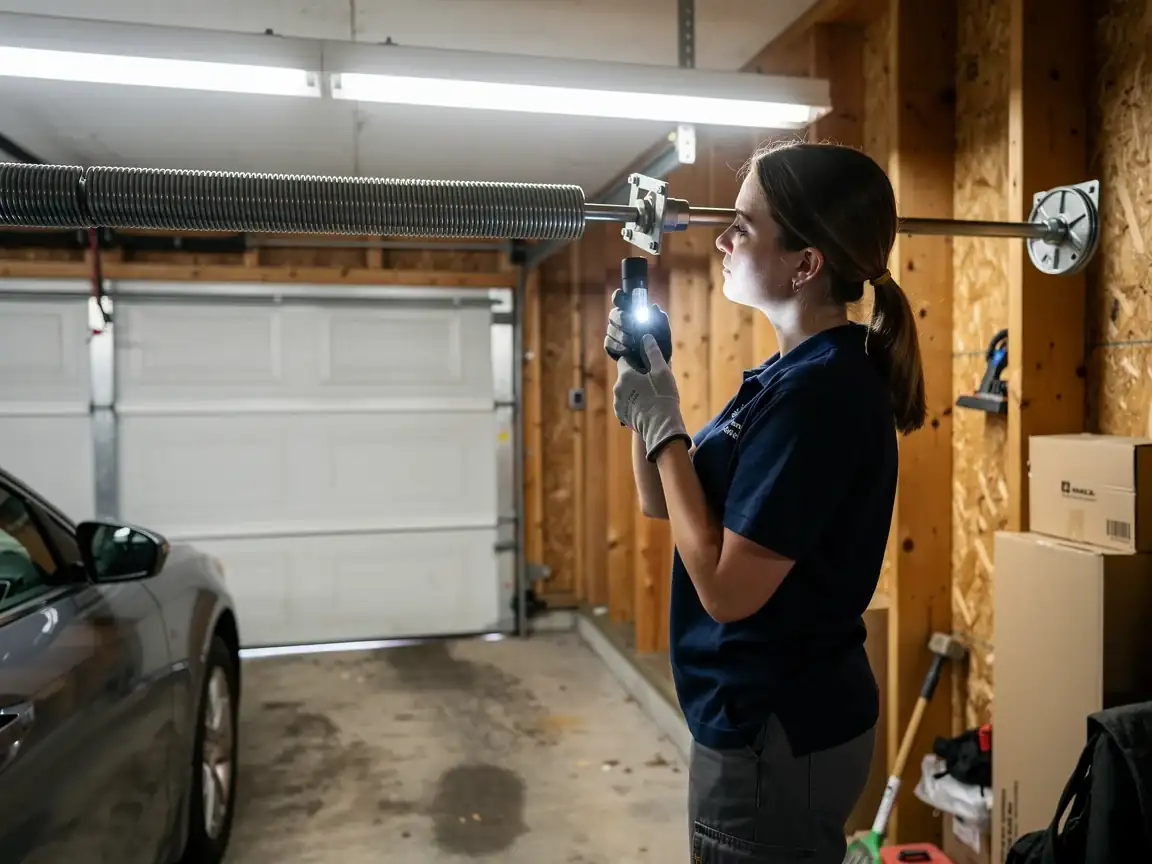
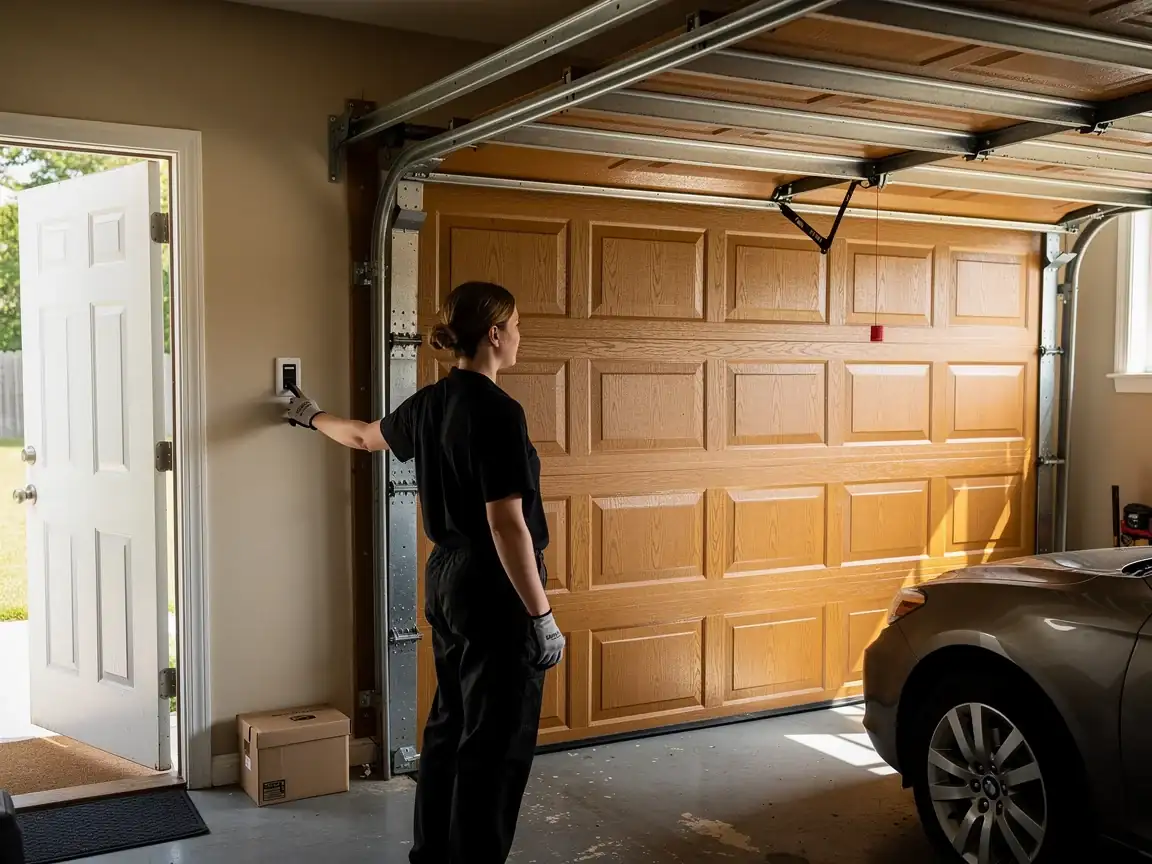
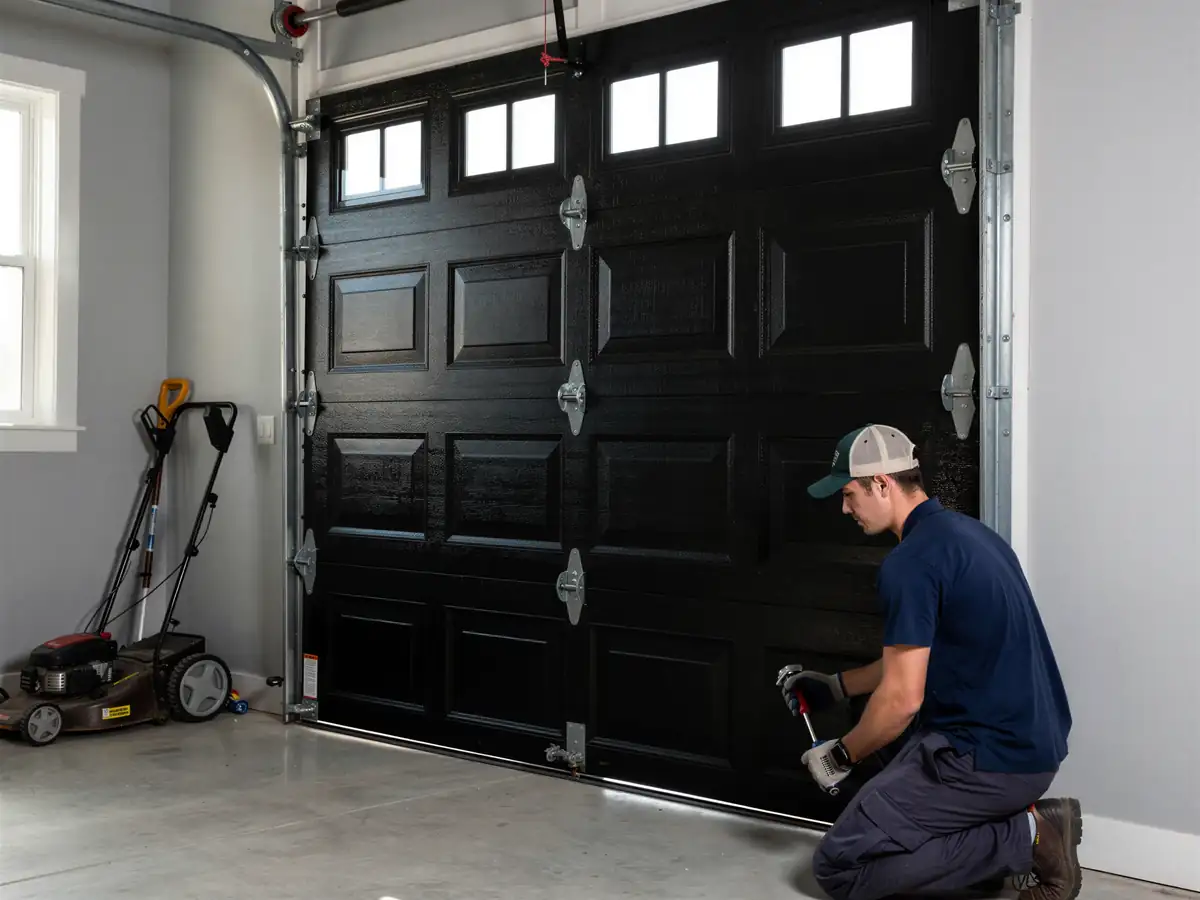
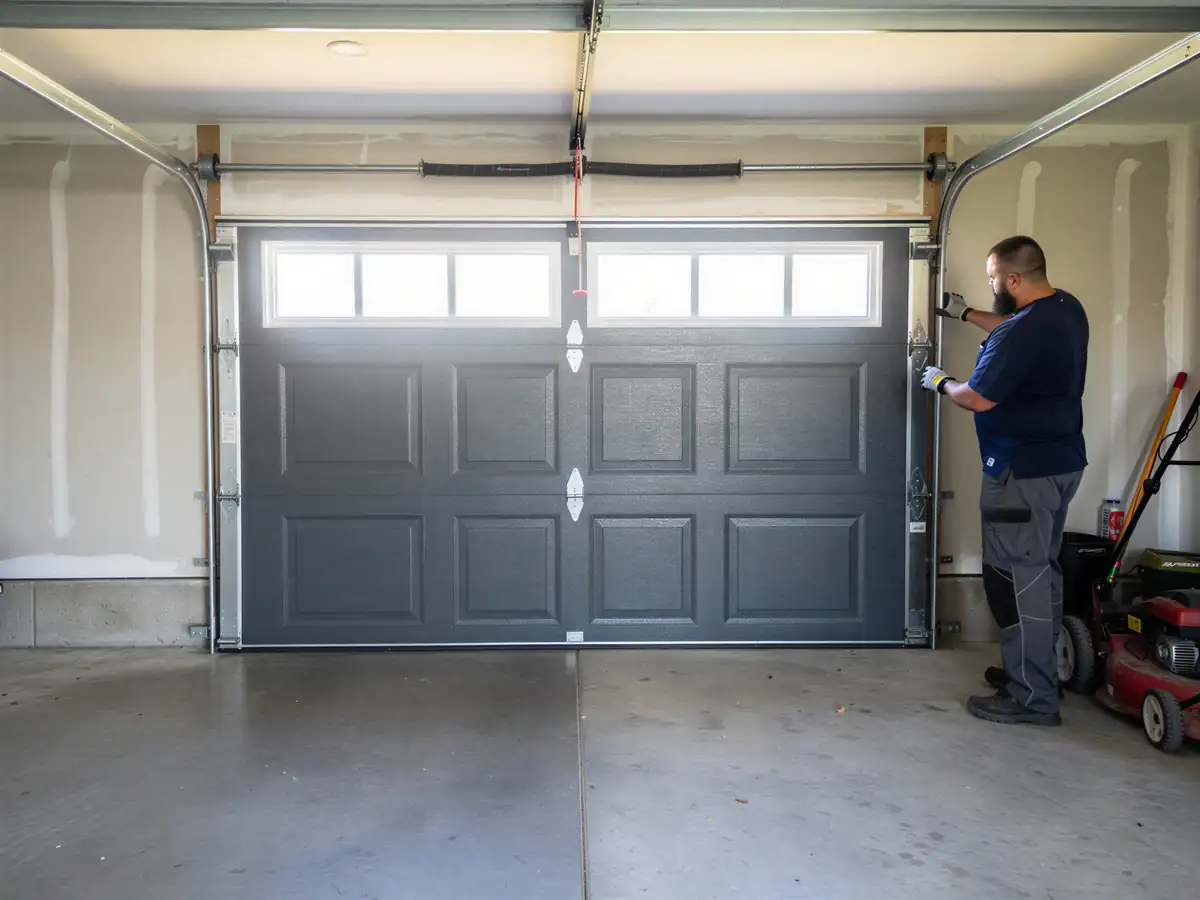
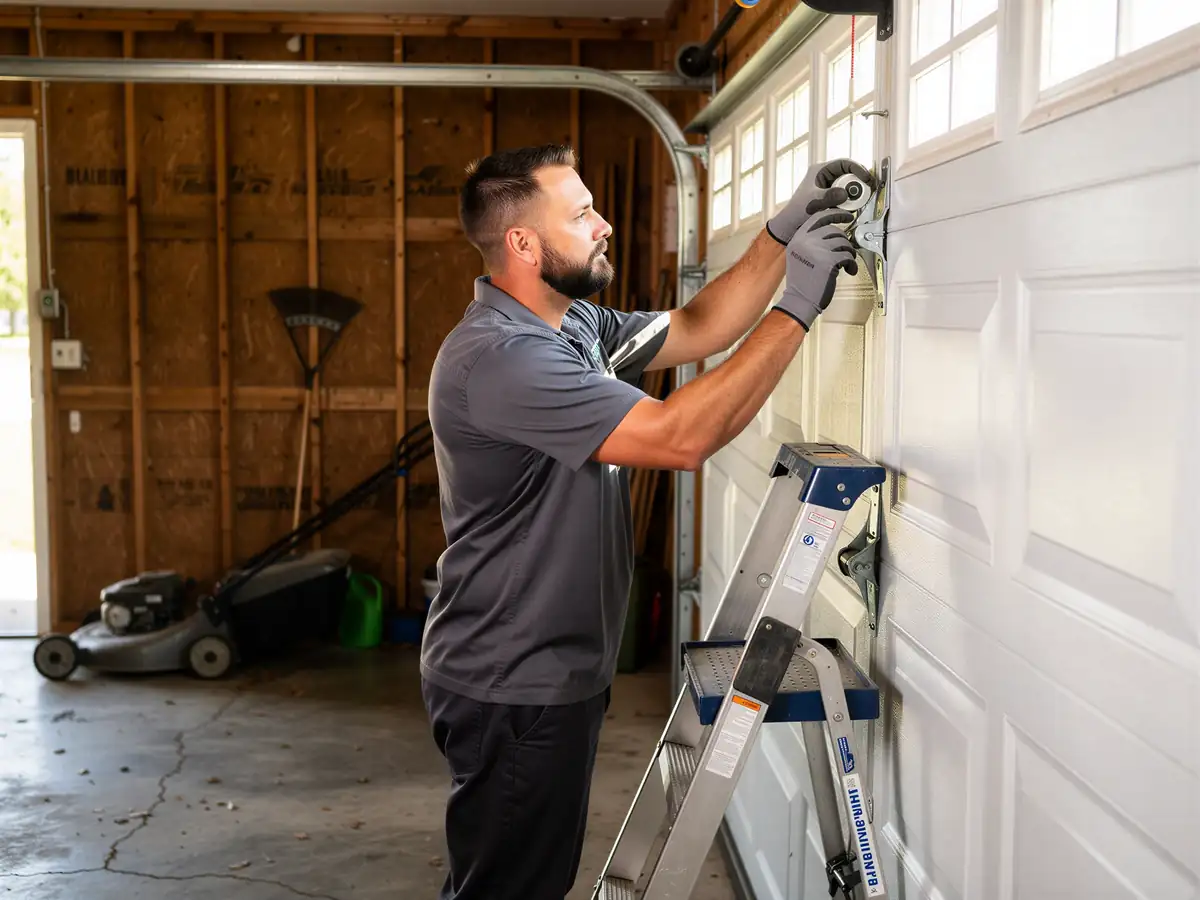
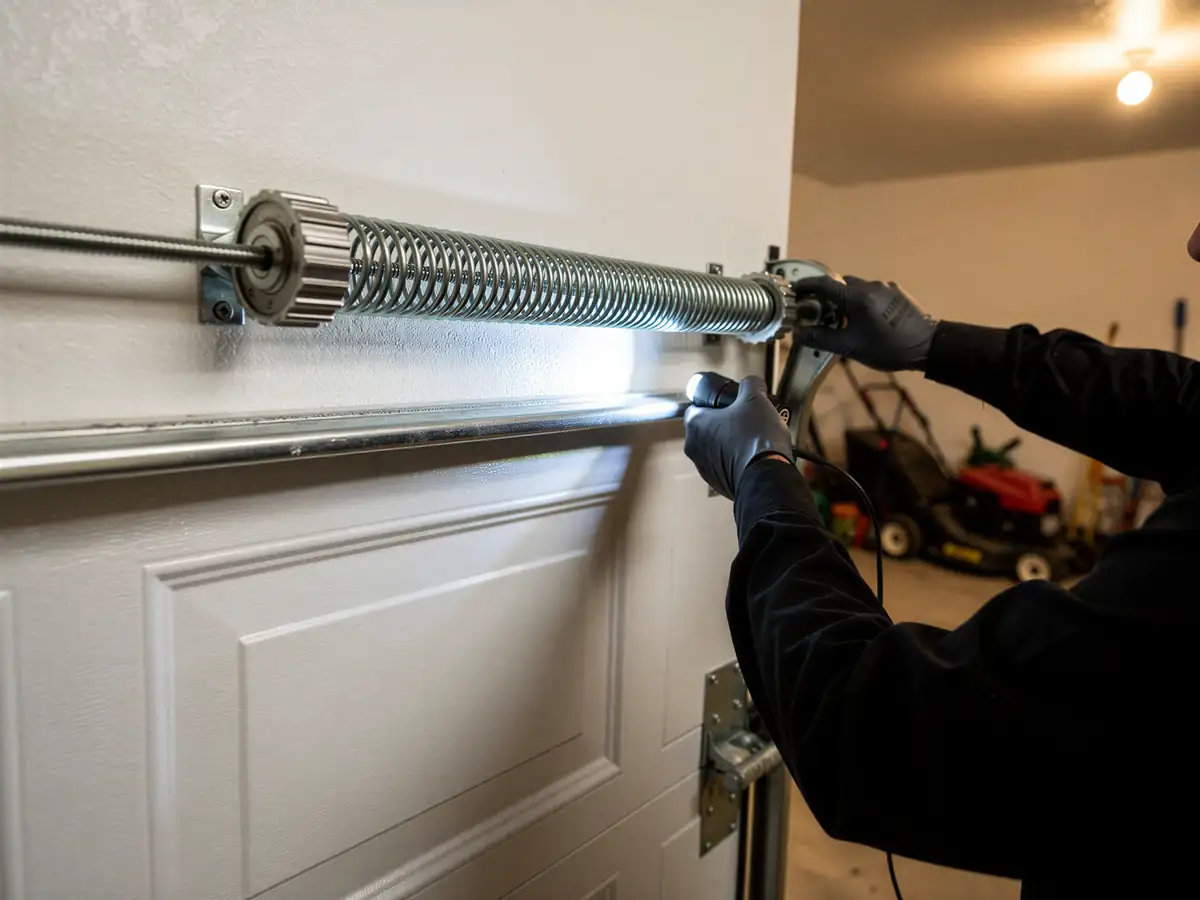
A spring under tension with power still running to the opener is how people get hurt. Then we clamp the door, relieve the old spring's tension with winding bars, and pull it off the center bracket. We check the cables, drums, and bearing plates while the spring's off, since those wear on the same cycle as the spring and it's wasted effort to replace one without checking the other. New spring goes on, wound to the door's weight, and we run it through a dozen open-close cycles to check the balance before we call it done.
We don't improvise tension by feel
A door that's over-tensioned will crack a panel on the way down eventually; one that's under-tensioned strains the opener motor until that fails too. Getting the wind count right the first time is most of the job.
The Complications
A lot of what got built in this stretch of the county in the early 1980s used extension springs without separate safety containment cables running through them - standard practice for that period, not up to current code. If that spring lets go while it's under tension, it can whip, and there's nothing holding it in place when it does. We see this on original hardware that's never been touched since the house was built, and it's one of the more common reasons a routine spring swap turns into a conversation about also adding containment cables while we're in there.
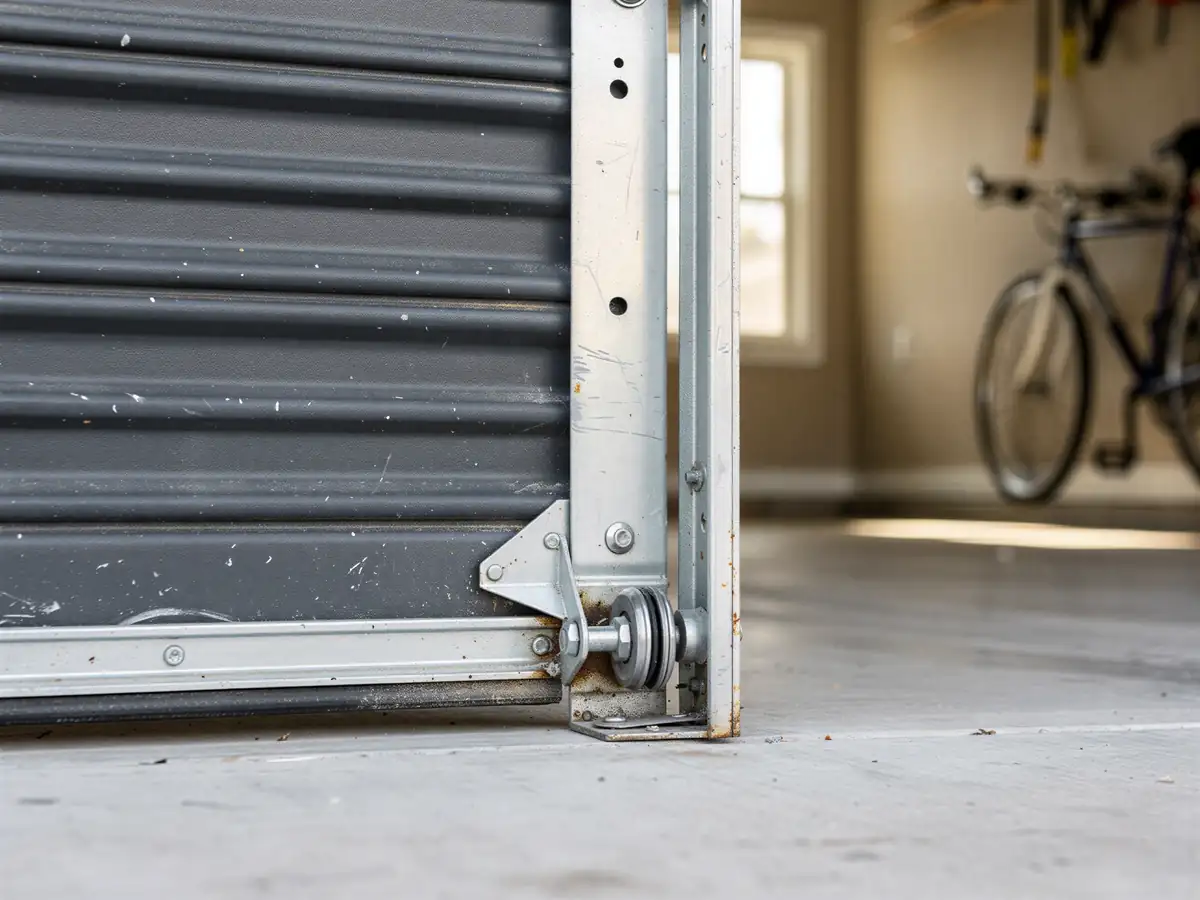
The other complication is drums and bearing plates that have outlasted a spring or two already. On a door from the early '80s stock common to this area, that hardware is now old enough that it's often worn thin even when it looks fine, and swapping the spring without checking it just means another call in a year. We'll point it out if we see it - we won't replace parts that don't need it, but we won't ignore ones that do either.
How Long It Takes
Once we're on site, a standard torsion spring replacement - one spring, no surprises with the drums or cables - usually runs under two hours. A matched pair takes longer, and anything where we find worn cables or a cracked bearing plate adds time on top of that, since we're not leaving a door half-fixed. Extension spring jobs with no containment cables, where we're adding that hardware as part of the repair, run longer than a straight swap.
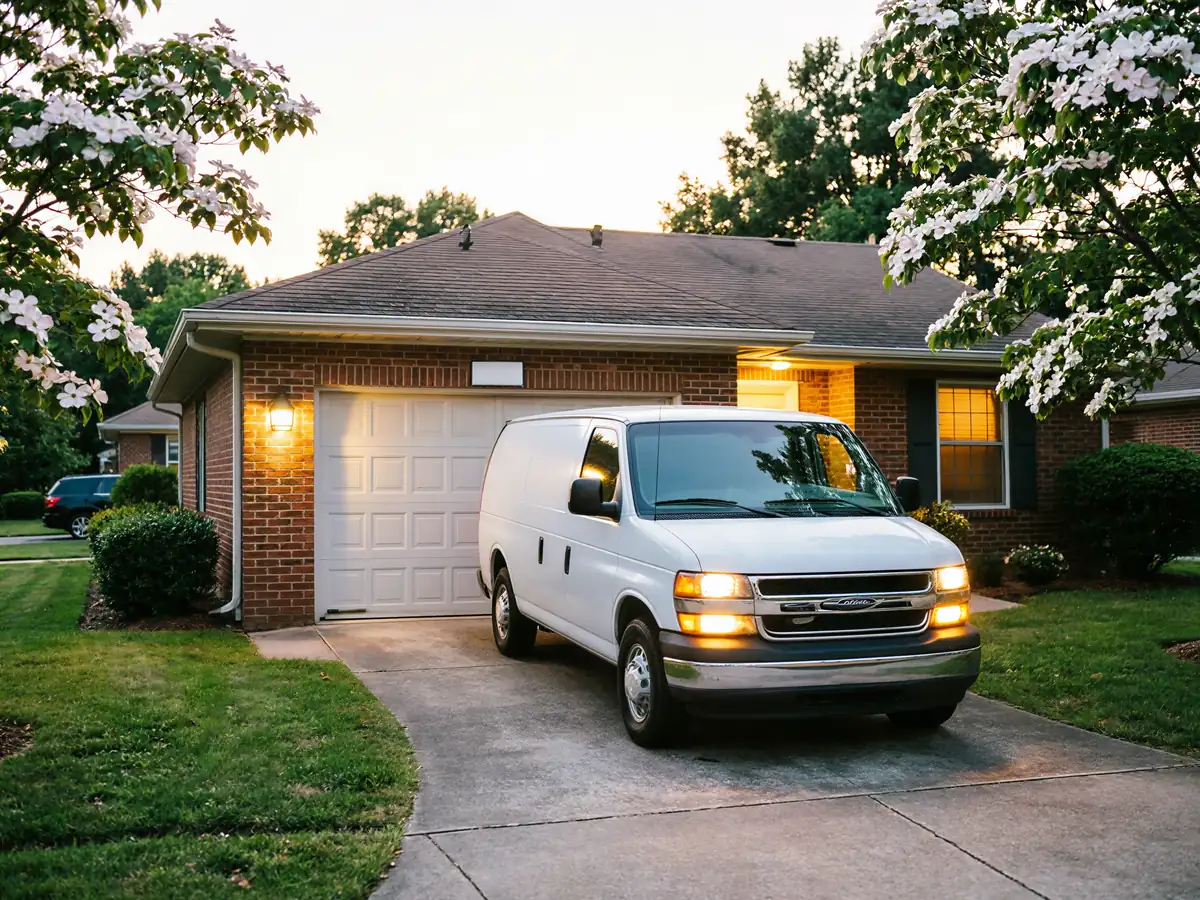
We're coming from Mobile, about 9 miles out, so getting to Tillmans Corner isn't a long haul, but we don't promise a window here that we can't back up - call and we'll give you a straight answer on when we can get there, not a guess meant to sound good on a webpage.
Why This Fails Locally
This area sits in a mild climate with occasional freeze
Which means the springs coming off Tillmans Corner doors aren't usually failing from ice lock-up the way they would somewhere with hard, regular freeze cycles. What we actually find is plain fatigue - a coil that's gone through tens of thousands of open-close cycles since a house built around 1983, with no lubrication along the way, until it finally lets go on an ordinary Tuesday. Humidity plays a role too, more corrosion on uncoated coils over the decades than you'd see in a drier climate, which is its own slow wear even without hard freezes.
The honest limit here
If your spring is original to the house and nothing else has been touched, we'd rather tell you to expect to budget for the second spring and the drums sooner than later than have you spend on one repair and be back again shortly after.