Booking a Visit
We run the 8 miles out from Mobile to get to Prichard, so when you call about a door that's jumped the track, tell us what you're seeing - one corner sagging, the door cocked sideways, a gap between the panel and the track on one side. That tells us whether we're dealing with a bent rail, a snapped roller bracket, or cable that's come off the drum, and it lets us bring the right parts the first trip instead of guessing. We don't keep a crew stationed in Prichard; every job here is scheduled out from Mobile, so give us a general sense of your schedule when you book rather than expecting a same-hour drop-in.
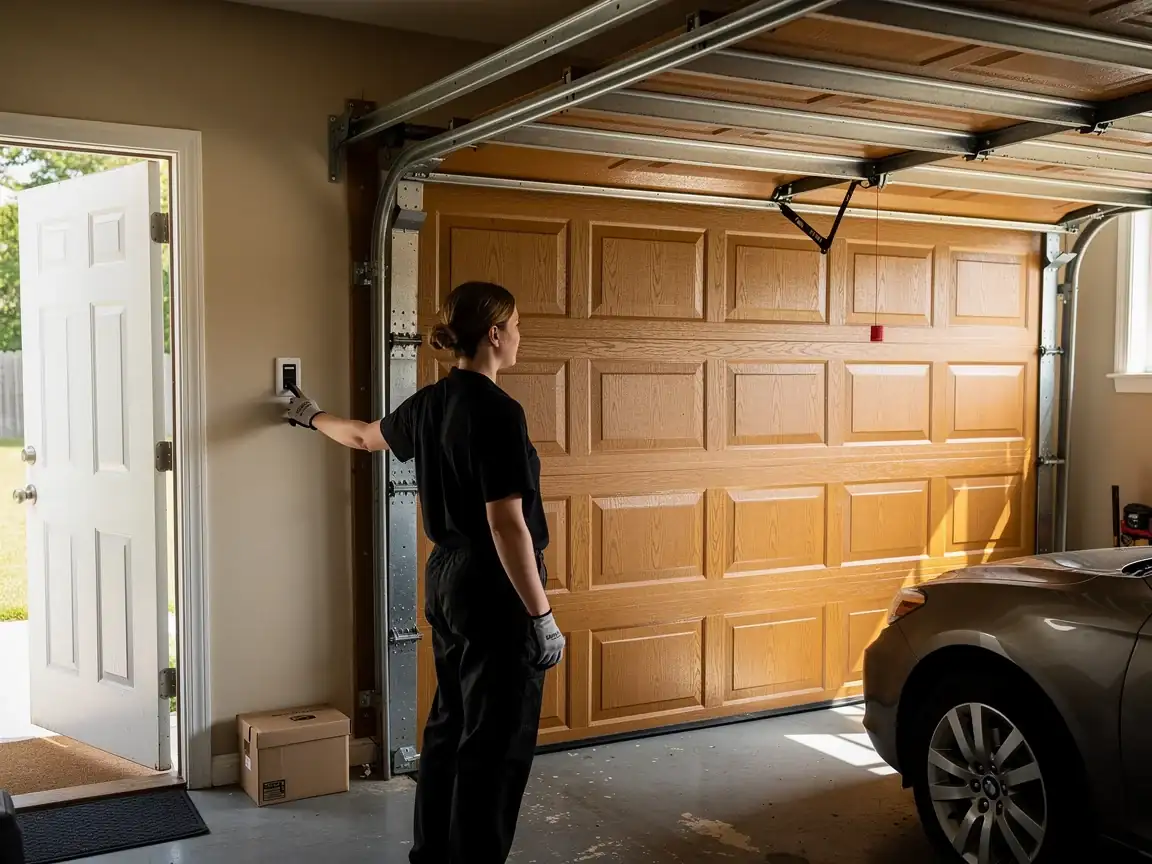
If the door is still partway open and binding against the track, leave it. Forcing an opener to keep pulling against a bent rail usually turns a $150 track repair into a $400 track-and-opener repair. Cut the power to the opener at the wall if you can reach it safely, and wait for us rather than working the door by hand.
We'll ask for the rough age of the house too. With 6,720 households in Prichard and most of that housing dating to around 1967, the hardware on your door is often older than what you'd find on a newer build elsewhere in the service area, and that changes what we expect to find when we pull the track cover.
What You Pay
Prichard's median household income is $35,331, well under the $62,318 median across the rest of the service area, and that gap matters for how we talk about this repair. On a door that's simply jumped a worn roller out of the track, straightening the rail and swapping the roller is a contained job and usually the right call regardless of income - it's cheap relative to replacement. The harder conversation comes when the track itself is rusted through or the door is a single-piece panel from the 1960s housing stock that's cracked at the hinge points. At that point we tell you plainly if you're paying to patch something that's going to fail again in a year.
We don't publish a flat price here because off-track damage ranges from a ten-minute roller swap to a full track and hardware replacement, and the only honest way to quote it is to look at the door. What we will say: if the repair cost starts approaching half of what a new door section costs, we'll tell you that number out loud before we touch a wrench, not after.
The Symptom
Most of what we see in Prichard traces back to the age of the housing stock
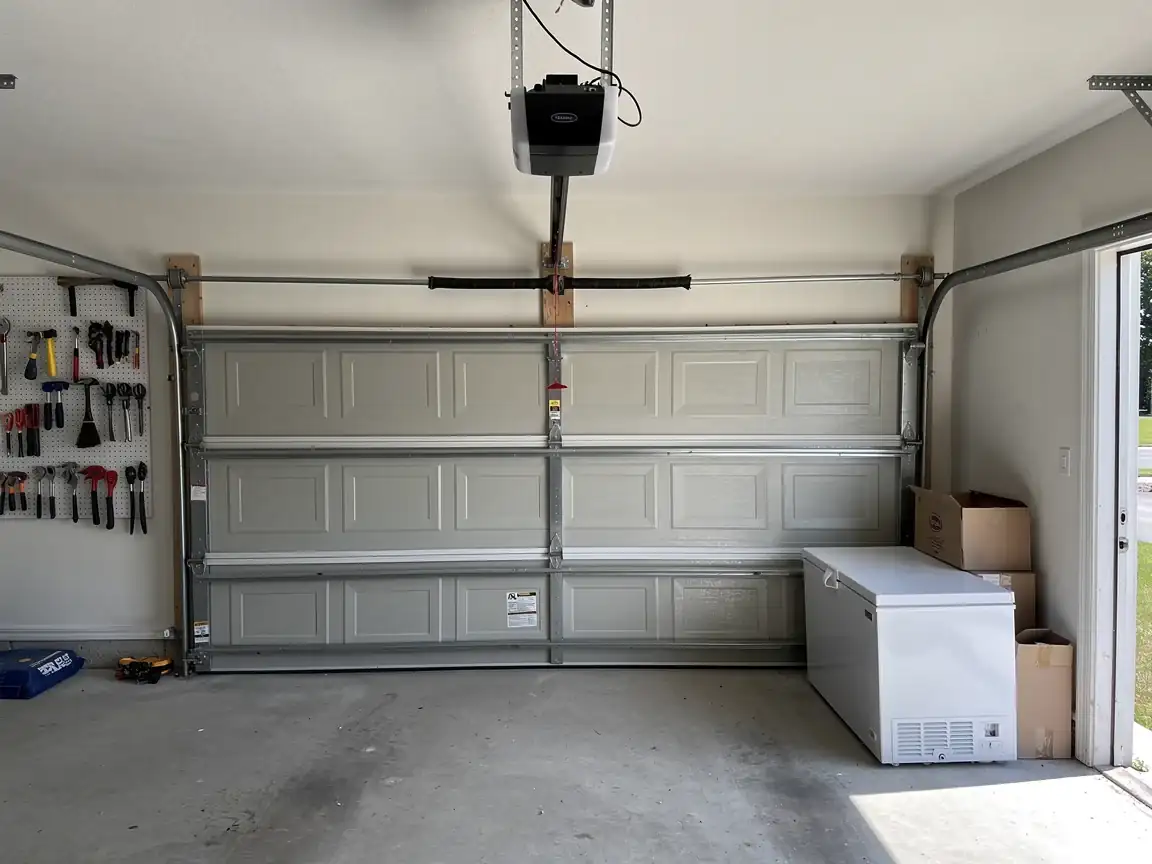
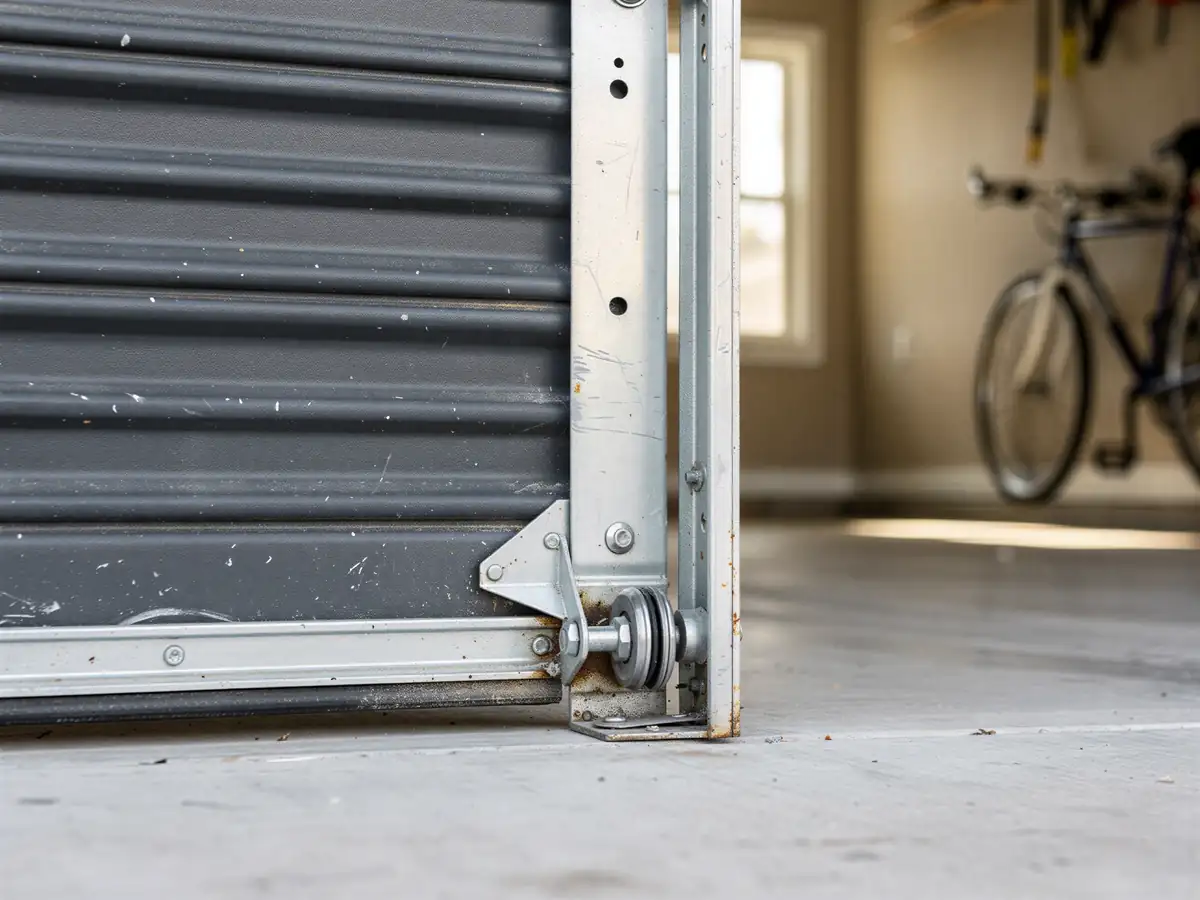
A lot of homes here went up around 1967, well before the service area's broader median of 1983, which means more doors still running on the narrower, lighter-gauge track that was standard then. That track flexes more than what's installed today, and over fifty-plus years it loosens at the wall brackets. The door starts riding slightly off-center, a roller works its way to the edge of the rail under that flex, and eventually it pops loose - usually on a day you're in a hurry.
The other common cause is a bent track from an impact
A car bumper, a stored ladder that fell against it, a kid's bike. That bends the rail inward or outward just enough that rollers catch and walk out of the channel instead of rolling through it.
Either way, the tell is the same
The door hangs crooked, one side drags or scrapes, and it stops cleanly refusing to move once a roller is fully out. If you hear a grinding or popping sound right before it jams, that's usually the roller leaving the track in real time.
How We Fix It
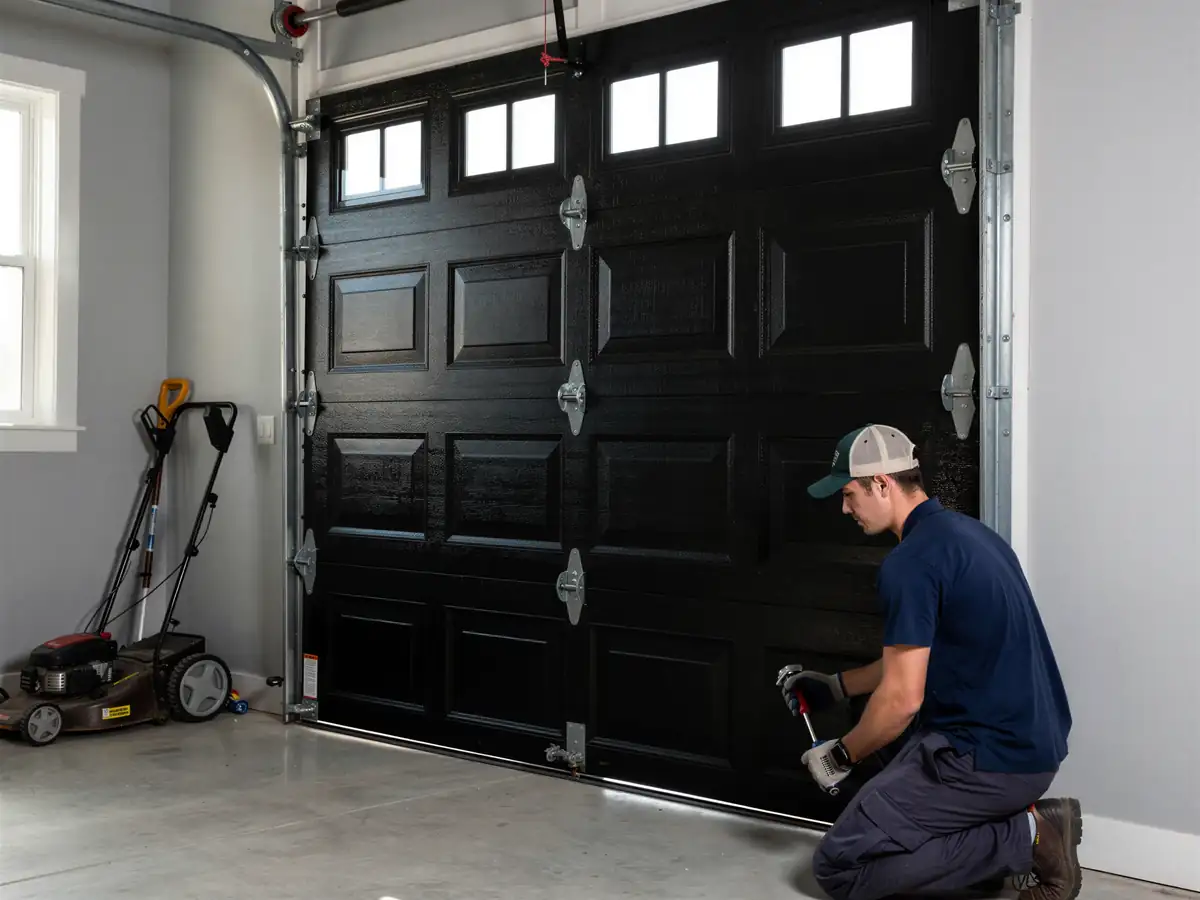
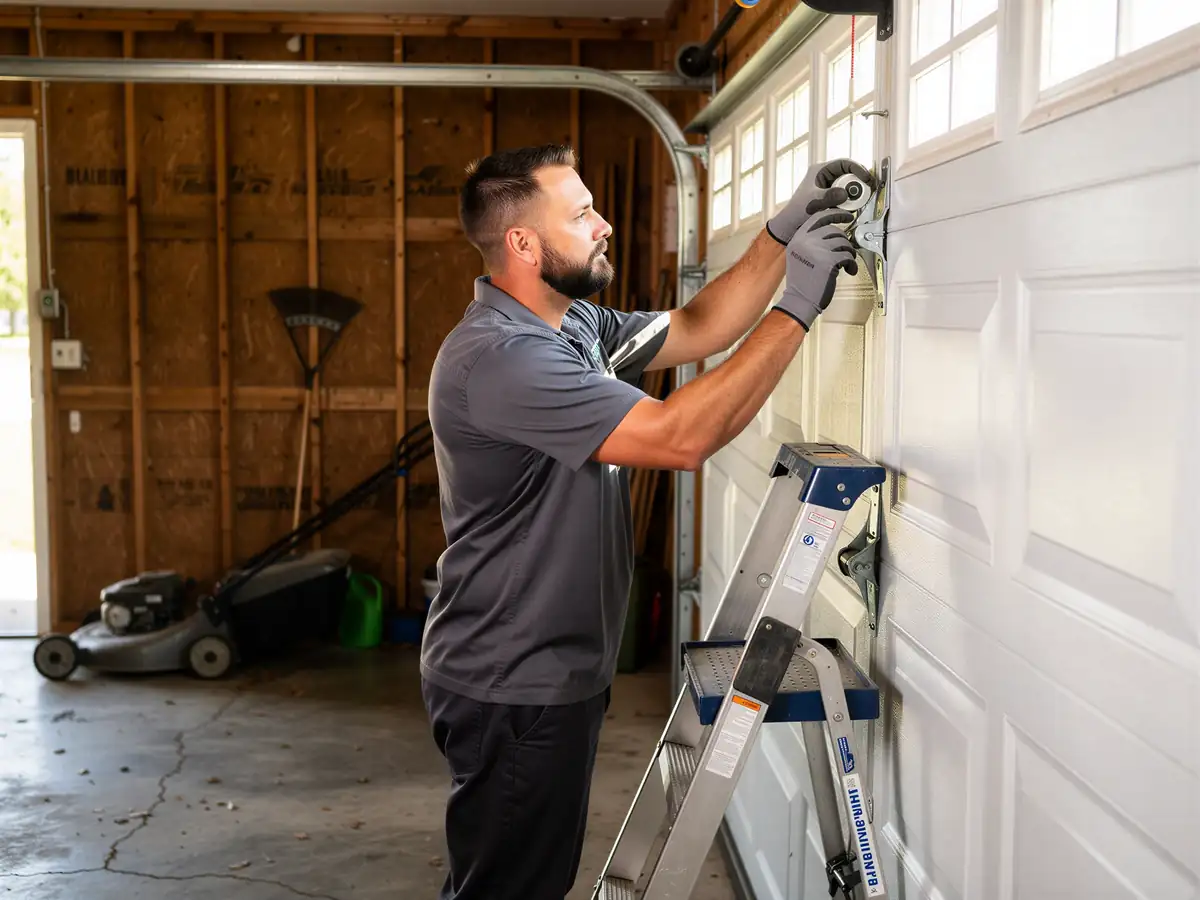
First we check whether the rollers themselves are bad before we touch the track - a worn nylon roller with a flat spot will jump track again even on a perfectly straight rail, so replacing just the track and leaving bad rollers in is a repair that doesn't hold. Once the rollers check out, we look at the rail itself. A mild bend we can often straighten in place. A rail that's kinked, rusted through, or pulled away from its wall brackets gets replaced outright - on the older track common in Prichard's 1960s-era homes, that sometimes means swapping a slightly wider or narrower section than a hardware store carries off the shelf, which is the one honest limitation here: non-standard track widths on older houses can mean a short parts wait rather than a same-visit fix.
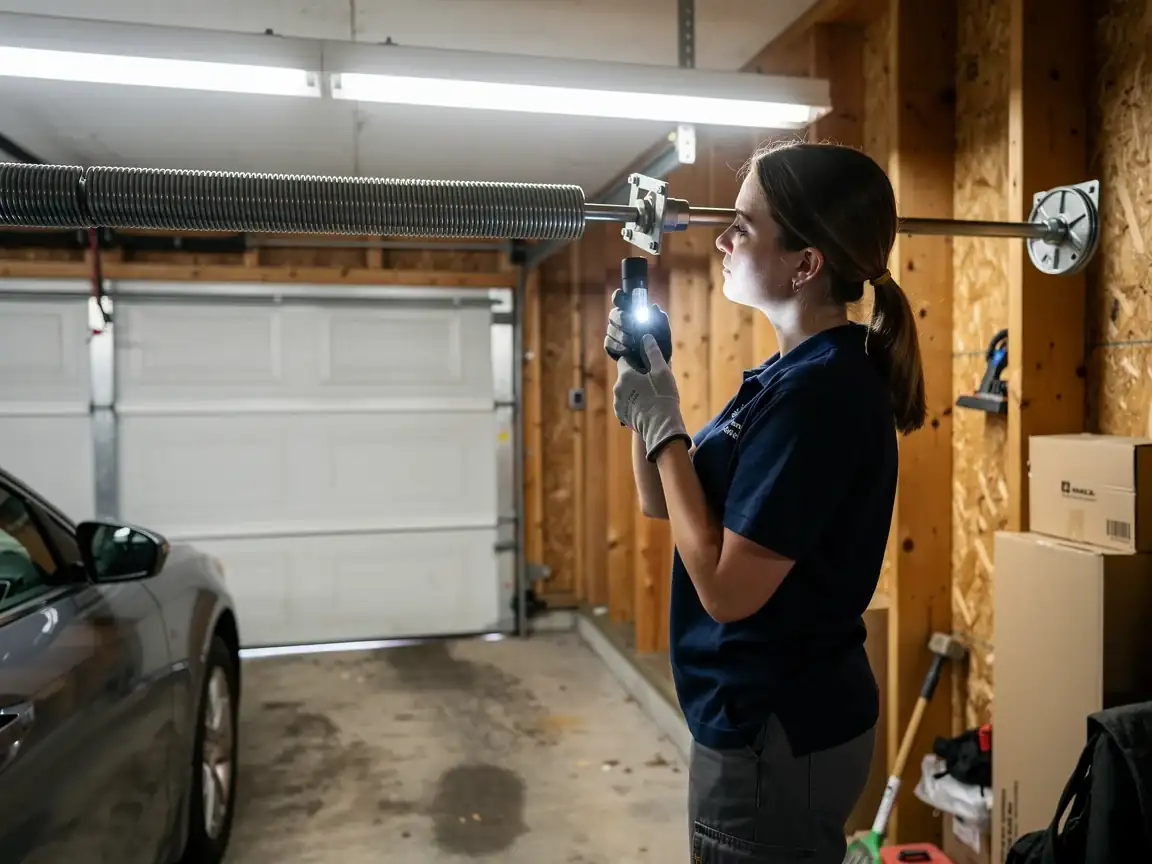
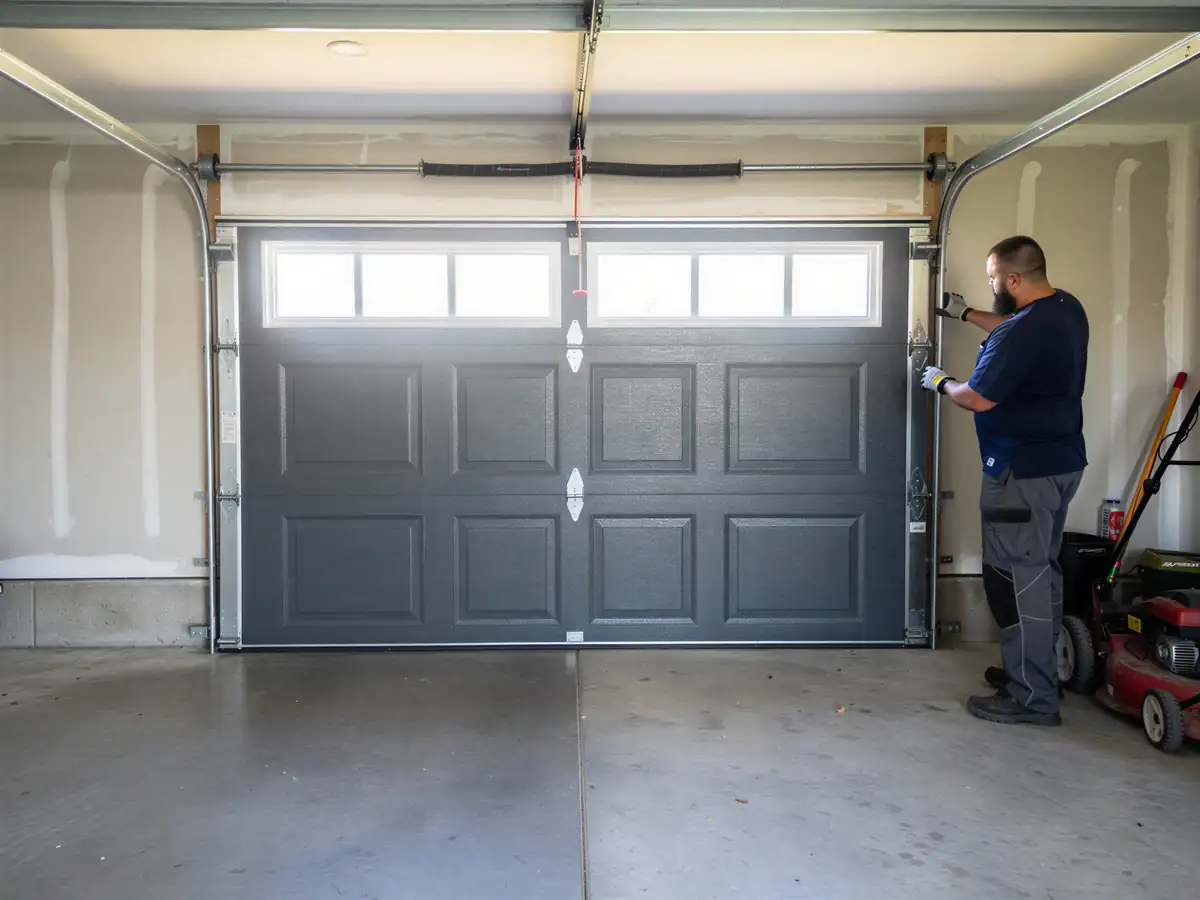
We re-square the door in the opening, reset the rollers into the channel, and run the door through a full open-close cycle a few times before we call it done, checking for drag, noise, and even travel on both sides. We also check the cable tension and the spring balance while we're in there, since an off-track jump is often a symptom of a door that was already running unbalanced.
How Long It Takes
A straightforward roller-and-track repair, where the rail just needs re-aligning and a roller or two swapped, usually runs under an hour once we're on site. A full track replacement, which is more common on the older hardware we see through Prichard's housing stock, takes longer - figure closer to two hours with the re-squaring and balance check included.
The variable we can't control from Mobile is the drive and any parts mismatch. If your track is the narrower older-style channel and we don't have a matching section on the truck, we'll tell you on the first visit and come back once it's in rather than forcing a part that doesn't fit. We'd rather lose a day than leave you with a door that jumps track again in a month.